Dade Phelan, Texas House Speaker: A Call for Resignation Amidst Controversy

The recent impeachment trial of Attorney General Ken Paxton has left many questioning the leadership of Texas House Speaker Dade Phelan. His fervent push for Paxton’s impeachment and subsequent acquittal have ignited a firestorm of criticism and calls for his resignation.
The Origins of the Controversy
The political clash between Attorney General Ken Paxton and Speaker Dade Phelan is a tale fraught with intrigue and personal vendettas. The roots of this controversy extend beyond the impeachment trial, delving into a web of political retribution and simmering tensions. The animosity between Paxton and Phelan escalated when, Attorney General Paxton called for Speaker Phelan’s resignation. Paxton’s demand came after he alleged that Phelan, the Republican from Beaumont, was “in an obviously intoxicated state” while presiding over the House.
In response to Paxton’s call for his resignation, Phelan’s office fired back, suggesting that Paxton’s remarks were an attempt to “save face.” The tension between the two Republican officials was palpable, with each side seeking to gain the upper hand in this high-stakes political battle.
Adding fuel to the fire, video footage from the House floor emerged, capturing a moment at the end of a grueling 14-hour session. In the video, Speaker Phelan appeared to slur his words while debating an amendment to a Senate bill. The video quickly went viral online over the weekend, further intensifying the scrutiny on Phelan’s leadership and behavior.
In a statement issued by Paxton in the wake of the incident, he expressed profound disappointment in Phelan’s conduct. He called for Phelan’s resignation, citing how Phelan’s performance while presiding over the Texas House “in a state of apparent debilitating intoxication” had negatively impacted the legislative process. Paxton argued that such conduct constituted a failure to uphold Phelan’s duty to the public, a sentiment that resonated with many who had witnessed the viral video.
Political Blowback and Escalating Dissatisfaction
The impeachment trial of Attorney General Ken Paxton unleashed a political maelstrom that reverberated across Texas. Speaker Dade Phelan, a key figure in pushing for Paxton’s impeachment, quickly found himself at the center of a storm of controversy and growing dissatisfaction. Lieutenant Governor Dan Patrick was among the first to publicly criticize the actions of the House in pursuing Paxton’s impeachment. His scolding of the House following Paxton’s return to office marked a turning point in the unfolding drama.
However, the criticism did not stop there. Within minutes of Paxton’s acquittal, Rep. Brian Harrison, a staunch opponent of impeachment from the outset, called for Speaker Phelan’s immediate resignation. In a strongly worded statement, Harrison decried what he saw as “staggering incompetence and dishonest conduct” within the House leadership. He emphasized the urgent need for accountability in the wake of the impeachment’s controversial conclusion.
But Harrison was not alone in his condemnation. A chorus of voices joined the call for Phelan’s resignation, characterizing the case against Paxton as weak, inept, and an egregious waste of resources. Matt Rinaldi, the chairman of the Texas Republican Party and a vocal critic of Speaker Phelan, lambasted the House leadership for subjecting Texas to what he deemed a “political sham of an impeachment.” Rinaldi’s critique went further, suggesting the need for a change in leadership that would unite the Republican party behind common goals, rather than sharing power with Democrats.
Perhaps the most striking voice to call for Phelan’s resignation was that of former President Donald Trump. Trump, who is currently the frontrunner in the state’s GOP presidential primary, took to Truth Social to declare, “It is time that Speaker Dade Phelan resign after pushing this Disgraceful Sham!” Trump’s endorsement of Attorney General Ken Paxton’s victory was a resounding show of support and added significant weight to the growing demand for Phelan’s departure.
Phelan’s Defense and Accusations
In response to the growing pressure, Speaker Phelan vigorously defended his actions. He lambasted the Senate’s handling of the impeachment trial and specifically targeted Lt. Gov. Dan Patrick, alleging bias and manipulation of the process. Phelan maintained that the House had provided ample evidence of Paxton’s alleged corruption, deception, and self-dealing.
“It is extremely unfortunate that after hearing and evaluating this evidence, the Texas Senate chose not to remove him from office,” Phelan lamented. He accused Lt. Gov. Patrick of disrespecting the constitutional impeachment process and claimed that the outcome had been orchestrated from the start.
The Unresolved Questions
As the dust settles on this contentious episode in Texas politics, many questions remain unanswered. Was the impeachment of Attorney General Ken Paxton a genuine pursuit of justice, or was it, as its critics claim, a political sham? Did Speaker Dade Phelan act in the best interests of the people of Texas, or did he overreach his authority in a quest for power and influence?
The answers to these questions may have profound implications for the future of Texas politics. If Speaker Phelan possesses a sense of duty and honor, he may consider resigning in the face of mounting calls for accountability. However, should he choose not to do so, it becomes incumbent upon the people of Texas to exercise their democratic rights. Barring a voluntary resignation, they have the power to voice their discontent through the electoral process and potentially primary Speaker Phelan out of office.
In the end, the path forward will be determined by the actions of those involved and the will of the people. The future of Texas politics hangs in the balance, and the decisions made in the coming weeks and months will shape the state’s political landscape for years to come.






Austin
Texas GOP Wants Closed Primaries. New Secretary of State Robert Howden Is Preparing to Fight Them.
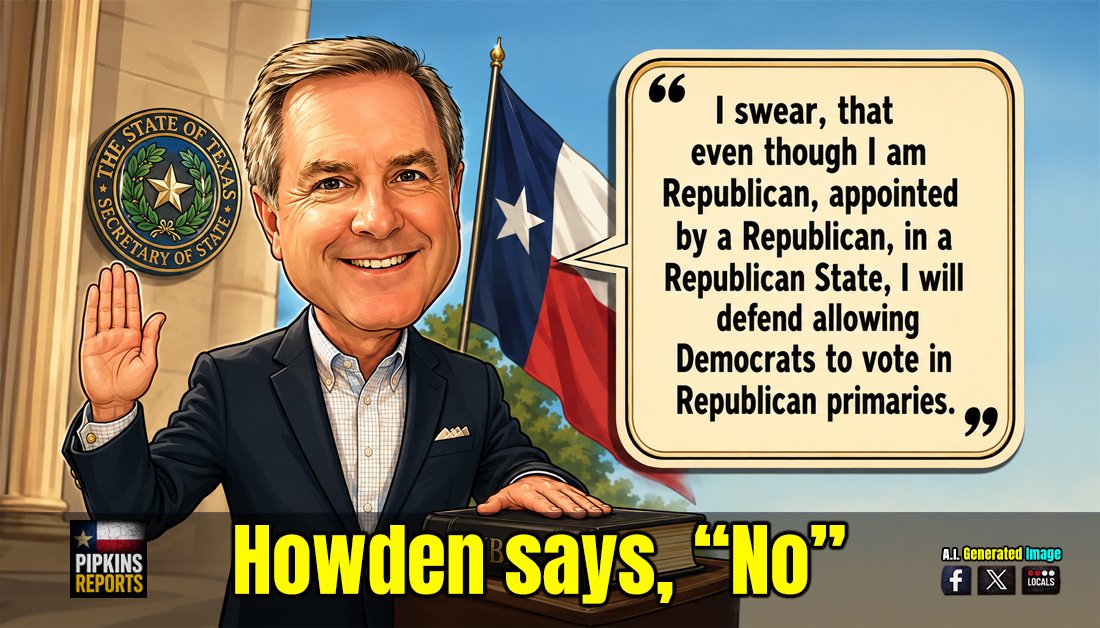
Austin, TX – Texas Republicans spent years demanding control of their own primary. Now they have a new Secretary of State, Robert S. Howden, appointed by Republican Governor Greg Abbott, and the man taking over the state’s election machinery is inheriting a lawsuit in which his office is expected to defend the very open primary system the GOP wants to dismantle.
The Republican Party of Texas filed the federal lawsuit in September 2025, arguing that Texas’ open primary system violates the party’s First Amendment right of association. Under the current system, Texas voters do not register by party and may choose which party’s primary to vote in during an election cycle. The GOP wants only registered Republicans participating in Republican primaries.
The case is pending in federal court in Amarillo before U.S. District Judge Matthew Kacsmaryk.
And Robert S. Howden has now inherited it.
Howden Steps Into the Fight
Gov. Abbott appointed Howden as Texas’ 116th secretary of state on July 17, effective July 18. Howden previously served as Abbott’s senior adviser and director of legislative affairs and has worked in the administrations of four Republican governors. As secretary of state, he is Texas’ chief elections officer.
Abbott has been quite clear about where he stands.
At the 2026 Republican Party convention, he said Texas would eventually make clear that “only Republicans vote in Republican primaries.” Abbott has also said lawmakers “can and should be more responsive to Republicans than a judge may be,” indicating that he expects the Legislature to address the issue during the 2027 session.
But that doesn’t mean the Secretary of State’s office is supposed to simply surrender in court.
That was the position taken by Howden’s predecessor, Jane Nelson.
Nelson argued that changing Texas’ primary system was a job for the Legislature, not a federal judge. In an October 2025 statement, she said it was her responsibility to defend existing election laws and that she would implement whatever changes the Legislature lawfully enacted.
The Attorney General’s office took the opposite position.
Attorney General Ken Paxton sided with the Texas GOP, asking the federal court to strike down portions of the Texas Election Code governing open primaries. According to reporting by The Texas Tribune, Nelson’s lawyers said Paxton’s office gave them less than an hour’s notice before taking the opposing position.
So the Republican Party sued the Republican-controlled state government. The Republican Attorney General joined the plaintiffs. And the Republican Secretary of State fought the lawsuit.
That’s not exactly the tidy party unity politicians like to advertise.
The Real Fight Is Over Who Controls the Nomination
The GOP argues that crossover voting allows Democrats and independents to influence Republican nominations, potentially helping candidates who are less conservative than the party base.
The lawsuit specifically pointed to the 2024 Republican primaries involving former House Speaker Dade Phelan and Rep. Gary VanDeaver. Both won their races by fewer than 800 votes, and the party argued that crossover voters helped determine the outcomes.
The party has already made closing primaries an official priority. Republicans adopted rules supporting closed primaries in 2024 and renewed that push at their 2026 convention.
But changing the system is not as simple as flipping a switch.
Texas has more than 18 million registered voters, and the state’s registration system was never designed around party registration. Moving to closed primaries could require new registration procedures, computer-system changes and a method for existing voters to establish party affiliation.
The GOP wants the courts to clear the way, preferably in time for 2028.
Art & Culture
McKinney Approves Controversial Islamic Center After Marathon Meeting That Exposed Deep Divisions
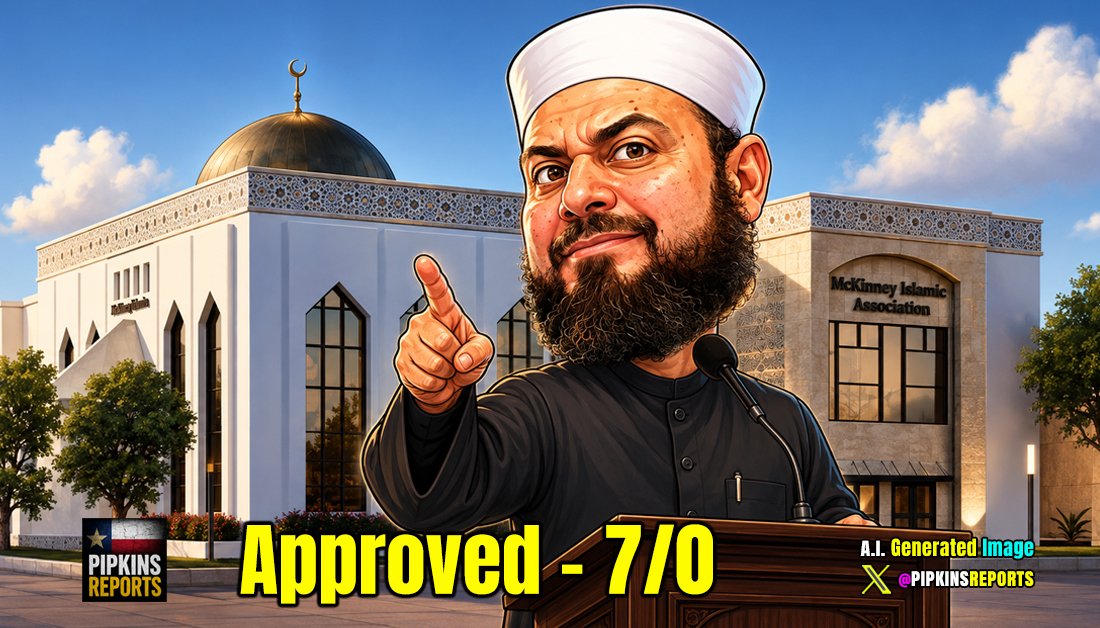
McKinney, TX – After nearly six hours of emotional testimony, shouted applause, boos, and police intervention, the McKinney City Council unanimously approved plans Tuesday night for a new Islamic center, closing another chapter in a debate that has simmered in Collin County for years. The vote may have been unanimous, but it certainly wasn’t uncontroversial.
Just before 11:30 p.m. on August 4, the council voted 7-0 to approve the site plan for the McKinney Islamic Association‘s proposed campus on roughly 5.5 acres at Virginia Parkway and Crutcher Crossing. City officials repeatedly emphasized that the decision before them was not whether Islam should have a place of worship in McKinney, but whether the submitted site plan complied with existing city ordinances and development standards. According to council members, the property’s current planned development zoning already permits religious assembly, leaving the city with little legal discretion to deny an otherwise compliant application.
The approved project includes a roughly 15,000-square-foot sanctuary, a classroom building of approximately 10,000 square feet, a 7,000-square-foot multi-purpose gymnasium, parking, and related site improvements. The McKinney Islamic Association says its current facility, where it has served the community for decades, can no longer accommodate its growing congregation.
The meeting itself became the story.
More than 150 people registered to speak, forcing city officials to delay the start of the regular meeting while names were entered into the system. Supporters and opponents packed the council chambers, overflow rooms, and hallways, creating an atmosphere that multiple local news outlets described as tense and, at times, hostile.
Opponents raised a mix of concerns.
Some focused squarely on practical issues, including increased traffic, parking shortages, neighborhood compatibility, and whether a campus serving large numbers of worshippers could comfortably fit on the site. Others voiced broader objections rooted in concerns about Islamic doctrine, Sharia law, and the changing cultural landscape of North Texas. Congressman Keith Self, whose district includes McKinney, spoke against the proposal before public testimony began, warning of dangers he associates with extremist interpretations of Islam.
Supporters argued that the project involved a long-established congregation simply seeking room to grow. They pointed to constitutional protections for religious liberty and rejected accusations directed toward the association as prejudice against Muslim residents. Veterans, longtime community members, and faith leaders urged the council to evaluate the application based on municipal law rather than religious disagreement.
Former McKinney Mayor George Fuller received one of the night’s harshest public receptions after speaking in support of the project. He was booed by portions of the crowd, and according to WFAA, police escorted him from the building after a woman reportedly shoved a sign reading “Don’t Sharia My Texas” into his shirt while he exited the meeting.
Despite the emotional testimony, council members repeatedly returned to the same legal conclusion, the site plan either met the city’s development requirements or it did not. Planning and Zoning had already recommended approval in July, and council members indicated denying a compliant application would almost certainly expose the city to litigation it was unlikely to win. Previous proposals involving substantially larger facilities required rezoning and were rejected, but the revised plan fits within the property’s existing zoning framework.
The approval does not authorize immediate construction. The project must still complete platting requirements, undergo a traffic study, and obtain building permits before construction can begin.
Below is the list of the current city council that voted 7/0 to approve the project.
| Member Name | Title | |
|---|---|---|
| Bill Cox | Mayor | |
| Rick Franklin | Mayor Pro Tem – District 4 | |
| Justin Beller | Council Member – District 1 | |
| Patrick Cloutier | Council Member – District 2 | |
| Geré Feltus | Council Member – District 3 | |
| Ernest Lynch | Council Member – At Large 1 | |
| Michael Jones | Council Member – At Large 2 |
Austin
‘The Taxpayer’s Comptroller’: Don Huffines Sworn In, Refuses Salary and Pledges to Slash Waste

Austin, TX — Don Huffines officially took the oath of office Saturday as Texas Comptroller, beginning his tenure as the state’s chief financial officer with a series of promises aimed squarely at fiscal conservatives: refuse a taxpayer-funded salary, root out government waste, pursue additional property tax relief, and faithfully administer Texas’ new school choice program.
Huffines was sworn into office after being appointed by Gov. Greg Abbott to fill the vacancy created by the resignation of former Comptroller Kelly Hancock. As Comptroller, Huffines will oversee the state’s accounting systems, tax collections, revenue estimates, and fiscal management while serving as one of Texas’ highest-ranking statewide officials.
The ceremony marks the beginning of Huffines’ service as comptroller ahead of the November general election, where he will appear on the ballot seeking a full term against Democratic nominee and State Sen. Sarah Eckhardt. Entering the race as the incumbent provides Huffines with both the visibility and responsibilities that come with holding statewide office.
Refusing a Taxpayer-Funded Salary
One of Huffines’ first announcements after taking office was that he will not accept the Comptroller’s salary.
The decision mirrors his previous service in the Texas Senate, where he also declined compensation, arguing that public office should be about serving Texans rather than collecting a government paycheck.
“I will not accept a salary,” Huffines said, emphasizing his belief that elected officials should demonstrate fiscal restraint beginning with themselves.
While the Comptroller’s salary represents only a tiny fraction of the state’s overall budget, the move is intended to reinforce Huffines’ message that government leaders should model the same financial discipline they expect from taxpayers.
Property Tax Relief Remains Top Priority
Huffines also made clear that reducing Texans’ property tax burden will be one of his central objectives.
Although the Comptroller does not directly set property tax rates, the office plays a significant role in state finances and revenue forecasting. Huffines said he intends to use the position to encourage local governments to reduce property taxes instead of expanding spending as state sales tax revenues continue to grow.
Property taxes have become one of the most contentious issues in Texas politics in recent years. Despite multiple rounds of tax relief approved by the Legislature, many homeowners have continued to see rising tax bills due to increasing property values and local government spending.
Huffines has long advocated for more aggressive property tax reductions and used his swearing-in ceremony to reaffirm that commitment.
Promising a More Aggressive Watchdog
Beyond taxes, Huffines pledged to aggressively identify wasteful government spending.
He said the Comptroller’s office should function as a watchdog over taxpayer dollars, focusing on eliminating waste, fraud, abuse, and unnecessary expenditures throughout state government.
The comments are consistent with Huffines’ long-standing reputation as one of the Legislature’s more fiscally conservative voices and suggest he intends to bring a more activist approach to the Comptroller’s office than simply managing the state’s books.
As the state’s chief financial officer, the Comptroller prepares revenue estimates that guide legislative budgeting and oversees billions of dollars in state finances, giving the office substantial influence over fiscal policy even without direct legislative authority.
School Choice Program Now Under His Oversight
Huffines also assumes responsibility for overseeing the financial administration of Texas’ new Education Freedom Account program, one of Gov. Abbott’s signature legislative accomplishments.
The program allows qualifying families to use state funds for approved educational expenses outside the traditional public school system. Because the Comptroller’s office is responsible for administering the program’s financial operations, Huffines will immediately play a central role in ensuring the initiative functions as intended.
Supporters view the program as expanding educational opportunities and parental choice, while critics have questioned its impact on public education funding. Regardless of the political debate, the Comptroller’s office will be responsible for ensuring taxpayer dollars are properly managed and accounted for.
Abbott Praises Huffines’ Private-Sector Experience
Gov. Greg Abbott praised Huffines during the transition, pointing to his business background and commitment to conservative fiscal principles.
Abbott has said Huffines’ experience in the private sector makes him well suited to oversee the state’s finances and continue Texas’ reputation for responsible fiscal management.
Huffines built his career in real estate development before entering public service and previously represented portions of Dallas County in the Texas Senate.
Looking Toward November
Although Huffines is now serving as Comptroller, Texas voters will still decide in November who will hold the office for the coming term.
His appointment gives Republicans an incumbent candidate heading into the election while allowing Huffines to begin implementing his priorities immediately rather than waiting until after Election Day.
His opening message leaves little doubt about the direction he intends to take the office: emphasizing smaller government, increased accountability, reduced spending, and continued efforts to lower the tax burden on Texans.
Whether those priorities translate into measurable policy changes will become clearer in the months ahead, but Huffines began his tenure with a clear signal to taxpayers that he intends to make fiscal conservatism the defining theme of his administration.
You must be logged in to post a comment Login