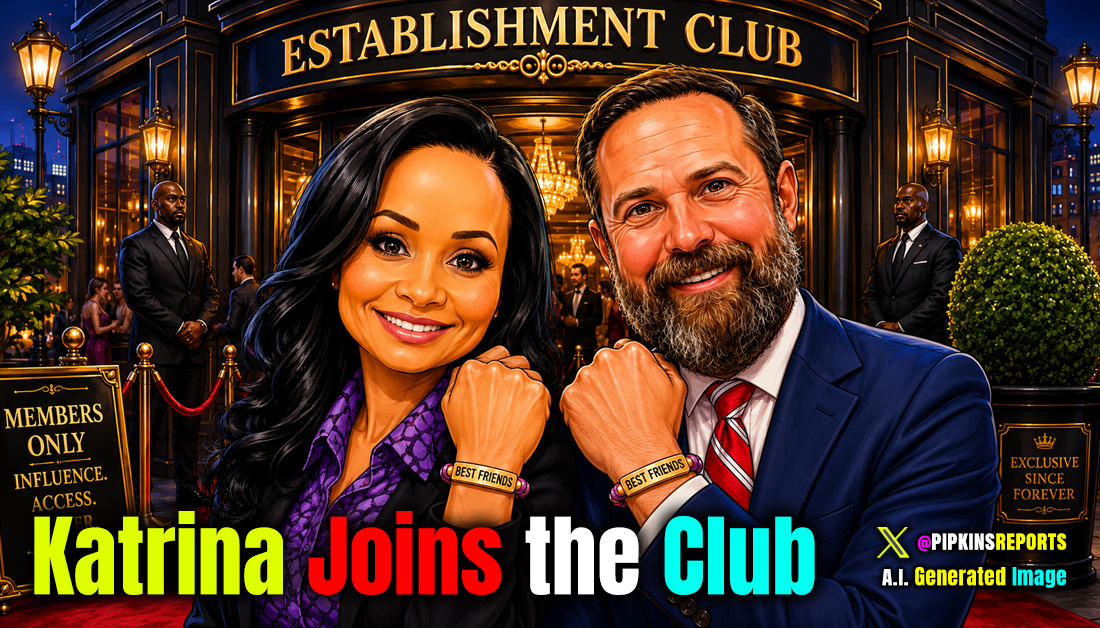
Top 10 Reasons Why Conservatives are SHOCKED to See Dustin Burrows Campaigning for Katrina Pierson
OPINION
Rockwall, TX – For years, Katrina Pierson carefully cultivated an image as a fiery grassroots conservative willing to battle the Republican establishment. From cable news appearances to campaign stages, Pierson positioned herself as a voice for the forgotten conservative voter — the kind of activist who would stand shoulder-to-shoulder with ordinary Texans against the Austin political machine. That is precisely why many grassroots conservatives are now stunned to see her openly embracing one of the most controversial establishment figures in the Texas House: Speaker Dustin Burrows.
Burrows has become a lightning rod inside Republican politics, criticized by conservatives for his role in the Dennis Bonnen scandal, his alliance with the House establishment wing, his reliance on Democrat support in the Speaker’s race, and his ongoing battles with the grassroots movement. To many activists, Burrows represents the very culture of insider deal-making and power preservation that the MAGA movement was built to oppose. Yet despite that record, Pierson has welcomed his support and appears increasingly comfortable standing alongside the Austin insider crowd many conservatives believed she once opposed.
Politics often changes people. Some enter public life promising reform, only to discover that proximity to power can be intoxicating. Critics now argue that Pierson’s alliance with Burrows signals more than simple political strategy — they see it as a symbol of a broader surrender by figures who once claimed to fight for the grassroots. Whether voters view her partnership with Burrows as pragmatic coalition-building or outright political betrayal may ultimately define how conservatives remember Katrina Pierson’s next chapter.
1. The Dennis Bonnen “Target List” Scandal (2019)
This remains the defining controversy of Burrows’ career.
Burrows attended a secretly recorded meeting with then-House Speaker Dennis Bonnen and conservative activist Michael Quinn Sullivan of Empower Texans. According to the recording, Bonnen and Burrows discussed providing House media credentials and identifying Republican lawmakers for possible primary challenges.
The fallout was explosive:
- Bonnen eventually announced he would not seek another term as speaker.
- Burrows resigned as chairman of the House Republican Caucus.
- Conservatives accused Burrows of participating in an insider political purge operation.
Although investigators later concluded no criminal laws were broken, the episode permanently damaged Burrows’ reputation among many grassroots conservatives.
2. Allegations of Targeting Conservative Republicans
The same 2019 recording fueled accusations that Burrows helped create a “hit list” of Republicans deemed insufficiently loyal to House leadership.
Critics argued the effort was designed to protect establishment Republicans and punish insurgent conservatives aligned with groups like Empower Texans and the Texas Freedom Caucus.
For many on the right, this controversy established Burrows as part of the House power structure that routinely fought conservative activists.
3. Winning the Speakership With Democratic Support
Burrows’ election as Speaker in January 2025 became another major flashpoint.
He defeated Republican caucus-backed candidate David Cook largely because 49 Democrats joined 36 Republicans to elect him speaker.
Conservative Republicans and activists accused Burrows of:
- Violating the spirit of Republican caucus unity,
- Empowering Democrats,
- Continuing the “coalition House” model long criticized by the grassroots.
Lt. Gov. Dan Patrick publicly blasted the effort, calling it effectively a “coup d’état” against the GOP caucus process.
4. Association With the “Establishment Wing” of the GOP
Burrows became closely associated with former Speaker Dade Phelan and the institutional leadership faction of the House.
After the impeachment of Attorney General Ken Paxton, tensions inside the Republican Party intensified dramatically. Burrows was viewed by many conservatives as aligned with the anti-Paxton House leadership faction.
Though Burrows was not the central architect of the impeachment proceedings, his close alliance with Phelan politically tied him to that conflict.
5. The “Death Star Bill” (HB 2127)
Burrows authored House Bill 2127, nicknamed by critics the “Death Star Bill.”
The legislation sharply restricted the ability of Texas cities and counties to create local regulations exceeding state law in areas such as:
- labor rules,
- environmental regulations,
- agriculture,
- business operations.
Supporters called it necessary to stop a patchwork of local regulations harming businesses.
Opponents argued:
- it stripped local control,
- undermined home-rule cities,
- centralized power in Austin.
The bill triggered multiple lawsuits and became one of the most litigated Texas laws in recent years.
6. Accusations of Working Too Closely With Democrats
Even after becoming speaker, Burrows faced persistent criticism from the Republican right for preserving Democratic influence in the House.
Although committee chairmanships eventually remained Republican-only, Democrats retained vice-chair roles and influence in committee operations.
Conservative critics argued:
- Republicans should fully control the chamber,
- Democrats should not hold institutional leverage,
- Burrows was perpetuating bipartisan governance models that diluted conservative priorities.
This issue became central to Republican grassroots anger against House leadership generally.
7. Republican Censure Threats
Following the speaker race, some Republicans pushed to censure Burrows and allied lawmakers under Texas GOP Rule 44.
The rule theoretically allows censured Republicans to be denied ballot access in GOP primaries.
Burrows and his allies argued the rule violated free association rights and punished lawmakers for independent votes.
The controversy exposed a widening civil war within the Texas Republican Party between:
- institutional conservatives,
- populist conservatives,
- activist grassroots factions.
8. Allegations of Political Surveillance During Speaker Race
During the heated 2024 speaker contest, reports surfaced alleging allies connected to Burrows engaged in monitoring Democratic caucus activity.
Texas Scorecard published allegations involving political intelligence gathering tied to former Speaker Bonnen on Burrows’ behalf. The accusations intensified distrust during the already bitter speaker fight.
No criminal findings emerged publicly from those allegations, but they further fueled perceptions of insider political maneuvering around Burrows.
9. Handling of Attempts to Remove Him as Speaker
In 2025, Rep. Brian Harrison attempted to initiate proceedings to remove Burrows as speaker.
Harrison accused Burrows of:
- empowering Democrats,
- blocking conservative priorities,
- manipulating House procedures.
Burrows refused to recognize the initial motion on procedural grounds, which critics described as protecting leadership through parliamentary control.
The House later overwhelmingly shut down the removal effort.
10. Enforcement Actions During Democrat Quorum Break
During the 2025 special session over congressional redistricting, House Democrats fled Texas to deny quorum. Burrows authorized “call of the House” enforcement measures and arrest warrants compelling absent lawmakers to return.
Supporters argued:
- he was enforcing constitutional legislative duties,
- Democrats were obstructing lawful governance.
Critics said:
- the enforcement measures were excessive,
- legislators were effectively treated like fugitives,
- the House atmosphere became increasingly authoritarian.
The incident drew national attention and deepened partisan tensions.
Broader Political Significance
Burrows’ controversies are not merely personal scandals; they reflect the larger ideological war inside Texas Republican politics.
He sits at the intersection of:
- establishment conservatism,
- business-oriented Republican governance,
- institutional House traditions,
- and insurgent populist conservatism aligned with grassroots activists and figures like Paxton.
To supporters, Burrows is an effective operator who can actually pass legislation.
To critics, he symbolizes the Austin political machine conservatives have spent years trying to dismantle.
True MAGA representatives should run far away from establishment RINOs like Dustin Burrows. Katrina Pierson should know better … unless, she is not the person we thought she was.
Election
The MAGA Reckoning: Cornyn Falls as Republican Voters Finish Off the Old Guard
The ballroom lights may still be glowing for the Republican establishment, but the music has stopped, the chairs are gone, and voters aligned with the MAGA movement are now sweeping the old guard out the door. What once looked like a political faction inside the Republican Party has become the dominant force driving the GOP in 2026, leaving longtime incumbents and establishment power brokers politically stranded.
The biggest political casualty yet came Tuesday night when longtime Texas Senator John Cornyn was defeated in a bruising Republican primary by a MAGA backed challenger, Ken Paxton, who successfully tied Cornyn to what many conservative voters now openly call the “Republican ruling class.” For years, Cornyn occupied one of the safest positions in Texas politics, operating as a reliable establishment conservative with deep ties to Washington leadership circles. But this election cycle proved something many political insiders resisted admitting, Republican primary voters no longer care much about seniority, committee assignments, or institutional relationships.
They want fighters.
Cornyn’s defeat follows a string of losses and exits that together paint a picture of a Republican Party undergoing a major internal realignment. Among the most notable defeats were Thomas Massie, Bill Cassidy, Dan Crenshaw, and Chip Roy, each losing to Republican challengers who campaigned heavily on alignment with President Donald Trump and the broader America First agenda. While each race carried its own local dynamics, the common thread was unmistakable, Republican primary voters increasingly view compromise minded Republicans as obstacles rather than allies.
Several other major Republican figures did not even attempt to survive the shifting political landscape. Former Senate Republican leader Mitch McConnell retired after decades as one of the most powerful figures in Washington. Rep. Marjorie Taylor Greene unexpectedly resigned from Congress, creating shockwaves inside conservative media circles and among grassroots activists. Meanwhile, a growing list of Republicans announced retirements from public office altogether, including Troy Nehls, Jodey Arrington, Michael McCaul, Morgan Luttrell, and Don Bacon. Some cited family considerations or changing priorities, though political observers noted the increasingly hostile climate facing establishment Republicans in GOP primaries.
Trump’s endorsement power clearly played a major role in several races. Political analysts across multiple outlets, including reports from Fox News and The Hill, have repeatedly pointed to the former president’s influence over Republican primary voters. But many grassroots conservatives insist the story runs deeper than Trump himself. Conversations at rallies, county GOP meetings, and conservative events across Texas suggest frustration has been building for years among voters who believe Republican lawmakers repeatedly campaigned as conservatives while governing as caretakers of the Washington status quo.
In Texas especially, immigration and border security remained defining issues. Several victorious MAGA aligned challengers accused incumbent Republicans of talking tough on the border while failing to deliver meaningful enforcement. Others focused on spending, foreign aid packages, censorship concerns, and what they described as a growing disconnect between Republican voters and Republican leadership in Washington. The message resonated strongly with grassroots activists who increasingly view political moderation as surrender.
Critics of the MAGA movement argue the party risks purging experienced lawmakers in favor of personalities and ideological purity tests. Some establishment Republicans privately warned that constant internal warfare could weaken the GOP ahead of the general election. Others expressed concern that governing becomes harder when compromise itself is treated as betrayal. Several Republican strategists speaking anonymously to national media outlets described the current environment as “politically unforgiving” for incumbents who fall out of favor with conservative activists.
Still, the election results are difficult to dismiss as isolated incidents. The scale of turnover suggests something larger is happening inside the Republican electorate. Voters who once tolerated establishment Republicans as the practical alternative to Democrats now appear increasingly unwilling to support candidates they view as disconnected from the populist energy reshaping the party.
Opinion and analysis sections of conservative media have gone even further. Many commentators argue the Republican base has simply grown tired of lawmakers who campaign on stopping the Left but then, once elected, become absorbed into Washington’s culture of negotiation and managed decline. In that view, the 2026 primary season was not merely about loyalty to Trump. It was about Republican voters attempting to reclaim ownership of their own party.
Whether one sees the MAGA movement as a political correction or a political purge likely depends on where they stand ideologically. But one reality is now unavoidable. The Republican establishment that dominated the Bush era and lingered through much of the Obama and Biden years is collapsing under pressure from its own voters.
And in Texas, where John Cornyn once seemed untouchable, the message from Republican primary voters could not be clearer. The old guard had its chance. The base wants something different now.
Council
Ethics Probe Into Former Fate Council Members Moves Forward
Fate, TX – The political aftershocks from Fate’s bruising recall election are still rattling City Hall, even after two council members were shown the door. A formal ethics complaint was filed on the very last day former council members Codi Chinn and Mark Harper held office, and has escalated into an official city investigation.
During the May 18, 2026 executive session, the Fate City Council met behind closed doors to discuss two ethics complaints filed by Darcy Gildon, the Rockwall County Precinct 4 Chair and a known participant in the recall effort against Chinn. According to the posted agenda, the complaints involved Chinn and Harper, and were discussed in Executive Session with legal counsel.
After returning to open session, council members voted on two matters tied to the complaints. First, the council voted to establish jurisdiction over both ethics complaints, effectively allowing the process to move forward. Second, the council approved an extension of the original June 1 deadline for an initial determination, directing that a final report be received by July 6, 2026. The outside law firm Messer & Fort was identified as the investigating party.
On May 14, four days before the executive session, Chinn publicly posted portions of the complaint against her on Facebook. In the post, she wrote:
“I was transparent while in office and I don’t plan to change anything now that I’m not in office any longer.”
The complaint itself alleges Chinn violated the Fate City Charter and Code of Ethics by directly engaging with city employees, directing them to document complaints, organizing those complaints, and preparing to present them to council outside the authority of the city manager or a formal council vote. This is presumably all in association with the complaints and dismissal of DPS Chief Lyle Lombard.

According to the complaint posted by Chinn, she allegedly instructed employees to “write it all down, put it on a timeline,” later describing [her] plans to organize statements in a chronological way. Stating, “I’m going to have organized everything… put it together like in a chronological way… what everybody has said… kind of like mixed together, not just one person’s statement.” She went on to say, “I don’t want to just show y’all what the statements are… I need to have it presented in a way that protects their identity.” Shortly thereafter, an “anonymous” letter was sent to Chinn, she claims, that made accusations against Lombard.
The ethics complaint argues that those actions may have crossed the line from legislative oversight into unauthorized administrative or investigatory conduct.
The complaint cites Charter Section 3.09(5), which states council members shall interact with city staff solely through the city manager and shall not give orders to employees privately or publicly. It also references Charter Section 3.05(11), concerning council authority to investigate official conduct only after a formal council vote, and Code of Ethics Section 2-309(10), which bars officials from appearing to exercise administrative authority.
Chinn’s public release of the complaint has created another layer of controversy.
Although she had technically already been removed from office at the time of her Facebook post, there remains a serious legal and ethical question over whether confidential executive session-related materials or discussions remain protected after a member leaves office. Texas law generally imposes confidentiality obligations regarding certain executive session matters, but the boundaries become less clear when an official is no longer serving.
The city has not publicly accused Chinn of violating confidentiality laws, nor has any formal allegation regarding disclosure been announced.
The complaint against former Councilman Mark Harper was also discussed in executive session Monday night, though details surrounding that filing have not yet been publicly released in full. However, sources familiar with the matter say the complaint against him may also relate to his involvement in the dismissal of Lombard. Harper was accused by City Manager Michael Kovacs, of threatening to fire him, if he didn’t fire the Chief.
Former Councilman Mark Harper could not be reached for comment prior to publication. Darcy Gildon also could not be reached for comment.
The investigation now moves into the hands of Messer & Fort, an outside legal firm retained to conduct the review. The firm is expected to provide findings to the city council by July 6.
For many residents, the dispute has become less about technical charter language and more about the increasingly bitter political divide that has overtaken local government in Fate. Supporters of the recall effort argue ethics enforcement is necessary to restore trust and proper governance. They seek to remind citizens that the root of all this controversy lies with Chinn, and her actions regarding the dismissal of Chief Lombard. Critics, meanwhile, view the complaints as the latest phase in a long-running political purge aimed at silencing dissenting voices.
Election
MAGA Base Gets Its Champion as Trump Endorses Ken Paxton
Texas — When Donald Trump finally weighed in on the Texas Republican Senate runoff, the political class expected the usual outcome. They assumed Trump would follow the whispers of Washington consultants, donor networks, and the familiar chorus of establishment Republicans who have spent years defending John Cornyn.
Instead, Trump did something that stunned the insiders. He listened to the base.
In a move that has electrified grassroots conservatives across the Lone Star State, Trump endorsed Ken Paxton in the Republican Senate runoff, sending a clear signal that the America First movement in Texas will not be dictated by the same political machinery that has dominated the GOP for decades.
In a post on Truth Social this afternoon, President Trump posted, “…Therefore, Ken Paxton has my Complete and Total Endorsement to be the next United States Senator from the Great State of Texas – KEN PAXTON WILL NEVER LET YOU DOWN!”
For many Texans, the endorsement felt less like a routine political decision and more like a long awaited course correction.
Because the first round of the primary already exposed something the establishment tried desperately to ignore. Despite spending roughly sixteen times more money than Paxton, Cornyn barely managed to limp into the runoff with a narrow lead. Federal Election Commission filings showed Cornyn’s campaign spending roughly $78 per vote, compared to Paxton’s lean $5 per vote.
Those numbers revealed the reality behind the race. Cornyn’s support was built on money and institutional backing, while Paxton’s momentum came from something far harder to manufacture, genuine enthusiasm among Republican voters.
For weeks, political insiders predicted Trump would side with the establishment. The pressure campaign was intense. Longtime Republican figures including Tom DeLay, Bill Flores, Pete Olson, Rick Perry, Mac Thornberry, and Lamar Smith all lined up behind Cornyn.
In Washington circles, the assumption was simple. Trump would eventually fall in line with the familiar power structure that has dominated Texas Republican politics for years.
Instead, he did the opposite.
By endorsing Paxton, Trump effectively sided with the voters rather than the gatekeepers who have long attempted to manage the party from the top down. For grassroots conservatives, the decision carried enormous symbolic weight.
Paxton has spent much of the past decade building a reputation as one of the most aggressive legal challengers to federal overreach in the country. As Texas attorney general, he repeatedly filed lawsuits against federal policies involving immigration enforcement, regulatory authority, and executive power.
Those confrontations made Paxton a hero among many conservative voters who view the courts as one of the few arenas where states can resist federal expansion.
Cornyn’s long Senate career has been defined by the kind of dealmaking that Washington celebrates but grassroots conservatives increasingly distrust. Critics often point to his central role negotiating federal gun legislation following the Robb Elementary School shooting, legislation that included incentives for states to adopt red flag style firearm restrictions.
Immigration policy has also been a dividing line. Many activists argue Cornyn failed to aggressively support border wall construction during key congressional negotiations, a point that has become politically radioactive in a state dealing with record levels of illegal crossings.
Those policy disputes created a widening gap between Cornyn and the Republican base.
Trump’s endorsement of Paxton suggests the former president recognized that gap and chose to stand with the movement that propelled him into the White House in the first place.
The most remarkable part of Trump’s endorsement may not be who he backed. It is that he refused to follow the predictable path the political establishment expected.
By endorsing Paxton, he effectively told the establishment something it rarely hears in Washington. “Go #### Yourself!” The grassroots movement that reshaped the Republican Party is still very much in charge.
For many Texans, the decision confirmed something they have long believed about Trump. Despite relentless pressure from consultants and insiders, he remains uniquely attuned to the energy of the voters who built the America First movement.
And in Texas, that movement clearly chose its champion.
If the runoff becomes a referendum on whether Republican voters want an establishment senator or a combative defender of the MAGA agenda, Trump’s endorsement leaves little doubt where the momentum lies.
The political class may be surprised. The grassroots are not.
You must be logged in to post a comment Login