


OPINION
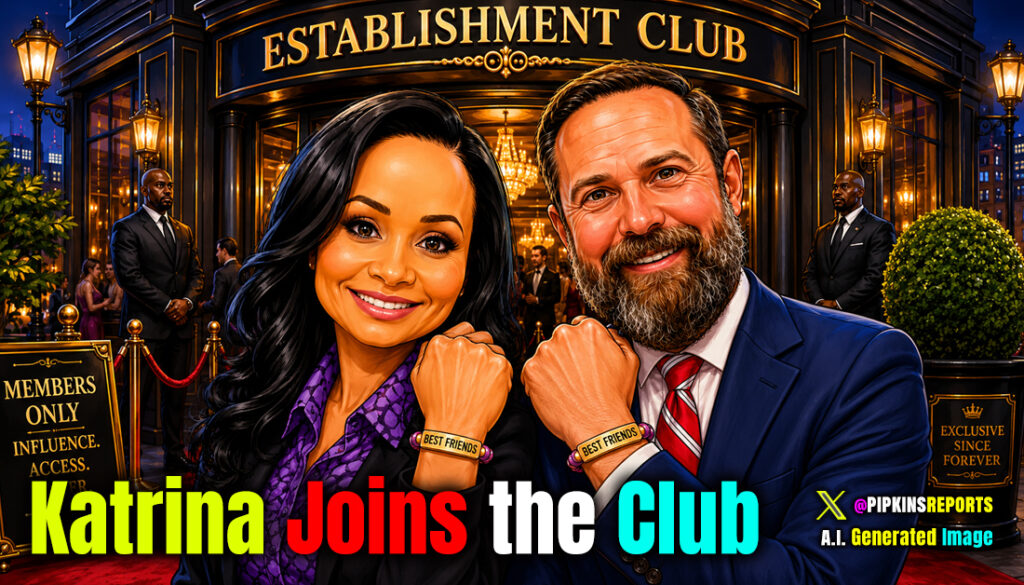
Rockwall, TX – For years, Katrina Pierson carefully cultivated an image as a fiery grassroots conservative willing to battle the Republican establishment. From cable news appearances to campaign stages, Pierson positioned herself as a voice for the forgotten conservative voter — the kind of activist who would stand shoulder-to-shoulder with ordinary Texans against the Austin political machine. That is precisely why many grassroots conservatives are now stunned to see her openly embracing one of the most controversial establishment figures in the Texas House: Speaker Dustin Burrows.
Burrows has become a lightning rod inside Republican politics, criticized by conservatives for his role in the Dennis Bonnen scandal, his alliance with the House establishment wing, his reliance on Democrat support in the Speaker’s race, and his ongoing battles with the grassroots movement. To many activists, Burrows represents the very culture of insider deal-making and power preservation that the MAGA movement was built to oppose. Yet despite that record, Pierson has welcomed his support and appears increasingly comfortable standing alongside the Austin insider crowd many conservatives believed she once opposed.
Politics often changes people. Some enter public life promising reform, only to discover that proximity to power can be intoxicating. Critics now argue that Pierson’s alliance with Burrows signals more than simple political strategy — they see it as a symbol of a broader surrender by figures who once claimed to fight for the grassroots. Whether voters view her partnership with Burrows as pragmatic coalition-building or outright political betrayal may ultimately define how conservatives remember Katrina Pierson’s next chapter.
1. The Dennis Bonnen “Target List” Scandal (2019)
This remains the defining controversy of Burrows’ career.
Burrows attended a secretly recorded meeting with then-House Speaker Dennis Bonnen and conservative activist Michael Quinn Sullivan of Empower Texans. According to the recording, Bonnen and Burrows discussed providing House media credentials and identifying Republican lawmakers for possible primary challenges.
The fallout was explosive:
- Bonnen eventually announced he would not seek another term as speaker.
- Burrows resigned as chairman of the House Republican Caucus.
- Conservatives accused Burrows of participating in an insider political purge operation.
Although investigators later concluded no criminal laws were broken, the episode permanently damaged Burrows’ reputation among many grassroots conservatives.
2. Allegations of Targeting Conservative Republicans
The same 2019 recording fueled accusations that Burrows helped create a “hit list” of Republicans deemed insufficiently loyal to House leadership.
Critics argued the effort was designed to protect establishment Republicans and punish insurgent conservatives aligned with groups like Empower Texans and the Texas Freedom Caucus.
For many on the right, this controversy established Burrows as part of the House power structure that routinely fought conservative activists.
3. Winning the Speakership With Democratic Support
Burrows’ election as Speaker in January 2025 became another major flashpoint.
He defeated Republican caucus-backed candidate David Cook largely because 49 Democrats joined 36 Republicans to elect him speaker.
Conservative Republicans and activists accused Burrows of:
- Violating the spirit of Republican caucus unity,
- Empowering Democrats,
- Continuing the “coalition House” model long criticized by the grassroots.
Lt. Gov. Dan Patrick publicly blasted the effort, calling it effectively a “coup d’état” against the GOP caucus process.
4. Association With the “Establishment Wing” of the GOP
Burrows became closely associated with former Speaker Dade Phelan and the institutional leadership faction of the House.
After the impeachment of Attorney General Ken Paxton, tensions inside the Republican Party intensified dramatically. Burrows was viewed by many conservatives as aligned with the anti-Paxton House leadership faction.
Though Burrows was not the central architect of the impeachment proceedings, his close alliance with Phelan politically tied him to that conflict.
5. The “Death Star Bill” (HB 2127)
Burrows authored House Bill 2127, nicknamed by critics the “Death Star Bill.”
The legislation sharply restricted the ability of Texas cities and counties to create local regulations exceeding state law in areas such as:
- labor rules,
- environmental regulations,
- agriculture,
- business operations.
Supporters called it necessary to stop a patchwork of local regulations harming businesses.
Opponents argued:
- it stripped local control,
- undermined home-rule cities,
- centralized power in Austin.
The bill triggered multiple lawsuits and became one of the most litigated Texas laws in recent years.
6. Accusations of Working Too Closely With Democrats
Even after becoming speaker, Burrows faced persistent criticism from the Republican right for preserving Democratic influence in the House.
Although committee chairmanships eventually remained Republican-only, Democrats retained vice-chair roles and influence in committee operations.
Conservative critics argued:
- Republicans should fully control the chamber,
- Democrats should not hold institutional leverage,
- Burrows was perpetuating bipartisan governance models that diluted conservative priorities.
This issue became central to Republican grassroots anger against House leadership generally.
7. Republican Censure Threats
Following the speaker race, some Republicans pushed to censure Burrows and allied lawmakers under Texas GOP Rule 44.
The rule theoretically allows censured Republicans to be denied ballot access in GOP primaries.
Burrows and his allies argued the rule violated free association rights and punished lawmakers for independent votes.
The controversy exposed a widening civil war within the Texas Republican Party between:
- institutional conservatives,
- populist conservatives,
- activist grassroots factions.
8. Allegations of Political Surveillance During Speaker Race
During the heated 2024 speaker contest, reports surfaced alleging allies connected to Burrows engaged in monitoring Democratic caucus activity.
Texas Scorecard published allegations involving political intelligence gathering tied to former Speaker Bonnen on Burrows’ behalf. The accusations intensified distrust during the already bitter speaker fight.
No criminal findings emerged publicly from those allegations, but they further fueled perceptions of insider political maneuvering around Burrows.
9. Handling of Attempts to Remove Him as Speaker
In 2025, Rep. Brian Harrison attempted to initiate proceedings to remove Burrows as speaker.
Harrison accused Burrows of:
- empowering Democrats,
- blocking conservative priorities,
- manipulating House procedures.
Burrows refused to recognize the initial motion on procedural grounds, which critics described as protecting leadership through parliamentary control.
The House later overwhelmingly shut down the removal effort.
10. Enforcement Actions During Democrat Quorum Break
During the 2025 special session over congressional redistricting, House Democrats fled Texas to deny quorum. Burrows authorized “call of the House” enforcement measures and arrest warrants compelling absent lawmakers to return.
Supporters argued:
- he was enforcing constitutional legislative duties,
- Democrats were obstructing lawful governance.
Critics said:
- the enforcement measures were excessive,
- legislators were effectively treated like fugitives,
- the House atmosphere became increasingly authoritarian.
The incident drew national attention and deepened partisan tensions.
Broader Political Significance
Burrows’ controversies are not merely personal scandals; they reflect the larger ideological war inside Texas Republican politics.
He sits at the intersection of:
- establishment conservatism,
- business-oriented Republican governance,
- institutional House traditions,
- and insurgent populist conservatism aligned with grassroots activists and figures like Paxton.
To supporters, Burrows is an effective operator who can actually pass legislation.
To critics, he symbolizes the Austin political machine conservatives have spent years trying to dismantle.
True MAGA representatives should run far away from establishment RINOs like Dustin Burrows. Katrina Pierson should know better … unless, she is not the person we thought she was.