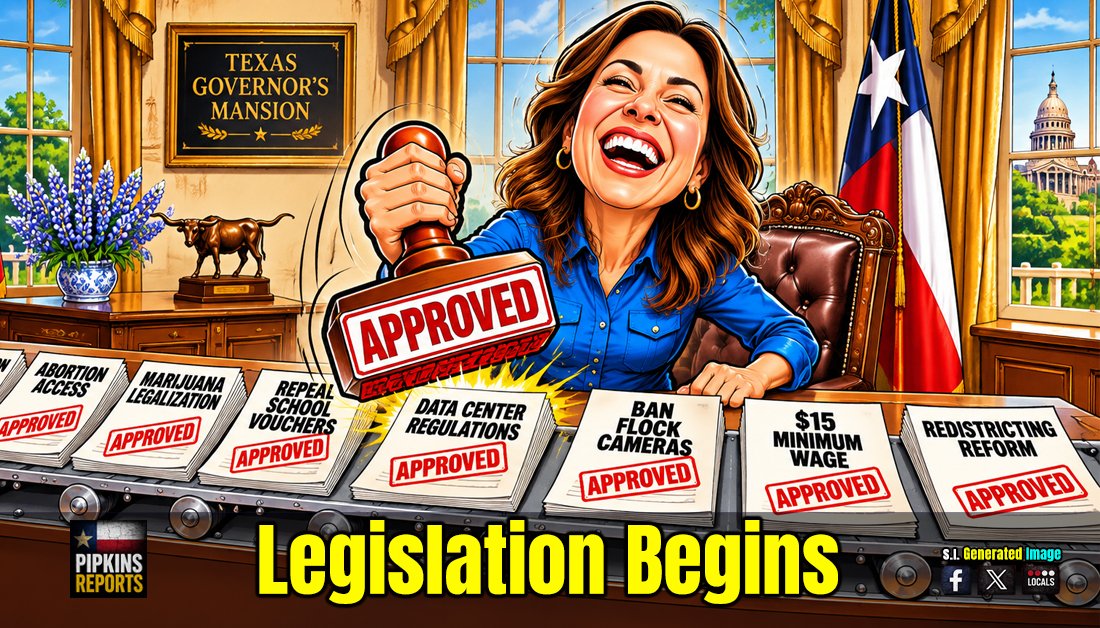
Texas Democrats Unveil Legislative Agenda for 2027

Bills Filed for the 90th Texas Legislature
Austin, TX – Texas Democrats have begun filing new, radical legislation for the upcoming 90th Legislative Session, advancing an agenda that would significantly change state policies involving immigration enforcement, abortion, public education, firearms, marijuana, election administration, energy development and taxation.
The first day of bill filing was November 9, 2026. Among the proposals are measures to increase the age to purchase firearms, repeal Texas’ school voucher program, legalize recreational marijuana, repeal the state’s abortion restrictions, prohibit certain law-enforcement uses of automated license plate readers, expand Medicaid and raise the minimum wage.
Important political context: Democrats now control the Texas House and will take control of the governor’s office and lieutenant governor’s office. Republicans, however, still retain a majority in the Texas Senate. Consequently, some of the more controversial proposals face a substantial legislative obstacle.
The following is a compilation of the major Democratic-sponsored proposals identified in the initial filing period. It is not a complete inventory of every bill filed by every Democratic legislator; additional bills are still being introduced.
1. Immigration enforcement and border security
These proposals seek to reverse or limit several immigration enforcement policies enacted under Republican leadership.
| Bill | Author | Summary |
|---|---|---|
| HB 123 | Trey Martinez Fischer (D) | Repeals the state requirement that certain county sheriffs participate in federal ICE 287(g) agreements. Allows sheriffs to terminate existing agreements and eliminates related state grants and enforcement actions. |
| SB 99 | José Menéndez (D) | Senate companion to HB 123. Repeals mandatory sheriff participation in ICE partnerships. |
| HB 111 | Eddie Morales Jr. (D) | Prohibits federal border-wall construction on state park property. |
| HB 410 | Eddie Morales Jr. (D) | Prohibits ICE agents and certain other law-enforcement officers from wearing face coverings while performing their duties. |
| HB 257 | Trey Martinez Fischer (D) | Requires a state audit of Operation Lone Star, the state’s border enforcement initiative. |
| HB 393 | Democratic sponsor reported | Requires immigrant detention facilities to obtain state licenses and undergo monthly inspections. |
| HB 392 | Democratic sponsor reported | Allows local governments to restrict employee cooperation with ICE in matters involving domestic violence shelters. |
| HB 424 | Claudia Ordaz (D) | Restricts sheriff’s offices participating in ICE agreements from targeting children for immigration enforcement at schools, hospitals, churches and other designated locations. |
| HB 818 | Vincent Perez (D) | Restricts state and local governments from entering into or renewing agreements to hold people in civil immigration detention and from using public resources to support those facilities. |
The principal issue here is the relationship between state and local law enforcement and federal immigration authorities.
HB 123 and SB 99 are particularly significant because they seek to undo a state mandate enacted in 2025. The Texas Tribune reported that 565 Texas partnerships existed under the federal 287(g) program as of November 4, 2026.
2. Abortion and reproductive health
Several Democratic proposals seek to repeal or substantially modify Texas abortion restrictions.
| Bill | Author | Summary |
|---|---|---|
| HB 126 | Donna Howard (D) | Broad repeal of Texas abortion restrictions, including the state’s abortion bans, related restrictions and the 2023 prohibition on certain gender-transition medical procedures for minors. |
| SB 231 | Carol Alvarado (D) | Creates exceptions to abortion restrictions for pregnancies resulting from sexual assault or incest. Does not require a police report, forensic evidence or prosecution. |
| SB 243 | Molly Cook (D) | Creates an abortion exception when physicians determine that a lethal fetal anomaly makes an abortion necessary. Establishes additional review requirements for pregnancies beyond 24 weeks. |
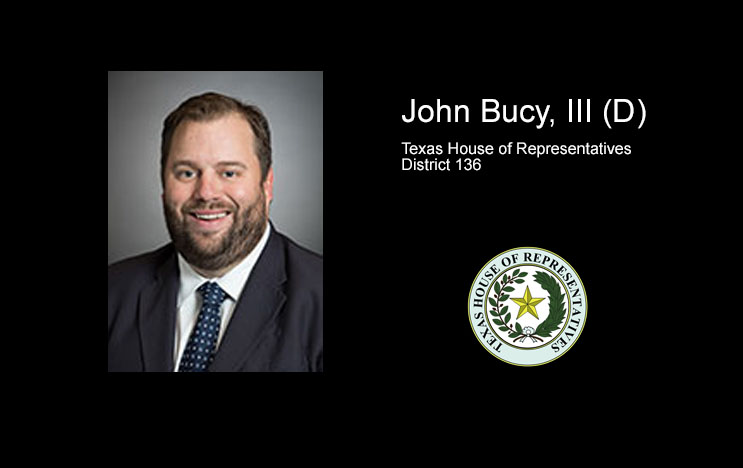
| HJR 24 | John Bucy (D) | Proposes a constitutional amendment establishing a right to reproductive autonomy. |
| HJR 68 | Samantha Lopez-Resendez (D) | Proposes a constitutional amendment prohibiting the Legislature from restricting abortion rights. |
HB 126 is the broadest proposal. It seeks to repeal multiple existing statutory restrictions rather than simply establish additional exceptions.
The legislation also reaches beyond abortion policy into Texas’ restrictions on gender-transition procedures for minors.
3. Marijuana legalization and cannabis regulation
Democrats have introduced several proposals to legalize recreational marijuana and expand medical cannabis eligibility.
| Bill | Author | Summary |
|---|---|---|
| HB 362 | John Bucy (D) | Texas Regulation of Cannabis Act. Legalizes recreational cannabis for adults 21 and older, establishes regulated sales, permits limited home cultivation and imposes taxes on cannabis sales. |
| HB 369 | Joe Moody (D) | Similar recreational marijuana legalization proposal, including possession limits, home cultivation and regulated commercial distribution. |
| SB 237 | Carol Alvarado (D) | Senate proposal to legalize recreational marijuana, allowing adults 21 and older to possess up to 2.5 ounces. Establishes a licensing system and allows counties to prohibit cannabis businesses. |
| HB 330 | Mihaela Plesa (D) | Expands eligibility for medical cannabis under Texas’ Compassionate Use Program to include certain conditions associated with menstrual pain. |
| HB 507 | John Bucy (D) | Addresses cannabinoid testing and cannabis-related employment policies for state and local government employees. |
| HB 667 | Joe Moody (D) | Reduces criminal penalties associated with marijuana concentrates. |
What the legalization proposals would mean:
The House proposals, HB 362 and HB 369, would establish a regulated commercial marijuana industry.
The reported provisions include:
- Legal possession of up to two ounces of marijuana.
- Possession of no more than 15 grams of concentrates.
- Home cultivation of up to 12 plants.
- Commercial cultivation, processing and retail distribution.
- A 20% retail cannabis tax.
- A 15% tax on producer-to-dispensary transactions.
- Distribution of tax revenue to public schools, veterans’ programs, drug treatment and local governments.
SB 237 takes a somewhat different approach, allowing up to 2.5 ounces and relying on licensing and application fees rather than the same excise-tax structure.
4. Public education and school choice
One of the most consequential Democratic initiatives is the effort to repeal Texas’ recently established school voucher program.
| Bill | Author | Summary |
|---|---|---|
| HB 164 | John Bucy (D) | Repeals the state’s Education Savings Account program, commonly called the school voucher program. |
| SB 106 | José Menéndez (D) | Senate companion to HB 164, repealing the Education Savings Account program. |
| HB 646 | Democratic sponsor | Repeals the Education Savings Account program. |
| HB 675 | Democratic sponsor | Repeals the Education Savings Account program. |
| HB 735 | Democratic sponsor | Repeals the Education Savings Account program. |
| HB 178 | Donna Howard (D) | Increases the public-school basic allotment from $6,215 to $7,500 per student and ties future increases to inflation. |
| HB 376 | John Bucy (D) | Changes public-school funding calculations from average daily attendance to student enrollment. |
| HB 133 | Jolanda Jones (D) | Requires schools to notify parents when a campus lacks a full-time school nurse or equivalent nursing coverage for more than 30 consecutive instructional days. |
| HB 172 | Maria “Lulu” Flores (D) | Addresses the availability of menstrual products in public schools. |
| HB 152 | Linda Garcia (D) | Establishes grants for public school and charter school campuses operating as full-service community schools. |
| HB 37 / SB 37 | John Bucy / Judith Zaffirini (D) | Requires school districts to provide free, full-day prekindergarten for all four-year-old children. |
| SB 115 | José Menéndez (D) | Repeals the requirement to display the Ten Commandments in public school classrooms. |
The voucher repeal legislation deserves particular attention.
The Texas Education Savings Account program, approved in 2025, allows eligible families to use public funds for private school tuition, homeschooling and other approved educational expenses.
Democrats argue that public money should remain focused on public education. Repealing the program would reverse a major education policy achievement of the previous Republican administration.
The proposals to increase public-school funding also deserve scrutiny. HB 178 would raise the basic allotment by approximately 20.7%, from $6,215 to $7,500 per student, before accounting for future inflation adjustments.
5. Higher education and university policy
Democrats have also introduced measures affecting public universities, tuition costs and diversity programs.
| Bill | Author | Summary |
|---|---|---|
| HB 358 | Democratic sponsor | Repeals Texas restrictions on diversity, equity and inclusion programs at public universities. |
| SB 125 | Democratic sponsor | Exempts certain university programs funded through private donations or federal money from the state’s DEI restrictions. |
| SB 39 | Democratic sponsor | Establishes financial assistance programs for Texas students attending community colleges and four-year universities. |
Additional Democratic proposals address college-credit transfers and temporary sales-tax exemptions for college textbooks.
The general direction is to restore or expand university programs that were restricted under previous Republican legislation and increase financial assistance for college students.
6. Data centers, electricity and water consumption
This is an especially important category for Texas communities experiencing rapid data-center development.
Democrats have proposed increased regulation, public reporting requirements and restrictions on economic-development incentives.
| Bill | Author | Summary |
|---|---|---|
| SB 35 | Judith Zaffirini (D) | Requires large data centers to report water consumption information to the Texas Water Development Board. |
| SB 36 | Judith Zaffirini (D) | Restricts data centers from obtaining certain local economic-development tax incentives and prevents renewal of certain existing incentives. |
| HB 167 | Trey Martinez Fischer (D) | Repeals sales-tax exemptions for property used in certain data centers and large data-center projects. |
| HB 408 | Republican author | Companion-type data-center sales-tax exemption repeal proposal; not a Democratic bill. |
| HB 529 | Salman Bhojani (D) | Addresses data-center water reporting and public disclosure. |
| HB 734 | Vincent Perez (D) | Requires agreements between municipalities and data centers to be publicly available. |
| HB 851 | Vincent Perez (D) | Repeals certain data-center tax exemptions and addresses enterprise-project tax refunds. |
There is a bipartisan element to this category. Some Republicans have also proposed repealing data-center tax incentives.
The Democratic proposals, however, go further in seeking to increase government oversight of water consumption, local development agreements and public disclosure.
For communities negotiating with data-center developers, HB 734 is particularly noteworthy. It would require greater transparency concerning agreements between municipalities and private data-center operators.
7. Automated license plate readers and law enforcement surveillance
Given the ongoing controversy surrounding Flock Safety cameras and automated license plate reader networks, these proposals warrant particular attention.
| Bill | Author | Summary |
|---|---|---|
| HB 763 | John Bucy (D) | Seeks to ban automated license plate readers, including systems such as Flock cameras. |
| HB 331 | Democratic sponsor | Addresses the use of automated license plate readers by governmental entities. |
These proposals target government use of automated license plate reader technology.
The issue involves more than the ability to identify stolen vehicles. Automated systems can capture license plates, vehicle locations and travel patterns, creating searchable databases of vehicle movements.
For local governments and police departments, passage of a prohibition could require the discontinuation of existing systems.
It is worth distinguishing between an outright prohibition and bills that merely regulate how the technology may be used. HB 763 is identified in reporting as the outright-ban proposal.
8. Minimum wage and employment regulations
Democrats have proposed raising Texas’ minimum wage, which currently follows the federal minimum of $7.25 per hour.
| Bill | Author | Summary |
|---|---|---|
| HB 110 | Ana-María Rodríguez Ramos (D) | Raises the Texas minimum wage to $15 per hour or the federal minimum wage, whichever is higher. |
| HB 132 | Armando Walle (D) | Raises the minimum wage to $15 per hour and permits local governments to establish their own minimum-wage requirements. |
| HB 246 | Trey Martinez Fischer (D) | Raises the Texas minimum wage to $17 per hour. |
| HB 151 | Democratic sponsor | Antelmo Ramirez Heat Safety Act. Establishes mandatory workplace heat-safety standards, including drinking water, shade, rest periods, emergency procedures and employee training. |
HB 151 is particularly consequential for Texas employers in construction, agriculture, landscaping and other outdoor industries.
The legislation would require employers to comply with state-established heat-safety standards and would establish administrative penalties of at least $1,000 per violation. Each day of noncompliance could constitute a separate violation.
The minimum-wage proposals also seek to reverse existing state restrictions that prevent cities and counties from establishing their own minimum wages for private employers.
9. Elections and redistricting
Democratic legislators are proposing changes to voter registration and the way Texas draws political districts.
| Bill | Author | Summary |
|---|---|---|
| HB 150 | John Bucy (D) | Directs the Secretary of State to work with DPS and the Department of Information Resources to develop a system for online voter registration. |
| HJR 53 | Ron Reynolds (D) | Constitutional amendment addressing when Texas may conduct redistricting. |
| HJR 55 | Ron Reynolds (D) | Another constitutional amendment limiting the circumstances in which redistricting may occur. |
| HB 162 | Democratic sponsor | Establishes an independent redistricting commission. |
| SB 113 | José Menéndez and Roland Gutierrez (D) | Establishes an independent redistricting commission. |
The redistricting proposals seek to transfer some authority over drawing congressional and legislative districts away from the Legislature and into an independent commission.
This would represent a substantial change to Texas’ existing redistricting process.
The online voter registration proposal would also introduce a significant administrative change, requiring coordination between several state agencies.
10. Firearms and Second Amendment legislation
| Bill | Author | Summary |
|---|---|---|
| HB 173 | Joe Moody (D) | Raises the minimum age to purchase certain semi-automatic rifles in Texas to 21. |
This proposal would impose additional age restrictions on the purchase of certain firearms.
The bill should be examined carefully for its definitions of covered firearms, exemptions and the categories of individuals affected.
11. Transportation and infrastructure
Democrats have also introduced proposals affecting transportation funding and major infrastructure projects.
| Bill | Author | Summary |
|---|---|---|
| HB 270 | John Bucy (D) | Directs TxDOT to initiate development of a high-speed rail line connecting Dallas, Waco, Austin and San Antonio. |
| HJR 37 | Armando Walle (D) | Proposes a constitutional amendment dedicating state funds to public transportation, bicycle lanes and sidewalks. |
| HB 148 | Armando Martinez (D) | Allows bicyclists to treat certain traffic-control devices as yield or stop signs. |
HB 270 is particularly significant for North Texas.
It proposes a high-speed rail corridor running parallel to the heavily traveled Interstate 35 corridor, connecting four major Texas metropolitan areas.
The proposed rail system would operate at speeds of at least 110 miles per hour. TxDOT would be directed to enter into a comprehensive development agreement with a private company to build, maintain and operate the system.
HJR 37 would require voter approval because it proposes a constitutional amendment.
12. Property taxes, housing and insurance
| Bill | Author | Summary |
|---|---|---|
| HB 489 | Salman Bhojani (D) | Creates a property-tax relief mechanism for renters, addressing the fact that renters do not receive the same direct property-tax relief as homeowners. |
| HB 142 | Mihaela Plesa (D) | Requires school-district property-tax transparency databases to disclose how much collected maintenance and operations tax revenue is subject to school-finance recapture. |
| SB 141 | José Menéndez (D) | Eliminates municipal minimum parking requirements for residential and commercial development. |
There are also Democratic proposals concerning insurance rate increases.
One proposal by Trey Martinez Fischer would require state insurance regulators to approve rate increases exceeding 5%.
The parking proposal is notable because it would limit the ability of municipalities to require minimum parking spaces for residential and commercial developments.
Supporters argue that minimum parking requirements increase construction costs and restrict housing development. Opponents argue that eliminating the requirements could create neighborhood parking problems.
13. Other notable proposals
Several additional Democratic proposals have been identified in initial reporting.
| Bill | Author | Summary |
|---|---|---|
| HB 138 | Democratic sponsor | Expands Medicaid eligibility under the Affordable Care Act and requires annual reporting on costs and coverage. |
| HB 141 | Suleman Lalani (D) | Expands Medicaid eligibility under the Affordable Care Act. |
| HB 363 | Democratic sponsor | Another Medicaid expansion proposal. |
| SB 31 | Judith Zaffirini (D) | Expands Medicaid eligibility under the Affordable Care Act. |
| HB 113 | Democratic sponsor | Creates an alternative Texas approach to Medicaid coverage through private health insurance marketplaces. |
| HB 195 | Democratic sponsor | Establishes an express-lane process for determining eligibility and enrolling individuals in Medicaid or CHIP. |
| HB 251 | Democratic sponsor | Addresses Medicaid coverage and reimbursement for multisystemic therapy services. |
| HB 529 | Salman Bhojani (D) | Addresses data-center water reporting and public disclosure. |
| HB 507 | John Bucy (D) | Addresses cannabinoid testing and cannabis-related employment policies for government workers. |
Overall assessment: What are Democrats attempting to accomplish?
Looking across these proposals, several broad policy objectives emerge.
| Policy objective | Principal legislative direction |
|---|---|
| Immigration | Reduce state and local participation in federal immigration enforcement. |
| Reproductive rights | Repeal existing abortion restrictions and certain restrictions on gender-transition procedures for minors. |
| Education | Repeal school vouchers and increase public-school funding. |
| Healthcare | Expand Medicaid and broaden reproductive healthcare access. |
| Energy and development | Increase oversight of data centers and restrict tax incentives. |
| Surveillance | Prohibit or restrict automated license plate reader systems. |
| Employment | Increase minimum wages and establish workplace heat-safety mandates. |
| Elections | Establish online voter registration and independent redistricting. |
| Firearms | Increase the minimum purchase age for certain semi-automatic rifles. |
| Transportation | Develop high-speed rail and increase public transportation funding. |
| Cannabis | Legalize and regulate recreational marijuana. |
Conclusion: Texas Democrats Prepare an Aggressive Legislative Agenda for 2027
The legislation introduced by Texas Democrats for the 90th Legislative Session represents an ambitious effort to reshape state policy across nearly every major area of government. From immigration enforcement and abortion restrictions to public education, firearms, marijuana legalization, election administration and economic development, the proposals would reverse or substantially modify policies adopted during years of Republican control..
Several measures seek to expand the authority of state government, increase regulatory oversight of private businesses, redirect public funding and restrict the ability of local law-enforcement agencies to cooperate with federal authorities. Others would fundamentally change how Texas approaches education funding, transportation, healthcare and the state’s energy infrastructure.
For Texans, the significance of these proposals extends well beyond the political debate in Austin. Changes involving data-center development, property-tax incentives, water consumption, school funding, public safety and local government authority could have direct consequences for communities throughout the state. Although the political makeup of the Legislature will determine which proposals have a realistic path to passage, the bills provide an early indication of the priorities Democrats intend to pursue.
The coming session will reveal whether these proposals become law, are substantially amended or remain political statements. Texans should pay close attention not only to the bills themselves, but also to committee hearings, amendments, fiscal notes and the state agencies and local governments that would be responsible for implementing them.
Questions and Answers: Texas Democrats’ 2027 Legislative Agenda
1. When does the 90th Texas Legislature begin?
The 90th Regular Session of the Texas Legislature is scheduled to begin January 12, 2027. Legislators will consider bills, conduct committee hearings, debate legislation and determine which proposals advance to the governor.
2. Do Democrats control the Texas Legislature?
Democratic control of the Texas House does not mean Democrats control the entire Legislature. The Texas House and Texas Senate operate independently, and legislation generally must pass both chambers before reaching the governor. The political composition of each chamber therefore matters when evaluating the prospects of individual bills.
3. What are the most significant proposals involving immigration?
HB 123 and SB 99 seek to repeal mandatory participation by certain Texas sheriffs in federal immigration-enforcement partnerships under the 287(g) program. Other proposals would restrict immigration detention arrangements, establish additional facility oversight and limit certain immigration enforcement activities.
4. Are Texas Democrats attempting to repeal school vouchers?
Yes. HB 164 and SB 106 seek to repeal the state’s Education Savings Account program, commonly known as school vouchers. Other proposals seek to increase public-school funding and change the way school districts receive state funding.
5. Are Democrats proposing to legalize recreational marijuana?
Yes. HB 362, HB 369 and SB 237 are among the proposals addressing recreational marijuana legalization. They would establish different approaches to legal possession, cultivation, licensing, commercial distribution and taxation.
6. What legislation would affect Texas data centers?
Several proposals address data-center water consumption, tax incentives and public disclosure of development agreements. SB 35, SB 36, HB 167, HB 529 and HB 734 are among the measures identified in this category. Their potential impact is particularly relevant to communities negotiating development agreements with large technology companies.
7. Are Democrats attempting to ban Flock Safety cameras?
HB 763 has been identified as a proposal targeting automated license plate readers. The legislation raises questions about the future of government-operated surveillance systems, including Flock Safety networks, and the ability of law-enforcement agencies to collect and retain vehicle-location information.
8. What changes are proposed for Texas elections?
Democratic proposals include online voter registration and the creation of an independent redistricting commission. These measures would change aspects of voter registration administration and the process used to draw congressional and state legislative districts.
9. Are Democrats proposing to raise the minimum wage?
Yes. Several proposals seek to increase the Texas minimum wage to $15 or $17 per hour and give local governments greater authority to establish minimum-wage requirements.
10. Will these bills automatically become law?
No. Filing a bill is only the beginning of the legislative process. A proposal must advance through the appropriate committee process, pass both the House and Senate in identical form, and generally receive the governor’s signature. Constitutional amendments also require approval by Texas voters.
Sources and Further Reading
The following sources provide the reporting, legislative records and background information used to compile this overview.
1. The Texas Tribune – Democrats Chart Ambitious Course as Bill Filing Begins for a Divided Texas Legislature — November 9, 2026. Primary reporting on the Democratic legislative agenda, including immigration, marijuana, Medicaid, school vouchers, data centers and Flock cameras.
2. NBC 5 Dallas-Fort Worth – Affordability, Regulating Big Tech, THC and Gambling: 2027 Texas Legislature Priorities — November 9, 2026.
3. Texas Standard – Texas Democrats Set Sights on 2027 Legislative Session as Bill Filing Begins — November 10, 2026.
4. KRGV – Democrats Chart Ambitious Course as Bill Filing Begins for a Divided Texas Legislature — November 9, 2026. Texas Tribune syndicated reporting.
5. Texas Association of School Administrators – 1,200+ Bills Filed on First Day of Bill Filing for 90th Legislative Session — November 10, 2026.
Official legislative records
7. Texas Legislature Online — Official source for bill text, authors, coauthors, committee referrals, amendments, fiscal notes and legislative history.
8. HB 123 – Immigration Enforcement Partnerships.
9. SB 99 – Immigration Enforcement Partnerships.
10. HB 763 – Automated License Plate Readers.
11. HB 362 – Cannabis Legalization.
12. HB 369 – Cannabis Legalization.



Senate Race in Texas – The Statistical Model by County
What Do 254 Texas Counties Tell Us About the 2026 U.S. Senate Election? A Mathematical Model Examines the Numbers An...


Granbury Recall: Five Targets, Three Lawsuits, One Mess
Granbury, TX – Granbury taxpayers are now financing a legal fight against the very recall process designed to give them...


Beyond Paxton: The Other Republican Losses That Turned Texas Blue
Texas, USA – The November 3, 2026, Texas Republicans losses were considerably worse than just Ken Paxton‘s defeat by James...
You must be logged in to post a comment Login