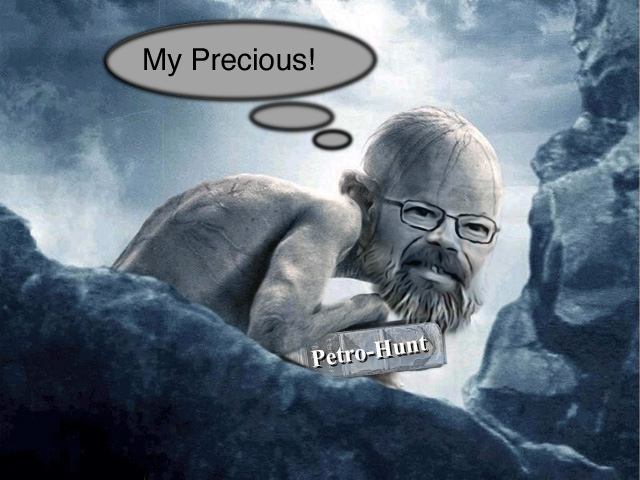
Mixed Use Development Proposed in Secret/Public Meeting.

06/21/2023 – Fate, TX.
If you missed the development presentation last night by Petro-Hunt, LLC to the joint City Council / Planning Commission don’t feel bad. How could you have possibly known this was to take place?
The town published agenda stated only: “ … JOINT WORK SESSION TO DISCUSS CONCEPTS FOR THE AREA LOCATED AT THE SOUTHEAST CORNER OF I-30 AND FM 551, RCAD PROPERTY IDS: 12848, 92992, 12849, AND 72981 “.
“Discuss concepts.” That’s what they are calling it. Not a single mention that there would be a sales pitch (ie: presentation) by Petro-Hunt was made public. Not even a blurb about the proposed multi-family, mixed-use commercial development that will occupy the busiest intersection in town. Nope, just a vague concept of a “work session to discuss concepts” was all that was presented to the public.
As a reminder, Texas law governing the notification of meetings states:
Sec. 551.041. NOTICE OF MEETING REQUIRED. A governmental body shall give written notice of the date, hour, place, and subject of each meeting held by the governmental body.
Our question is, does the advertisement of a joint “work session” without any reference to the actually intended discussion meets the legal requirement of this definition? We don’t think so. Why would Ryan Wells, the Director of Planning & Development organize such a deceptive announcement? Could it be that he is collaborating with Petro-Hunt on how to get their project through without stirring up too much public outcry that he knows is inevitable?
Fortunately, you will be happy to know that no actions were taken with regard to this “presentation”. But don’t worry, it will happen. And when it does, they will come back and say, “This was ALL public record, and the citizens were aware of what was going to happen.” Of course, they were.
Who is Petro Hunt, LLC?
Petro Hunt is essentially an oil & gas company that owns a lot of land in Texas. Recently, they have decided to get into real estate development. The current President and perhaps patriarch of the family is Bruce Hunt. Bruce has set up over 53 various companies (LLCs) to manage the family’s vast holdings.
It truly is a family organization. In addition to Bruce, there is Douglas Hunt, David Hunt, Marshall Hunt, Casey Hunt, Austin Hunt, Carter Hunt, and Bailey Hunt… all working directly for the company. It looks to be about three generations…. And not one of them lives in Fate.
But they do own land here … a lot of it. They boast about owning 520 acres of land. 250 acres available for commercial/retail along I30, and 393 acres for residential use (split into two tracts of 165 & 228 acres).
Fate is not their first rodeo. They have land developments in Forney, Lavon & Edgecliff. Fate is actually small potatoes compared to Forney and Lavon, which boasts 1600 acres & 1814 acres respectively.
In March of 2022, the city approved a zone change of the land across from Fresh Brookshires from Agriculture to Mixed use commercial … without that decision, this wonderful opportunity for our town to expand into commercial development would not have been possible… Thank you, Council, Mayor Billings, and Strong Towns for your assistance in shaping our development strategies.







Fate, TX – The race to fill the vacant Fate City Council Place 1 seat vacated by the recall of Codi Chinn, will consist of four candidates. Randy Long, Stephanie Delaine Adams, Joshua Martin and Donovan Heinrich.
Randy Long is a serves as the Rockwall County director for True Texas Project, a conservative grassroots organization.
Stephanie Delaine Adams served 12 years on the Rockwall ISD Board of Trustees, including two years as board president from 2017 to 2019. She is now a Realtor.
Joshua Martin has lived in Fate for approximately six years and is a recruiting manager with QXO. He previously served as president of the Old Shepard Place neighborhood association in Plano.
Donovan Heinrich previously ran for Fate City Council, Place 5, in 2021, receiving 288 votes, or 30.48%, against eventual winner Jim DeLand.
More to follow on each candidate in the upcoming days.
Featured
Rowlett Police Officers, Drugs and a Barroom Encounter: What the Chief Didn’t Tell the Public

Rowlett, TX – On July 28, 2026, Rowlett Police Chief Michael Denning took to Facebook with what he called a message of “transparency and accountability” concerning an incident involving three off-duty Rowlett police officers at a local bar in 2025.
Denning said the officers had been approached by a man who didn’t know they were police. The man allegedly produced what appeared to be an illegal substance and said he was known to deal drugs at the establishment. According to Denning, one officer recognized an opportunity to gather intelligence on local narcotics activity, briefly engaged the man and arranged a follow-up narcotics transaction at another location. No transaction occurred, Denning said.
“The officers”, according to the chief’s account, realized the encounter could become an unauthorized investigation and promptly notified an on-duty supervisor. They were told to disengage and go home, and they complied.
Denning also acknowledged something else: all three officers had violated department policy and had received discipline.
What the chief didn’t tell Rowlett residents was exactly what happened inside that bar, what the officers did after leaving it, which department policies they violated, and how serious the resulting discipline actually was.
Pipkins Reports has now obtained the Rowlett Police Department’s internal affairs records concerning the incident. The department’s own investigation provides a much fuller account.
And it’s considerably less tidy than the Facebook version.
According to the March 11, 2025 internal affairs report, the incident began on Jan. 23, 2025, after the three officers had finished their shift. They met for drinks, first going to Brass Tap in Rockwall before heading to Hang Time in Rowlett. The report states that at least some of the officers had consumed alcohol.
At Hang Time, a patron identified in the investigation as “Shane” approached the officers, apparently unaware that they were police officers. During the conversation, one officer detected a strong odor of marijuana and asked Shane whether he had any.
Shane produced a bag containing an unknown substance and placed it on the table.
One of the officers picked up the bag, examined its contents, and removed some of the substance to smell it. They used the flash on their cellphone to illuminate the substance, which may have contributed to alerting the public. The officer later told investigators that he believed the substance was Delta 9. The bag was returned to the table, where Shane retrieved it, the report says.
The conversation then moved beyond marijuana.
Shane told the officers he could obtain other narcotics, including mushrooms, and asked whether they wanted to meet him to obtain them. The officer agreed.
At one point, Shane expressed concern about being robbed. An officer responded by lifting his shirt and displaying his department-issued firearm. The investigative report says he did so on three occasions during the encounter, including once when he indicated the weapon with his right hand.
This was not an authorized Rowlett Police Department undercover operation. It was three off-duty officers at a bar. And that distinction becomes important when the department’s findings are examined.
This was an off-duty encounter that eventually produced an internal affairs investigation, multiple sustained policy violations, and disciplinary action against all three officers. The Rowlett Police Department’s own investigative report tells a considerably more complicated story than the sanitized version that Chief Michael Denning presented to the public in a July 28 Facebook statement.
After some interaction inside the bar, which was recorded on various surveillance cameras and reviewed during the investigation, Shane suddenly became eager to leave and stated he would meet them at a nearby gas station.
While Shane was leaving, one of the officers contacted Sgt. Hughes, with Rowlett Police, and reported that Shane might be driving while intoxicated and that he had attempted to sell the officers narcotics. The sergeant advised that the officers should leave and let on-duty police handle the situation.
Before they could leave, however, the bar manager confronted them after being told they were attempting to sell narcotics, which would not be permitted in their establishment. The officers identified themselves as police and explained they weren’t involved in illegal activity. They told the manager they had already reported the incident to the on-duty sergeant. They paid their bill and left.
But the encounter wasn’t quite over.
After leaving Hang Time, one officer went home. The other two drove past Shane’s residence, using an address obtained during their conversation at the bar.
After speaking with Sgt. Hughes, the officers decided to get fuel at a different gas station than the EZ Mart on their way home.
What the Investigation Found
The department did not conclude that the officers committed a crime involving marijuana. Investigators found insufficient evidence to establish a violation of Texas Health and Safety Code §481.121, noting questions about whether the substance was actually marijuana and the lack of testing to establish its composition. The video also did not clearly establish what was inside the bag.
The internal investigation did, however, sustain several departmental violations.
Among them were violations involving conduct, off-duty law enforcement actions, firearms and alcohol, and displaying police identification. This is what the officers were disciplined for. The investigation also found that the officers’ actions amounted to an unauthorized operational plan because they were off duty and the encounter was not an official police operation.
The department recommended a two-day, 20-hour suspension without pay for one officer, along with ABLE training.
Another officer received a written reprimand and was required to complete an ABLE refresher.
The most severe discipline went to the officer who displayed the firearm. The department recommended a four-day, 40-hour suspension without pay (Reduced to 30 hours by Chief Denning), removal from the Problem-Solving Unit (PSU), reassignment to Patrol, ABLE training, and a law-enforcement de-escalation course.
A Note About Names
Pipkins Reports received the complete 91-page investigative report, but one officer’s identity was redacted in the records provided to us. We are not going to speculate about the reason for that redaction.
We have chosen to redact the names of the other officers in this article. Their identities do not change the facts, the department’s findings, or the discipline imposed, and in our opinion, publishing their names serves no legitimate public interest. Our redactions are clearly labeled in the accompanying copy of the report; the department’s original redactions are not labeled.

OPINION
There is a dirty little trick in local government that deserves far more scrutiny: tell an elected official that he has no choice, then call the vote “administrative.”
It sounds legal. It sounds technical. It sounds like something citizens are simply supposed to accept. But a compulsory vote isn’t really a vote…It’s coercion.
If elected officials are legally forbidden from voting according to their own judgment, then we have to ask a rather uncomfortable question: what exactly are we electing them to do?
That question is playing out in McKinney, Texas, where the City Council unanimously approved a proposed Islamic center despite significant opposition from residents who packed City Hall to protest the project. The council approved the site plan Aug. 4 after a meeting that reportedly lasted about five hours and included more than 100 speakers. Residents have since launched an effort to recall the mayor and council members, although whether enough valid signatures will ultimately be collected remains to be seen.
Mayor Bill Cox of McKinney characterized the council’s role as “administrative” or “ministerial”. Dumbing down the vote to a simple question, “Did the proposed site plan satisfy the City’s established development requirements?” Says Cox on a Facebook post this past Sunday.
And that’s where things get interesting.
McKinney’s own staff report says site plans are generally approved administratively by city staff. But this particular planned development ordinance requires the project to go before both the Planning and Zoning Commission and City Council.
In other words, the city itself established a process requiring elected officials to vote. Then, after bringing the matter before those elected officials, residents were essentially told those elected officials had no choice but to approve it.
That’s an awfully strange definition of representative government.
Texas law absolutely recognizes ministerial duties. A ministerial act is one where the law leaves the official with no discretion and prescribes what must be done. Texas courts can compel performance of a clear ministerial duty through mandamus. They generally cannot use mandamus to dictate the exercise of genuine governmental discretion.
But here’s the question that local governments should have to answer:
Why put a truly administrative decision before an elected body in the first place?
If an application meets every objective requirement and approval is mandatory, let the administrator approve it. That’s what administrators are for.
Let the city manager, planning director, zoning administrator or other properly designated official perform the administrative function. There is no reason to drag an elected council into a decision that supposedly contains no discretion, then tell council members they are legally obligated to cast a particular vote.
Because once you require an elected representative to vote, you have entered the political process. And a vote that can only legally be “yes” isn’t really a vote. It is an order.
This is where I believe Texas municipalities need to rethink the way they use the term “administrative.” A city council member is not a city manager.
He isn’t a bureaucrat whose job is simply to process paperwork according to a checklist. He is an elected representative. His constituents elected him to exercise judgment, to deliberate and, when necessary, to say no.
And that includes saying no to something that city staff believes complies with an existing ordinance.
Now, that does not mean a council member gets to ignore the law. Obviously he doesn’t. An elected official cannot simply declare that an ordinance doesn’t exist because he doesn’t like its consequences. But there is a vast difference between saying, “I don’t like the law,” and saying, “I don’t believe this application is legally entitled to approval.”
The former is political disagreement. The latter is a legal position that can be tested in court. And that is what courts are for.
If an applicant believes a council unlawfully denied an application, let the applicant sue. Let a judge determine whether the council had a ministerial duty to approve it. If the court orders approval, the city would comply. If someone believes the trial court got it wrong, the appellate process exists. That’s the legal system. Avoiding it doesn’t help a community…it supercharges distrust in the system.
What isn’t healthy is telling an elected official that he MUST vote for something because somebody else has decided his vote is merely “administrative.”
A compulsory vote is not representative government. It is coercion dressed up in municipal jargon. And here’s the simple rule I would like to see every Texas city follow:
Keep administrative acts with administrators.
If the City Manager can approve something because the law requires approval upon satisfaction of objective conditions, let the City Manager approve it. But if the city charter, ordinance or municipal process puts the matter before an elected council for a vote, then the council must retain the ability to vote yes or no.
Otherwise, it’s not a vote, it is compelled consent.
A representative republic depends upon elected officials exercising judgment on behalf of the people who elected them. They can make good decisions. They can make bad decisions. They can be reelected. They can be defeated.
What they cannot meaningfully be is representatives who are told they have no choice.
Because once you remove the ability to say no, you’ve removed the very thing that makes the exercise of political judgment a vote.
And if McKinney’s residents don’t like how their elected officials exercised that judgment, they have every right to make their own judgment at the ballot box, or through the recall process the city’s charter provides.
That’s accountability.
And accountability is supposed to be the whole point. The McKinney City Council has failed to uphold its obligation to the citizens who elected them … and they deserve to be recalled for no other reason than that they were gutless when faced with adversity.
You must be logged in to post a comment Login