
Identify Theft Rampant on Facebook – Beware of Fake Jobs
Fake job scams lead to identity theft and billions in losses to Americans.

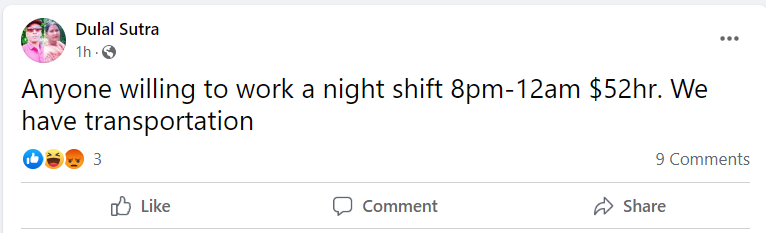
You have probably seen the job listings on Facebook recently. “Driver needed. 35 hrs per week. $100,000”. “Anyone willing to work a night shift 8pm – 12am. $52hr. We have transportation”.
In reality, there are no “late shift” or “drivers needed” jobs. These are just the latest in “Imposter Scams” tracked by the Federal Trade Commission. In just the first and second quarters of 2022, Americans have lost over $1.3 billion dollars to scammers.
According to the FBI’s Internet Crime Complaint Center (IC3), in 2020, Texas reported 1,720 victims with a reported $4.5 million in losses. There were 69 victims in El Paso totaling $721,600 in losses. In El Paso, there were eight victims reporting $31,928 in losses. Midland/Odessa reported 10 incidents in 2020 totaling $71,500. The average reported loss was nearly $3,000 per victim, in addition to the damage to the victims’ credit scores.
The examples given above outline simply the entry point of this gigantic fraud scheme that can get quite intricate and encompassing.
A link is provided to a victim either through Facebook, Linked In, email, or Instant Messenger to a very legitimate-looking Job board, employer, or recruiter website. Occasionally, they are even (very sophisticated) spoofed versions of websites such as Indeed.com.
How they get you there is really not important, what’s important is that once you are there you will need to fill out the employment application … just as in every job you have ever applied for. Once you start typing your information you are already headed into the abyss.
In no time they will have just about everything they need to steal your identity. Name, address, phone number, email address. Work history…. Those are easy and most people will give that information away freely.
If you clicked on a link from Facebook they already have your social media account and will instantly start downloading your profile pictures or anything else they might need to create a “fake” account with your name on it. With that, they will spoof your friends. But YOU will be blocked so that you can’t see what they are doing.
When it comes to that “Driver” job … well for that you will, of course, have to enter your driver’s license number … “For insurance purposes” you are told. And of course, you will have to fill out the W4 form (giving them your social security number) in order to have the proper taxes deducted from your check, of course.
Once you are on the hook no matter what happens from here on out you are already a victim … you just don’t know it yet.
In some cases, they might just ghost you from this point forward. Walking away with your information and setting you up for identity theft and stealing every dime from you. Days later you are left wondering what ever happened to that job. When you try to contact them your inquiries go unanswered.
A few of them go even further.
They tell you that you will need to pay a small processing fee for the application. Or perhaps it is a referral fee to the recruiter. It might be a fee as low as $4.99 or as high as $24.99… or more. At this point, they may have already run your credit (and stored that information for later use) and figured out how much they think they can scam you. Once you agree to pay, now they also have at least one credit card.
From here they have full reign to do just about anything they want with your identity. But the latest scam, as reported in propublica.org is one that you might not even be aware of… Unemployment Insurance Fraud.
In February 2021, the U.S. Department of Labor issued an Alert that stated that they had identified upwards of $5.4 billion in potentially fraudulent Unemployment Insurance benefits.
“A Bronx man allegedly received $1.5 million in just ten months. A California real estate broker raked in more than $500,000 within half a year. A Nigerian government official is accused of pocketing over $350,000 in less than six weeks.
What they all had in common, according to federal prosecutors, was participation in what may turn out to be the biggest fraud wave in U.S. history: filing bogus claims for unemployment insurance benefits during the COVID-19 pandemic.” writes, Cezary Podkul with Propublica.
By the time the jobless claims ended in September 2021, the U.S. Department of Labor’s inspector general estimates that at least $87 billion in fraudulent and improper payments will have been paid.
The Federal Trade Commission has stated that in 2021, “Government documents or benefits fraud” was the most prevalent type of identity theft case — more than 395,000 people reported that someone submitted a fraudulent government document under their name. This number represents a 70% spike over 2020 numbers.
So when you witness those seemingly benign Facebook posts about a “Driver needed” or “Late shift workers” be sure to not only report the post as Spam or Fraud but also block them.
The FBI recommends the following tips to protect yourself:
- Conduct a web search of the hiring company using the company name only. Results that return multiple websites for the same company (abccompany.com and abccompanyllc.com) may indicate fraudulent job listings.
- Legitimate companies will ask for PII and bank account information for payroll purposes AFTER hiring employees. This information is safer to give in-person. If in-person contact is not possible, a video call with the potential employer can confirm identity, especially if the company has a directory against which to compare employee photos.
- Never send money to someone you meet online, especially by wire transfer.
- Never provide credit card information to an employer.
- Never provide bank account information to employers without verifying their identity.
- Do not accept any job offers that ask you to use your own bank account to transfer their money. A legitimate company will not ask you to do this.
- Never share your Social Security number or other PII that can be used to access your accounts with someone who does not need to know this information.
- Before entering PII online, make sure the website is secure by looking at the address bar. The address should begin with “https://”, not “http://”.
- However: criminals can also use “https://” to give victims a false sense of security. A decision to proceed should not be based solely upon the use of “https://”.



VIDEO
PENTAGON – United States Central Command released a new operational update on Operation Epic Fury. In a March 11 briefing, U.S. Navy Adm. Brad Cooper addressed the public with the latest details on the rapidly developing mission. Speaking on behalf of the command, Cooper outlined current military actions, operational goals, and the strategic posture of U.S. forces in the region. The update offers a rare inside look at how CENTCOM is executing Epic Fury, and what commanders say comes next as the operation continues to unfold.
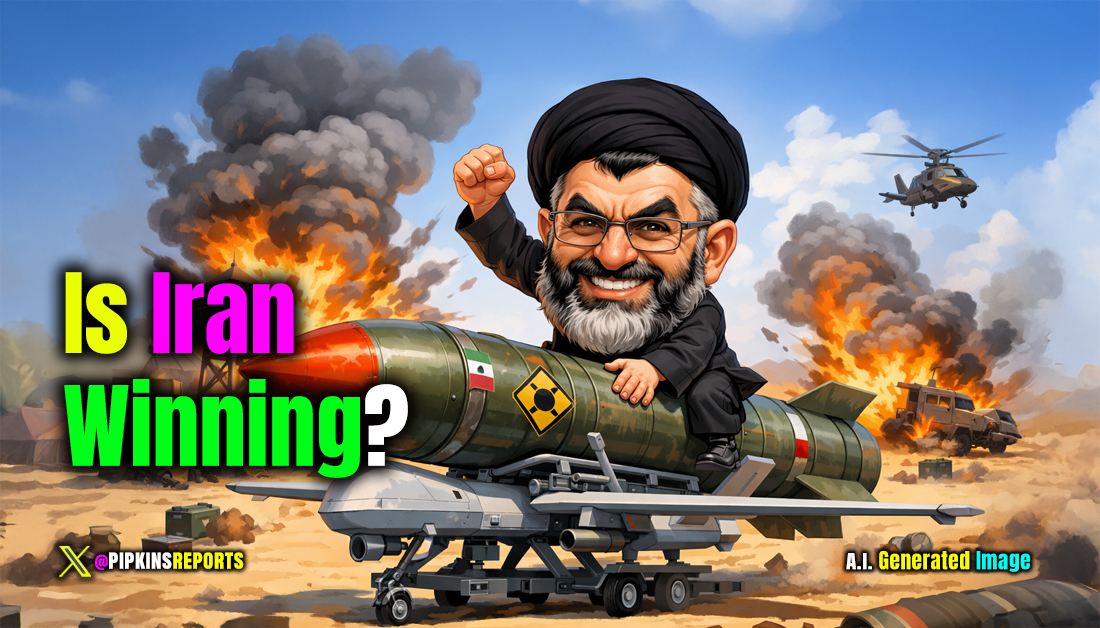
Iran – The bombs started falling in the Middle East, and within minutes the internet detonated with something just as explosive, a tidal wave of fake war footage across social media.
Scroll through Facebook, X or Instagram and you will see burning U.S. bases. Iranian missiles blasting American jets from the sky. Satellite images of destroyed radar installations. Clever Iranian tricks of a painted airplane silhouette – supposedly humiliating the Pentagon.
Much of it never happened.
Since the United States began striking Iranian targets, the online world has been flooded with fake accounts, AI-generated videos, manipulated satellite imagery, and viral propaganda posts designed to shape global opinion about the conflict. Analysts say the scale of the deception campaign marks one of the first major wars where artificial intelligence is being weaponized at industrial scale in the information space.
Millions Watching Fake War
The misinformation explosion began almost immediately after the strikes.
Researchers monitoring social media say fabricated videos of the war have accumulated tens of millions of views before fact-checkers could intervene. Some clips claimed to show Iranian missile strikes destroying American aircraft or warships.
One particularly dramatic video circulating online showed an Iranian missile destroying a U.S. aircraft in midair. The footage went viral, racking up tens of millions of views, before investigators determined it had been generated entirely using artificial intelligence.
Other viral clips were not even AI. They were lifted from military video games.
A widely shared video claiming to show a U.S. warship shooting down an Iranian fighter jet was eventually traced to gameplay footage from the combat simulation game War Thunder. The clip gained more than seven million views online before being exposed as fictional.
Experts say the tactic works because viewers often encounter these clips in emotionally charged moments, when verification is the last thing on their minds.
The Fake Account Armies
The deception is not random.
Investigators have uncovered organized networks of fake or hacked social media accounts pushing fabricated war footage to millions of users.
In one case uncovered by platform X, at least 31 coordinated accounts were allegedly operated by a man in Pakistan and used to spread AI-generated war videos related to the U.S. strikes on Iran.
Many of the accounts impersonated journalists or eyewitnesses. Some posed as residents near battle zones. Others claimed to be military observers.
By pretending to be on-the-ground witnesses, propagandists can trick audiences into believing fabricated videos are authentic breaking news.
Researchers say this kind of deception campaign is increasingly common during international conflicts, where online narratives can influence global opinion as quickly as military developments.
AI Is Now Faking Satellite Evidence
Perhaps the most alarming development is the manipulation of satellite imagery.
In several viral posts circulating online, images appeared to show U.S. military installations destroyed by Iranian strikes. The images looked convincing, complete with blast craters and damaged buildings.
Investigators later discovered some of the satellite images were AI-altered or entirely fabricated.
One widely shared image, promoted by Iranian media outlets, claimed to show a devastated U.S. radar installation in Qatar. Analysts later determined the image had been digitally manipulated using artificial intelligence.
Experts warn that satellite images are particularly powerful propaganda tools because they appear technical and authoritative.
People tend to trust them without question.
Viral Claims Iran Is Tricking U.S. Satellites
Another category of viral propaganda has taken a different approach, mockery.
Images circulating across social media show large silhouettes of drones and aircraft painted onto the ground inside Iran. The accompanying posts claim Iranian forces created fake targets to trick American satellites.
The narrative accompanying the images is clear and deliberate. According to the viral captions, U.S. intelligence supposedly identifies the fake aircraft as real targets, allowing Iran to make the United States waste millions of dollars destroying empty patches of dirt.
The posts typically end with the same message, Iran is clever, the United States is foolish.
But military historians say the narrative leaves out a key fact. This never happened…the images are Photoshop or A.I..
The deception, to the viewers, is effective because decoys, camouflage, and deception have been standard military tactics for centuries. Inflatable tanks, fake airfields, and painted aircraft silhouettes were used extensively during World War II and are taught in military academies around the world. So the accusations seem plausible…and the fake images seal the deal.
The propaganda lies not in the existence of decoys, but in the framing designed to humiliate the United States and elevate Iran’s image.
State Actors Fuel the Propaganda War
Analysts say the information battlefield is being shaped by a mix of actors.
State-backed propaganda networks have circulated exaggerated claims about Iranian military success, while foreign influence operations have amplified misleading narratives to undermine confidence in American military power. Anti-semite groups capitalize on the opportunity to take swipes at Israel. Democrat operatives live for the opportunity to make President Trump, or Secretary of War, Pete Hegseth, look like a fool.
Researchers studying the phenomenon say the goal is not always to persuade people of a single lie. Instead, the objective is chaos & uncertainty.
Flood the internet with so many competing claims, fake videos, and manipulated images that ordinary people simply stop trusting anything they see.
Opinion: America Is Losing the Information Battlefield
Facts first. Now the uncomfortable truth.
The United States may dominate the skies militarily, but in the information war raging across social media, the battlefield is far murkier.
Artificial intelligence has democratized propaganda. What once required vast intelligence agencies, professional studios, and technical expertise can now be created by anyone with a laptop and the right software.
The viral posts mocking American intelligence over painted decoys illustrate the strategy perfectly. A centuries-old military tactic becomes a viral story about Iranian brilliance and American incompetence.
The objective is not accuracy. The objective is perception.
Every fake video of a burning U.S. base, every manipulated satellite image, every anonymous account posting dramatic “battle footage” pushes the same narrative, America is losing, Iran is winning, and nothing you see can be trusted.
And when truth becomes impossible to separate from fiction, propaganda has already won.
The missiles may be flying over the Middle East.
But the real war for public perception is raging on your phone screen.
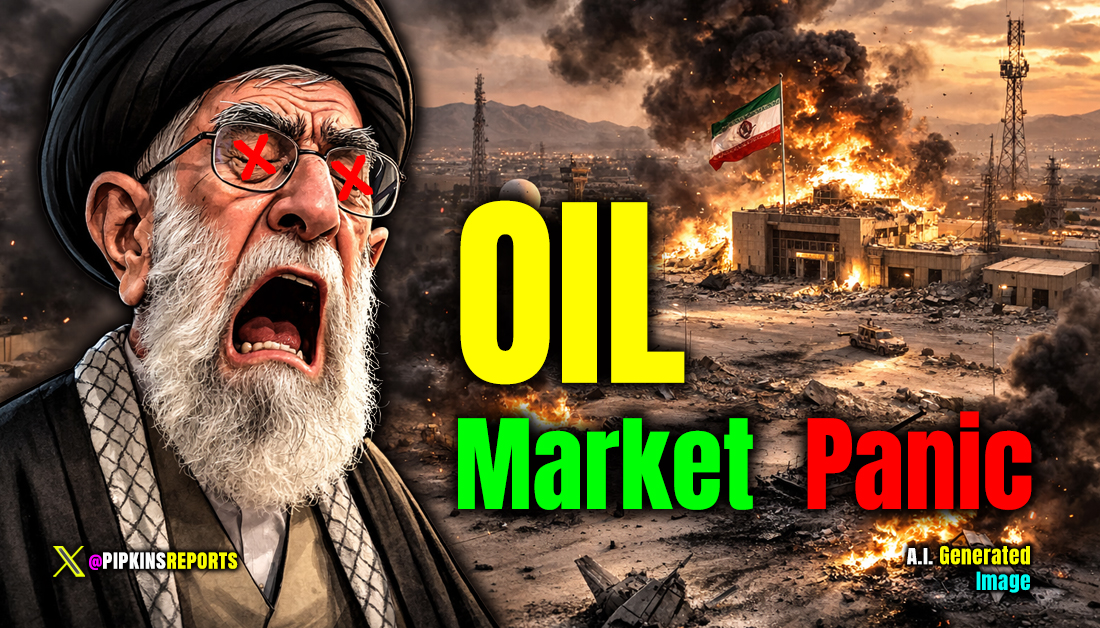
New York, NY – Global markets convulsed at the opening bell, shedding billions in value as war headlines involving Iran ricocheted across trading floors from New York to Tokyo. Traders reacted swiftly, energy prices spiked, and the financial press warned of supply shocks rippling across the world economy.
According to reporting from The New York Times, major stock indices fell sharply amid intensified military activity tied to Iran. Exchanges in the United States, Europe, and Asia all registered significant losses. Oil futures climbed on fears that instability in the Persian Gulf could disrupt tanker traffic through the Strait of Hormuz, a critical shipping lane for global crude.
The downturn began early in the trading session as reports of expanded strikes circulated. Analysts cited by The New York Times described widespread panic selling, with algorithmic trading accelerating declines once volatility thresholds were breached. Technology and transportation stocks led losses. Defense firms saw modest gains as investors anticipated increased military spending.
Yet beneath the red ink and breathless headlines lies a critical fact often missing from early coverage.
Iran accounts for roughly 2 percent of the global traded oil supply. While it remains a member of the Organization of the Petroleum Exporting Countries, years of sanctions following the U.S. withdrawal from the Joint Comprehensive Plan of Action in 2018 have pushed much of its crude into what analysts call the “grey market.”
Rather than selling transparently on regulated exchanges, Iranian oil typically moves through ship-to-ship transfers, obscured tracking systems, and intermediary traders. China has been a principal buyer of these discounted barrels. Transactions often bypass Western financial clearing systems, making the supply less visible but still economically present.
In short, Iran’s oil is already marginal to formal global trading structures.
Markets nevertheless reacted as though a primary energy artery had been severed. The CBOE Volatility Index surged, reflecting investor anxiety. Safe-haven assets, including gold and U.S. Treasury bonds, drew inflows as portfolio managers sought shelter from geopolitical uncertainty.
Complicating the picture, U.S. military officials confirmed that American forces conducted strikes that neutralized Iran’s naval presence in the Gulf of Oman, according to public statements released by U.S. Central Command. Those operations reportedly destroyed multiple Iranian vessels operating in that theater, significantly degrading Tehran’s ability to threaten commercial shipping lanes in the immediate area.
While independent verification remains limited, the operational effect appears clear: Iran’s capacity to directly interfere with tanker traffic near the Strait of Hormuz has been substantially reduced in the short term.
Energy analysts note that the Strait, while strategically vital, is patrolled by multiple international naval forces. With Iran’s regional naval capabilities diminished, the probability of prolonged shipping disruption appears lower than early market reactions suggested.
Moreover, if sanctions enforcement tightens amid escalating hostilities, nations purchasing discounted Iranian crude may be compelled to source oil from legitimate, regulated markets instead of grey market channels. That shift would not remove supply from the global system. It would redirect demand toward transparent producers.
Historically, geopolitical shocks produce immediate price spikes followed by recalibration once traders assess actual supply data. During prior Middle East conflicts, oil markets often stabilized after initial surges, particularly when physical infrastructure remained intact.
Government officials in several countries have urged calm. At this stage, no confirmed long term production outages have been reported. Strategic reserves among major economies provide additional buffers against short term volatility.
Opinion
Financial markets dislike uncertainty, but they often overprice fear.
When a nation responsible for about 2 percent of global traded supply triggers worldwide selling, the reaction says more about investor psychology than structural fundamentals. Iran’s oil already circulates through shadow networks at discounted rates. If conflict constrains that channel further, buyers such as China would likely pivot toward lawful suppliers, strengthening formal markets rather than collapsing them.
The destruction of Iran’s naval presence in the Gulf of Oman, if sustained, further reduces the specter of prolonged maritime shutdowns. Shipping lanes do not appear poised for indefinite closure.
Panic selling generates drama. It does not automatically generate durable economic damage.
Investors would be wise to separate headlines from hard supply data. Markets tend to correct once reality asserts itself. And reality, at least for now, suggests the global oil system remains far more resilient than Monday’s selloff implied.
You must be logged in to post a comment Login