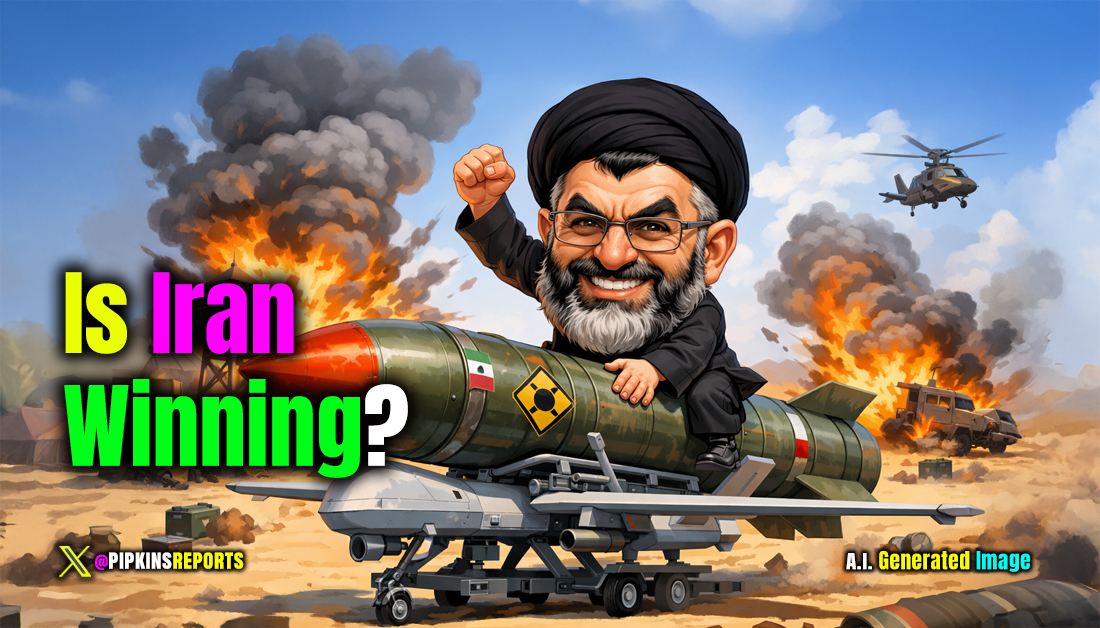
Fake War Footage – Propagandizing You for Clicks.
Iran – The bombs started falling in the Middle East, and within minutes the internet detonated with something just as explosive, a tidal wave of fake war footage across social media.
Scroll through Facebook, X or Instagram and you will see burning U.S. bases. Iranian missiles blasting American jets from the sky. Satellite images of destroyed radar installations. Clever Iranian tricks of a painted airplane silhouette – supposedly humiliating the Pentagon.
Much of it never happened.
Since the United States began striking Iranian targets, the online world has been flooded with fake accounts, AI-generated videos, manipulated satellite imagery, and viral propaganda posts designed to shape global opinion about the conflict. Analysts say the scale of the deception campaign marks one of the first major wars where artificial intelligence is being weaponized at industrial scale in the information space.
Millions Watching Fake War
The misinformation explosion began almost immediately after the strikes.
Researchers monitoring social media say fabricated videos of the war have accumulated tens of millions of views before fact-checkers could intervene. Some clips claimed to show Iranian missile strikes destroying American aircraft or warships.
One particularly dramatic video circulating online showed an Iranian missile destroying a U.S. aircraft in midair. The footage went viral, racking up tens of millions of views, before investigators determined it had been generated entirely using artificial intelligence.
Other viral clips were not even AI. They were lifted from military video games.
A widely shared video claiming to show a U.S. warship shooting down an Iranian fighter jet was eventually traced to gameplay footage from the combat simulation game War Thunder. The clip gained more than seven million views online before being exposed as fictional.
Experts say the tactic works because viewers often encounter these clips in emotionally charged moments, when verification is the last thing on their minds.
The Fake Account Armies
The deception is not random.
Investigators have uncovered organized networks of fake or hacked social media accounts pushing fabricated war footage to millions of users.
In one case uncovered by platform X, at least 31 coordinated accounts were allegedly operated by a man in Pakistan and used to spread AI-generated war videos related to the U.S. strikes on Iran.
Many of the accounts impersonated journalists or eyewitnesses. Some posed as residents near battle zones. Others claimed to be military observers.
By pretending to be on-the-ground witnesses, propagandists can trick audiences into believing fabricated videos are authentic breaking news.
Researchers say this kind of deception campaign is increasingly common during international conflicts, where online narratives can influence global opinion as quickly as military developments.
AI Is Now Faking Satellite Evidence
Perhaps the most alarming development is the manipulation of satellite imagery.
In several viral posts circulating online, images appeared to show U.S. military installations destroyed by Iranian strikes. The images looked convincing, complete with blast craters and damaged buildings.
Investigators later discovered some of the satellite images were AI-altered or entirely fabricated.
One widely shared image, promoted by Iranian media outlets, claimed to show a devastated U.S. radar installation in Qatar. Analysts later determined the image had been digitally manipulated using artificial intelligence.
Experts warn that satellite images are particularly powerful propaganda tools because they appear technical and authoritative.
People tend to trust them without question.
Viral Claims Iran Is Tricking U.S. Satellites
Another category of viral propaganda has taken a different approach, mockery.
Images circulating across social media show large silhouettes of drones and aircraft painted onto the ground inside Iran. The accompanying posts claim Iranian forces created fake targets to trick American satellites.
The narrative accompanying the images is clear and deliberate. According to the viral captions, U.S. intelligence supposedly identifies the fake aircraft as real targets, allowing Iran to make the United States waste millions of dollars destroying empty patches of dirt.
The posts typically end with the same message, Iran is clever, the United States is foolish.
But military historians say the narrative leaves out a key fact. This never happened…the images are Photoshop or A.I..
The deception, to the viewers, is effective because decoys, camouflage, and deception have been standard military tactics for centuries. Inflatable tanks, fake airfields, and painted aircraft silhouettes were used extensively during World War II and are taught in military academies around the world. So the accusations seem plausible…and the fake images seal the deal.
The propaganda lies not in the existence of decoys, but in the framing designed to humiliate the United States and elevate Iran’s image.
State Actors Fuel the Propaganda War
Analysts say the information battlefield is being shaped by a mix of actors.
State-backed propaganda networks have circulated exaggerated claims about Iranian military success, while foreign influence operations have amplified misleading narratives to undermine confidence in American military power. Anti-semite groups capitalize on the opportunity to take swipes at Israel. Democrat operatives live for the opportunity to make President Trump, or Secretary of War, Pete Hegseth, look like a fool.
Researchers studying the phenomenon say the goal is not always to persuade people of a single lie. Instead, the objective is chaos & uncertainty.
Flood the internet with so many competing claims, fake videos, and manipulated images that ordinary people simply stop trusting anything they see.
Opinion: America Is Losing the Information Battlefield
Facts first. Now the uncomfortable truth.
The United States may dominate the skies militarily, but in the information war raging across social media, the battlefield is far murkier.
Artificial intelligence has democratized propaganda. What once required vast intelligence agencies, professional studios, and technical expertise can now be created by anyone with a laptop and the right software.
The viral posts mocking American intelligence over painted decoys illustrate the strategy perfectly. A centuries-old military tactic becomes a viral story about Iranian brilliance and American incompetence.
The objective is not accuracy. The objective is perception.
Every fake video of a burning U.S. base, every manipulated satellite image, every anonymous account posting dramatic “battle footage” pushes the same narrative, America is losing, Iran is winning, and nothing you see can be trusted.
And when truth becomes impossible to separate from fiction, propaganda has already won.
The missiles may be flying over the Middle East.
But the real war for public perception is raging on your phone screen.
Council
Mark Hatley Under Fire as Fate Council Launches Ethics Investigation Over Secret Recordings
FATE, TX – The City Council voted to investigate Councilman Mark Hatley, setting off a political drama that some view as a battle of power between two diametrically opposed groups.
At the center of the dispute is an ethics complaint filed March 25, 2026, by Councilman Scott Kelley against Deputy Mayor Pro Tem Mark Hatley, tied to audio recordings previously reported by Pipkins Reports. The Fate City Council took up the matter during its April 6 regular meeting at City Hall where members entered executive session to review the complaint under provisions of the Texas Open Meetings Act and personnel deliberation statutes.
According to the official agenda, council members met privately with legal counsel to conduct an initial screening of the complaint. The session relied on guidance from attorney Ross Fischer of Ross Fischer Law, PLLC, whose memorandum outlined potential violations of the city’s Code of Ethics. That memo, later made public by council vote, identified two allegations as sufficiently credible to warrant further investigation: interference in administrative matters and disclosure of confidential information.


[Memorandum from Ross Fischer]
The memorandum detailed specific excerpts from recorded conversations between Hatley and City Manager Michael Kovacs, including alleged remarks suggesting pressure or influence related to the police chief’s employment. In one instance cited in Fischer’s memorandum, Kelley asserts that Hatley allegedly warned Kovacs that the situation “would not bode well” for him, language the memo suggests could be interpreted as administrative interference under Section 2-309(10) of the city’s ethics code.
The second allegation centers on the release of the recordings themselves. Fischer’s analysis concluded that the audio contained discussions about personnel matters typically reserved for closed session, and therefore may constitute confidential information under Section 2-309(6). The memo notes that the City Council later voted to waive privilege and release the recordings officially, but that Hatley had allegedly distributed them prior to that authorization.
During the open session that followed, Councilman Mark Harper moved to make the executive session public, a motion seconded by Councilman Codi Chinn and approved unanimously, 7-0. Councilman Hatley voted in favor of that motion, joining the full council in opening the executive session discussion to the public for transparency.
Councilman Kelley then made a motion to proceed with a formal investigation into Hatley’s conduct, citing the findings outlined in the memo. In doing so, Kelley referred to Pipkins Reports as a “local opinion blogger,” a characterization that may be viewed by some as dismissive.
The council ultimately voted 5-2 to move forward with the investigation. Mayor Greenberg and Councilman Hatley cast the dissenting votes, while the remaining five supported the inquiry. According to Councilman Rick Maneval, Fischer indicated during executive session that he did not expect an investigation to uncover additional substantive facts beyond what was already known, aside from giving Hatley an opportunity to formally respond.
In a separate but related action, the council voted unanimously, 7-0, to dismiss a third allegation from the ethics complaint that falls under Section 2-309(5), which concerns granting special consideration or advantage. Fischer’s memo found that the claim lacked sufficient detail and failed to identify a specific beneficiary, rendering it inadequate under the city’s ethics standards.
The decisions come amid a broader political dispute, as one of the members of a recall petition is now also under investigation for ethics violations.
Mark Hatley is one of three councilmen, along with Rick Maneval and Martha Huffman, plus Mayor Andrew Greenberg, who are currently the subject of a circulating recall petition. Some residents have suggested that effort is, at least in part, a response to a separate recall targeting Councilman Codi Chinn, which is set to appear on the May ballot.
Chinn’s public supporters include Councilman Mark Harper and Councilman Scott Kelley, both of whom now play central roles in the current ethics dispute. Harper has been accused by City Manager Michael Kovacs of making threatening statements, an allegation that has not been adjudicated but adds another layer of tension to an already volatile situation.
From a procedural standpoint, the council’s vote will authorize Ross Fischer to conduct an investigation, as the City’s in-house attorney would have a conflict of interest.
** Mark Hatley couldn’t be reached for comment prior to publication.
Election
Do Not Distribute: Fate Recall Document Sparks Concern
FATE, TX – A document containing unproven allegations, some of which could raise defamation concerns if false, and stamped with a warning against distribution, is now at the center of a growing political storm in Fate, Texas, after a student’s testimony revealed it was nonetheless handed out at a public recall event targeting the mayor.
At the March 23, 2026 Fate City Council meeting, Gus Richardson, a local debate student, stepped forward during public comment and described attending a petition signing event tied to the ongoing recall effort against Mayor Andrew Greenberg, Councilman Mark Hatley, Councilman Rick Maneval, and Councilwoman Martha Huffman.
According to Richardson’s testimony, he was provided a document outlining reasons for removing the mayor by individuals he identified as being involved in the recall effort.
The document was marked with a warning that read: “This document is for reference purposes only. Distribution and photographs are strictly prohibited.” Despite the printed warning, Richardson proceeded to photograph the document, and the organizer then removed the document from his hands, Richardson stated.
[Video of presentation of Gus Richardson to Fate City Council]

That contradiction, a document marked for secrecy but distributed in a public setting as reasons for the removal of an elected Mayor, quickly became the focal point of Richardson’s remarks. While Richardson questioned the validity of some of the allegations made in the document, his primary focus was on the process and transparency behind their circulation.
Pipkins Reports has obtained a copy of the document and presents it here as part of this report. We note that notices of, “DISTRIBUTION AND PHOTOGRAPHS ARE STRICTLY PROHIBITED”, generally do not carry clear legal enforceability in a public setting.
Notably, one of the document’s central allegations involves the recording of city officials, and it is a matter of public record that Mayor Greenberg did record at least one phone call with Councilwoman Codi Chinn, a recording later released by Pipkins Reports, though the motivations and context surrounding that call remain disputed.
The document itself is structured as a list of allegations under several headings, including “Abuse of Power,” “Charter Violations,” “Texas Ethics Commission Errors,” and “Code of Ethics Violations.” It presents the claims in declarative language, offering no citations, supporting documentation, or sourcing within the text.
Under “Abuse of Power,” the document asserts that Mayor Greenberg secretly recorded city officials and staff for personal benefit, used his position to secure special privileges, and intentionally misled citizens about city governance and charter provisions. It further claims he used his authority for actions benefiting his private interests and threatened board members with removal if they questioned city officials.
Another claim alleges that the mayor allowed what the document describes as “potential electioneering” during a city council meeting, suggesting unequal treatment between certain speakers and regular citizens. Additional points accuse him of interfering in administrative staffing decisions and engaging with city staff without the required council authorization.
The section labeled “Texas Ethics Commission Errors” raises campaign-related concerns, including an allegation that required political advertising disclosures were omitted from campaign signs and that semiannual campaign finance reports were not filed on time in July 2025 and January 2026. It further states that only one of those reports has been remedied, though no official findings from the Texas Ethics Commission are cited in the document itself.
Other portions of the document claim violations of the city’s code of ethics, including representing private interests before the council, and paint a broader picture of what is described as a “lack of transparency.” The final section, labeled “Loss of Confidence,” includes assertions that the mayor has failed to keep citizens informed, does not understand the city charter, and has placed the city at risk of retaliation and lawsuits.
None of the claims included in the document were accompanied by evidence within the material reviewed, and the organizers explanation to Richardson, he states, was that the document “wasn’t verified yet and was simply what they believed.” However, the language used presents the allegations as statements of fact, rather than opinion, a distinction that carries legal implications if the claims cannot be substantiated.
Richardson’s testimony only briefly touched on how be believed the printed allegations were false. Instead, he focused on what he characterized as an inconsistency, that a document warning against distribution was nonetheless handed out to members of the public at an organized event. His remarks, measured in tone, appeared aimed at prompting greater transparency from those involved in the recall effort.
The City Council did not provide a response during the meeting regarding the document or its contents. This is typical of the Public Comments section of the agenda.
Mayor Greenberg’s Comment
Pipkins Reports reached out to Mayor Greenberg for comment. Regarding the document, he stated, “It’s a list of broad accusations without real evidence or specifics, and that’s just not a fair or productive way to have a conversation. If you’re going to make claims, don’t hide behind a command not to take photos or share-if they are strong enough to try to get people upset, they should be strong enough to be share publicly and examined. If someone disagrees with my policies, that’s completely fair, but pushing baseless accusations this way is disappointing.“
Christopher Rains Comment
We also reached out to Christopher Rains, the petition organizer, who it appears was also the person to whom Richardson spoke to. He stated, “It [the conversation] is not how I remember the exchange. I was talking with two people, both combative in nature and upon recognizing that they were not in support tried to exit the exchange as quickly as possible. If I misspoke, I am not above admitting as much. I am not a politician and have no aspirations to become one, I am not afraid to say I am wrong. But, I stated and reiterated many times that I was there because I believe there were charter violations based on my understanding of the charter. He claimed that I said they broke the law, I clarified that I did not believe it was criminally illegal, but a civil violation and morally questionable.“
Ashley Rains was also respectful to our request for comment and provided the following statement: “I was not surprised to see Gus Richardson, or his mother, at the City Council meeting Monday evening. If anything, I was proud and impressed to see Gus in attendance and participating. Proud because I firmly believe it’s imperative that our younger generations become interested and involved in the future of our government, at all levels. Our current political climate may not be where it is today if that had been the case sooner.
I was simultaneously impressed by his willingness to speak publicly on such a controversial topic. Not many young people have the wherewithal or courage to do so. I applaud him for that.
However, I was surprised to hear my name casually mentioned, while presenting as though he was unsure who the gentleman was he speaking with.
Gus and his mother approached our table while I was engaged in conversation with another citizen. But my husband is both cordial and a business professional. He shakes your hand and introduces himself, every time, with every new person we encounter in a mutually respectful setting.
I was unable to join their conversation until the last couple of minutes of their exchange. To hear my name referenced in the speech Gus delivered Monday evening was surprising, as the premise of the delivery seemed to be geared more toward attacking my campaign rather than presenting the facts of the exchange as the truly were.
I still applaud his involvement and courage. I also recognize the true potential he has to offer our society, political or otherwise. But, truthfully, I would’ve preferred to hear the recollection of events delivered less politically and more forthright.“
As the recall effort continues to unfold, the emergence of this document and the circumstances surrounding its distribution are likely to draw increased scrutiny from both the public and those directly involved. Richardson’s testimony has added a new layer to an already contentious political environment, raising questions not only about the claims themselves, but about how information is being presented to voters in the course of the petition process.
For now, the allegations outlined in the document remain unverified, and no formal findings by relevant authorities have been publicly confirmed. As the situation develops, the focus may shift toward greater transparency from all parties involved, particularly as residents weigh the credibility of the information being circulated in connection with the recall effort.
Council
Tax Hikes, Fees, and Townhomes: The Record of Allen Robbins in Fate
FATE, TX – Voters in Fate may soon face a familiar name on the ballot, but beneath the surface of Allen Robbins’ political comeback lies a record that could reshape how residents view his return. As the May 2026 city council election approaches, Robbins, a former Fate councilman, is seeking another term, bringing with him a documented voting history that raises pointed questions about taxes, fees, and development decisions that directly affected residents’ wallets and the city’s character.
Public records from the City of Fate show that during his previous tenure, Robbins not only introduced a series of consequential motions, but in each instance, those motions ultimately passed the council. The result was a slate of enacted policies that increased costs and advanced higher-density development, leaving a clear legislative footprint for voters to evaluate.
Below are seven key actions tied to Robbins’ record that voters may weigh as they consider his candidacy.
1. Ratifying a Property Tax Increase
Robbins made the motion to approve Ordinance No. 0-2023-036, ratifying a property tax increase embedded in the adopted budget for fiscal year 2023–2024. The motion passed, formally locking in the increased tax burden tied to that budget cycle.
2. Supporting a 5.96 Percent Tax Rate Increase
Robbins also made the motion to adopt Ordinance No. 0-2023-037, setting the property tax rate at $0.26421, an effective increase of approximately 5.96 percent. The council approved the measure, resulting in a higher rate applied to property owners across the city.
3. Approving Increased Solid Waste Fees
Through Ordinance No. O-2023-038, Robbins moved to approve updated rates for solid waste and refuse collection services. The motion passed, leading to increased service charges for residents.
4. Road Fee Adoption
Although introduced by another council member, Robbins voted to approve Ordinance No. 0-2023-039, establishing a $3 road fee for both single-family and multi-family residential units. The measure adds a recurring fee impacting nearly all households.
5. Zoning Change with Financial Penalties
Robbins made the motion to approve Ordinance No. O-2023-021, which amended zoning classifications on approximately 3.18 acres from Mixed Use to Mixed Use Transition for a Townhouse Development.
6. Approval of a 179-Unit Townhome Development
Through Resolution No. R-2023-055, Robbins moved to approve a Type III development plan for a 179-unit townhome project on approximately 13.9 acres. The council approved the motion, clearing the way for the higher-density development to proceed.
7. Advancing a Maximum Tax Rate Above Key Thresholds
Robbins also made the motion to approve Resolution No. R-2023-058, setting a maximum tax rate that exceeded both the no-new-revenue rate and the voter-approval rate, within the de minimis threshold allowed under Texas law. The motion passed, advancing the process for adopting the higher rate and triggering required public notices and hearings.
Context and Verification
Each of these actions is documented in official City of Fate council records from 2023. Motions made by a council member are a critical procedural step in municipal governance, and in these cases, each motion successfully resulted in council approval, meaning the policies were not merely proposed, but enacted.
Municipal leaders often justify such decisions as necessary responses to growth, infrastructure demands, and service costs. Fate, like many North Texas communities, has experienced rapid expansion, increasing pressure on roads, utilities, and public services.
The Stakes in 2026
As Robbins seeks a return to office in May 2026, voters are presented with a clear and verifiable record of policy actions that translated into tangible outcomes, higher taxes, new fees, and expanded development density.
Whether those outcomes are viewed as responsible governance or excessive government expansion will likely shape the election.
Opinion: A Pattern, Not an Accident
Seven motions. Seven approvals. One consistent direction.
That pattern is difficult to dismiss as coincidence. Robbins’ record reflects a governing philosophy that leans toward increasing revenue through taxation and fees while accommodating denser residential growth.
Supporters may argue these were necessary decisions in a growing city. That is a fair argument. Growth requires infrastructure, and infrastructure costs money.
But voters should also ask whether every increase was necessary, whether alternatives were explored, and whether the cumulative impact on residents was fully considered.
Because while each individual vote might be explained away, together they tell a broader story, one of a councilman comfortable with expanding both the cost and scope of local government.
In a community like Fate, where many families moved seeking affordability and space, that story carries weight.
And in May 2026, voters will decide whether it carries enough weight to keep Allen Robbins out of office, or return him to it.
You must be logged in to post a comment Login