Who are they?: The 16 Nobel Prize Winners Predicting Inflation Under Trump

In a recent statement, Joe Biden has highlighted concerns from sixteen esteemed economists, all Nobel Prize winners, warning that a second term for Donald Trump could lead to increased inflation. The letter signed by these economists outlines their concerns about the economic ramifications of a Trump presidency.
The letter reads:
We the undersigned are deeply concerned about the risks of a second Trump administration for the U.S. economy.
Among the most important determinants of economic success are the rule of law and economic and political certainty. For a country like the U.S., which is embedded in deep relationships with other countries, conforming to international norms and having normal and stable relationships with other countries is also an imperative. Donald Trump and the vagaries of his actions and policies threaten this stability and the U.S.’s standing in the world.
While each of us has different views on the particulars of various economic policies, we all agree that Joe Biden’s economic agenda is vastly superior to Donald Trump’s. In his first four years as President, Joe Biden signed into law major investments in the U.S. economy, including in infrastructure, domestic manufacturing, and climate. Together, these investments are likely to increase productivity and economic growth while lowering long-term inflationary pressures and facilitating the clean energy transition.
During Joe Biden’s presidency we have also seen a remarkably strong and equitable labor market recovery — enabled by his pandemic stimulus. An additional four years of Joe Biden’s presidency would allow him to continue supporting an inclusive U.S. economic recovery.
Many Americans are concerned about inflation, which has come down remarkably fast. There is rightly a worry that Donald Trump will reignite this inflation, with his fiscally irresponsible budgets. Nonpartisan researchers, including at Evercore, Allianz, Oxford Economics, and the Peterson Institute, predict that if Donald Trump successfully enacts his agenda, it will increase inflation.
The outcome of this election will have economic repercussions for years, and possibly decades, to come. We believe that a second Trump term would have a negative impact on the U.S.’s economic standing in the world and a destabilizing effect on the U.S.’s domestic economy.
Signed,
The Signatories: Who Are These Economists?
1. George A. Akerlof (2001)
- Background: American economist, university professor at Georgetown University, and Koshland Professor of Economics Emeritus at UC Berkeley.
- Notable Work: Nobel Prize for contributions to the understanding of markets with asymmetric information. Husband of Janet Yellen, U.S. Secretary of the Treasury.
2. Sir Angus Deaton (2015)
- Background: British-American economist, Dwight D. Eisenhower Professor of Economics and International Affairs Emeritus at Princeton University.
- Notable Work: Nobel Prize for analysis of consumption, poverty, and welfare.
3. Claudia Goldin (2023)
- Background: American economic historian and labor economist, Henry Lee Professor of Economics at Harvard University.
- Notable Work: Nobel Prize for advancing understanding of women’s labor market outcomes.
4. Sir Oliver Hart (2016)
- Background: British-born American economist, Lewis P. and Linda L. Geyser University Professor at Harvard University.
- Notable Work: Nobel Prize for contributions to contract theory.
5. Eric S. Maskin (2007)
- Background: American economist and mathematician, Adams University Professor at Harvard University.
- Notable Work: Nobel Prize for foundational work on mechanism design theory.
6. Daniel L. McFadden (2000)
- Background: American economist and econometrician, Presidential Professor of Health Economics at USC.
- Notable Work: Nobel Prize for development of methods for analyzing discrete choice behavior.
7. Paul R. Milgrom (2020)
- Background: American economist, known for auction theory, co-creator of the no-trade theorem.
- Notable Work: Nobel Prize for improvements to auction theory.
8. Roger B. Myerson (2007)
- Background: American economist, professor at the University of Chicago.
- Notable Work: Nobel Prize for work on mechanism design theory.
9. Edmund S. Phelps (2006)
- Background: American economist, founder of Columbia’s Center on Capitalism and Society.
- Notable Work: Nobel Prize for demonstrating the golden rule savings rate.
10. Paul M. Romer (2018)
- Background: American economist, University Professor in Economics at Boston College.
- Notable Work: Nobel Prize for contributions to endogenous growth theory.
11. Alvin E. Roth (2012)
- Background: American economist, Craig and Susan McCaw Professor of Economics at Stanford University.
- Notable Work: Nobel Prize for work on market design and experimental economics.
12. William F. Sharpe (1990)
- Background: American economist, STANCO 25 Professor of Finance Emeritus at Stanford University.
- Notable Work: Nobel Prize for contributions to financial economics, creator of the Sharpe ratio.
13. Robert J. Shiller (2013)
- Background: American economist, Sterling Professor of Economics at Yale University.
- Notable Work: Nobel Prize for empirical analysis of asset prices.
14. Christopher A. Sims (2011)
- Background: American econometrician and macroeconomist, John J.F. Sherrerd ’52 University Professor of Economics at Princeton University.
- Notable Work: Nobel Prize for research on cause and effect in the macroeconomy.
15. Joseph E. Stiglitz (2001)
- Background: American economist, University Professor at Columbia University.
- Notable Work: Nobel Prize for research on information asymmetry.
16. Robert B. Wilson (2020)
- Background: American economist, Adams Distinguished Professor of Management, Emeritus at Stanford University.
- Notable Work: Nobel Prize for contributions to auction theory.
Analysis
Despite their credentials, it’s noteworthy that many of these Nobel laureates were awarded for their work in specialized areas such as game theory, rather than macroeconomic policy or inflation forecasting. This raises questions about their expertise in predicting inflation outcomes from policy decisions.
In their letter, they emphasize concerns over Trump’s approach to fiscal responsibility and international relations. They argue that Biden’s economic agenda, marked by significant investments in infrastructure and manufacturing, is better suited to maintaining economic stability and controlling inflation.
The concerns raised by these Nobel-winning economists suggest that the upcoming election could have significant economic repercussions. However, the relevance of their specialized fields to the broader economic issues at hand, particularly inflation, should be carefully considered. As the election draws near, voters must weigh these expert opinions alongside their own views and experiences.


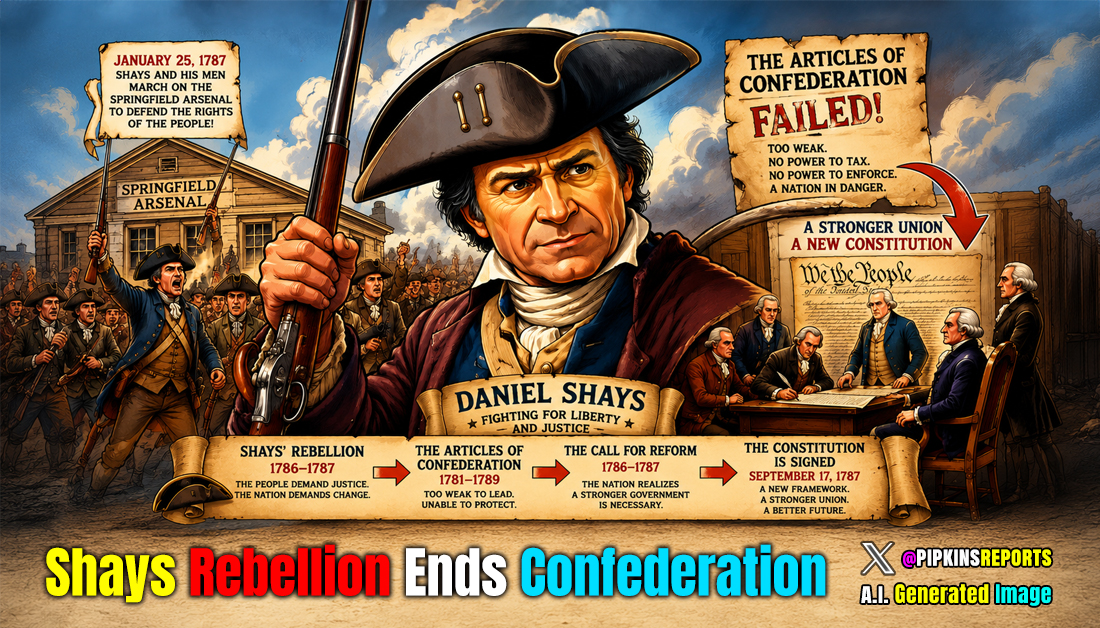
HISTORY – As Americans prepare to celebrate the 250th anniversary of the Declaration of Independence, it’s worth remembering something many school textbooks and social media historians tend to skip these days. The Constitution that hangs behind glass in the Rotunda for the Charters of Freedom, was not America’s first constitution.
It was the second.
Long before James Madison and the delegates gathered in Philadelphia in 1787, the young nation experimented with another system of government, one born amid war, shaped by distrust of centralized authority, and ultimately abandoned when its flaws became impossible to ignore.
On July 4, 1776, the Continental Congress adopted the Declaration of Independence, formally announcing that the Thirteen Colonies of Britain considered themselves free and independent states. Yet true independence would have to be won on the battlefield.
The Revolutionary War had already begun more than a year earlier with the battles of Lexington and Concord in April 1775. For eight years, General George Washington‘s Continental Army fought the British Empire through defeats, shortages, and brutal winters. Victory was never guaranteed. It would end with Britain’s surrender at Yorktown in October 1781, although the war was formally concluded with the Treaty of Paris in September 1783.
However, while the war was still raging, Congress recognized that the new nation, if it were to be successful in its rebellion, needed a framework for government.
Delegates drafted the Articles of Confederation in November 1777. After years of debate among the states, the Articles were finally ratified on March 1, 1781, becoming America’s first constitution.
The Articles established what was essentially a loose alliance of 13 sovereign states. Congress could conduct diplomacy, declare war, and manage western territories, but its powers were intentionally limited. There was no president. No national judiciary. Congress could request money from the states, but had no authority to compel payment or levy taxes.
At the time, the arrangement made sense.
Americans were still fighting for independence, and few had any appetite for creating a strong national government that might resemble the British system they were trying to escape. Nobody wanted to trade George III for another distant authority. So the states retained most of their power, and Congress remained intentionally weak.
But peace exposed weaknesses that war had masked.
States often ignored Congress. They imposed tariffs against one another, printed competing currencies, and frequently refused to contribute money to the national government. War debts mounted. Foreign powers questioned whether the United States could survive as a unified nation. There was no executive branch to enforce laws and no national courts to settle disputes.
Then came Shays’ Rebellion in 1786.
Shays’ Rebellion erupted in western Massachusetts in the fall of 1786, when farmers burdened by debt and heavy taxes faced foreclosures and possible imprisonment. Many were Revolutionary War veterans who believed they had sacrificed for independence only to find themselves losing their farms.
Led by former Continental Army captain Daniel Shays, groups of armed men shut down courts to prevent foreclosures and, in January 1787, attempted to seize the federal arsenal at Springfield. The uprising was ultimately suppressed by a privately funded state militia, but the episode sent shockwaves throughout the country. To many national leaders, the rebellion exposed the inability of the Confederation government to maintain order or provide for the common defense.
The uprising by Massachusetts farmers alarmed George Washington, James Madison, and Alexander Hamilton. Washington even wrote in a letter to Henry Lee that he was, “mortified beyond expression” and worried that Americans were proving incapable of self-government. James Madison viewed the rebellion as proof that excessive democracy and weak national authority endangered republican government, and Alexander Hamilton practically used the rebellion as Exhibit A to propose a stronger central government. It became painfully clear that merely tweaking the Articles would not solve the problem.
So delegates assembled in Philadelphia in May 1787 with the stated purpose of revising the Articles of Confederation. But instead, they scrapped them altogether.
Over the course of four months, the Constitutional Convention produced an entirely new framework. Completed in September 1787, the United States Constitution officially took effect on March 4, 1789. It created three branches of government, gave Congress the power to tax and regulate commerce, and established a system of checks and balances intended to preserve liberty while providing enough national authority to hold the republic together.
Most importantly, the States regained most of their independence. With the Federal Government becoming the arbitrator of conflict between them. Any power not specifically specified as belonging to the federal government is reserved for the States, or the People.
Over the years, many amendments have been made. Perhaps the most disastrous amendment that is still in effect today is the 17th amendment … which stripped away representation by the States, which were so important to our founding fathers.
Opinion
Modern political debates often treat the Constitution as though it sprang into existence fully formed in 1787, but those of us who follow history understand another side of the story.
With the Articles of Confederation, the Founders first tried a decentralized system that left most authority with the States. But they learned through experience that a weak national government could be nearly as dangerous as one that is too strong.
That doesn’t mean they intended to create the sprawling administrative state Americans know today. Far from it. Their goal was balance, national unity without sacrificing liberty, federal authority restrained by checks, balances, and state sovereignty.
As the nation approaches its semiquincentennial (250th anniversary), Americans should remember that the Constitution itself was born from a humble trial and error. The Founders recognized when their first attempt wasn’t working, and had the wisdom to take steps and fix it.
It’s a reminder that self-government requires both principle and the willingness to confront reality when facts demand it.
OPINION
The United States of America – The framers of our Constitution weren’t building a pure democracy; they were building a balancing act. And they knew exactly what they were doing.
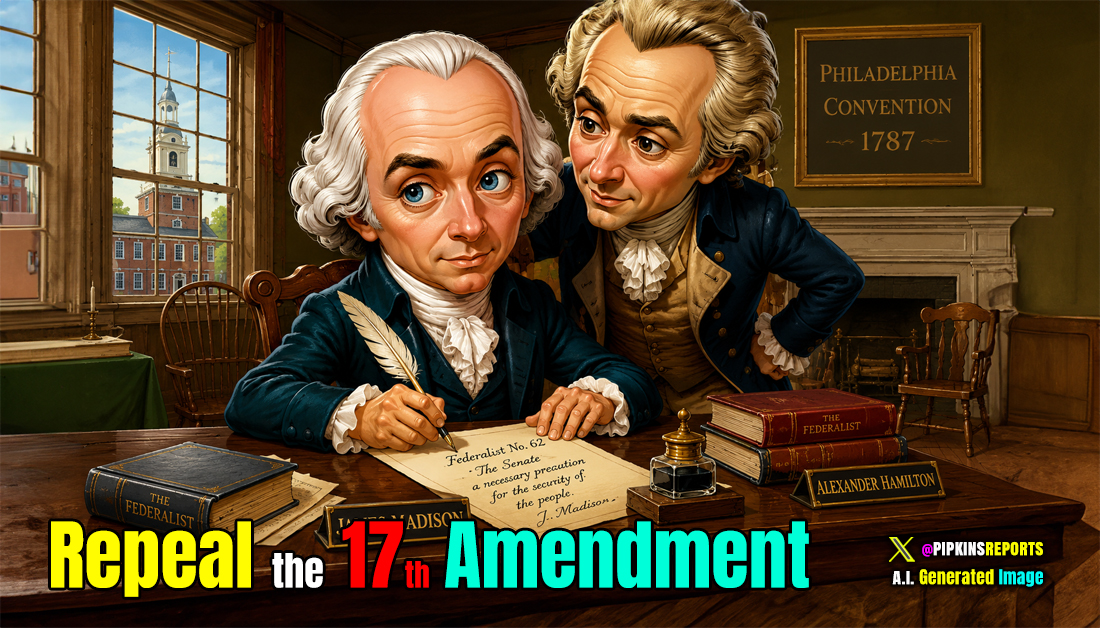
The original Constitution divided political power among different interests. The People elected the House of Representatives. State legislatures selected Senators. The Executive branch was headed by a President chosen through the Electoral College. Everybody had skin in the game. Everybody had a seat at the table. And nobody got all the power.
That arrangement wasn’t some accident buried in old parchment. It was deliberate.
Article I, Section 3 of the Constitution plainly stated that senators would be “chosen by the Legislature” of each state. According to James Madison in Federalist No. 62, appointment by state legislatures was designed to create a direct connection between the states and the federal government. He wrote that this method would “form a convenient link between the two systems.” The Senate was never intended to represent the passions of the public. The House already did that. The Senate represented the states themselves.
And that’s because the United States was formed by sovereign states entering into a union, not by Washington handing power down from on high.
During the Constitutional Convention of 1787, delegates spent weeks fighting over representation. Large states wanted population-based representation. Smaller states feared being steamrolled. The eventual Connecticut Compromise created two chambers, one representing the People and one representing the States. It was a compromise that helped save the convention from collapse. Benjamin Franklin himself urged concessions to preserve the union.
Madison argued repeatedly that the Senate’s structure would act as a stabilizing force. The upper chamber would provide experience and continuity while insulating the country from sudden swings in public opinion. The U.S. Senate’s own historical records note that senators were intentionally made older and selected by state legislatures to provide stability and restraint.
Then came 1913.
The Seventeenth Amendment fundamentally changed the arrangement by transferring the election of senators from state legislatures to popular vote. Supporters argued it would reduce corruption and legislative deadlocks. It certainly changed things, but it also removed the states themselves from direct representation in Washington. The National Constitution Center describes the amendment as the only major constitutional change affecting the structure of Congress since the Bill of Rights.
Since then, senators have become national politicians rather than ambassadors of their state governments. Their incentives changed. Governors and legislatures may protest federal mandates, but their senators often answer first to national donors, party leadership and television cameras.
That’s a very different system than the one the founders designed.
State governments today have no institutional voice inside Congress. They sue Washington. They lobby Washington. They beg Washington. But they no longer possess representation within Washington itself, which is exactly what the original Senate provided.
Supporters of the Seventeenth Amendment point to corruption scandals that occurred before 1913. Those problems were real. But replacing one flaw with another doesn’t necessarily count as progress, history is full of reforms that created new problems while solving old ones.
The Constitution was built on competing interests checking one another. The House represented the people. The Senate represented the states. The president represented the nation as a whole. It wasn’t complicated.
We’ve drifted far from that arrangement.
Today Washington treats states less like partners and more like administrative districts. Federal agencies dictate policy, Congress spends borrowed money with abandon, and senators spend more time chasing campaign cash than defending state sovereignty.
Maybe the old system wasn’t perfect. Nothing designed by human beings ever is. But the framers understood something modern politicians often forget… Power needs rivals.
Repealing the Seventeenth Amendment wouldn’t weaken democracy. It would restore federalism. It would give state governments a genuine stake in the game again and force Washington to remember that the states created the federal government, not the other way around.
We shouldn’t expect the people who benefit from the current arrangement to voluntarily surrender power. Congress is not likely to repeal the Seventeenth Amendment, and senators certainly aren’t inclined to vote themselves out of their present status. The framers anticipated moments like this.
That’s why Article V of the Constitution gives the states another path, a convention for proposing amendments called by two-thirds of the state legislatures. If Americans truly want to restore federalism and return the states to their rightful place in the constitutional order, the answer probably won’t come from Washington. It’ll have to come from the states themselves, from the People. The people created the states, the states created the federal government, and sometimes it’s necessary to remind Washington who’s really supposed to be in charge.
For those who believe the time has come to restore the constitutional balance our founders envisioned, organizations like Convention of States Action are already leading the fight. Visit https://conventionofstates.com/, get informed, and get involved, because Washington isn’t going to limit itself unless the states and the people demand it.
Sources: Article I of the Constitution, James Madison’s Federalist No. 62, Madison’s notes from the Constitutional Convention, and historical material from the U.S. Senate and Library of Congress.
OPINION
California – Don’t expect a dramatic press conference from the Trump administration declaring California’s elections clean. More likely, the investigations will quietly fade into the background and eventually disappear from the headlines without any grand conclusion.
In my view, that outcome is almost inevitable. The reason is simple. California’s election laws have been written in such a way that many practices critics consider vulnerable to abuse are perfectly legal. If the conduct itself is authorized by law, federal investigators are unlikely to ever establish the kind of “widespread fraud” that many Americans are expecting them to uncover.
President Donald Trump recently accused Democrats of cheating in California’s primary election, prompting First Assistant U.S. Attorney Bill Essayli to announce that his office and the FBI have multiple election fraud investigations underway in Los Angeles. Essayli’s office also confirmed that Assistant U.S. Attorney Robert Renner visited a Los Angeles County ballot processing center to observe the vote counting process. Reports described the visit as routine and similar to those available to members of the public.
Those comments may sound encouraging to voters concerned about election integrity. But they are likely to produce exactly what previous investigations have produced … years of unanswered questions … followed by silence.
California Elections Code Section 3017 allows a voter who is unable to return a ballot to designate another person to do so. The designated person may hand deliver the ballot or place it in the mail. Criminal penalties exist for bribery, intimidation, tampering, and fraud, but the collection and delivery of ballots by third parties is itself legal.
Supporters argue the practice improves access for elderly and disabled voters. Critics call it legalized ballot harvesting.
Under California law, political organizations, activists, churches, unions, or nonprofit groups may legally collect ballots from voters. If investigators discovered nonprofit groups organizing ballot collection efforts among homeless populations, it would not automatically constitute criminal conduct. Unless prosecutors could prove bribery, coercion, or tampering, much of the activity critics complain about would be perfectly lawful.
Fox 11 recently reported that Essayli referenced a case involving a Marina del Rey woman accused of paying individuals, including homeless people on Skid Row, to register to vote. Brenda Lee Brown Armstrong, 64, also known as “Anika,” pleaded guilty to one federal count of paying another person to register to vote. She faces up to five years in prison when she is sentenced Aug. 31.
Authorities have not alleged that the conduct affected statewide races. Nevertheless, the case highlights concerns long raised by election integrity advocates.
Even if investigators were to uncover isolated examples involving ballots cast in the names of deceased individuals or by noncitizens, history suggests such cases would be treated as individual violations rather than evidence of a larger conspiracy. Officials and media outlets would almost certainly characterize them as statistically insignificant and insufficient to alter election outcomes.
Likewise, even if prosecutors managed to bring a handful of cases involving illegal voting, supporters of the system would likely point to those prosecutions as evidence that the safeguards are working. Critics, meanwhile, would argue that the cases merely expose vulnerabilities that are impossible to quantify.
That is because proving widespread election fraud requires more than finding isolated violations. Prosecutors would have to establish a coordinated effort on a massive scale. Such a burden is extraordinarily difficult to satisfy, especially after ballots have been separated from identifying information and mixed with millions of legitimate votes.
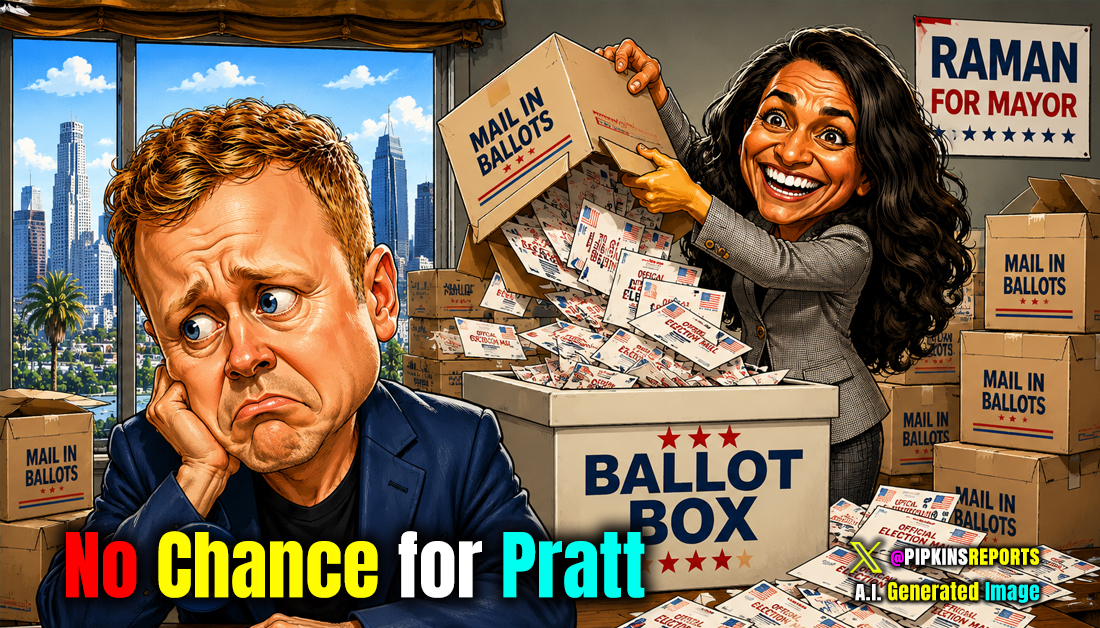
Critics need look no further than the Los Angeles mayoral race to understand why public confidence has eroded. Councilmember Nithya Raman climbed into second place on June 7, overtaking Spencer Pratt as post Election Day ballots continued to be counted. To skeptics, the distribution of those later ballots appeared anomalous, with Raman benefiting disproportionately while neither Karen Bass nor Pratt experienced comparable gains.
Some election integrity advocates view such swings as evidence that California’s system invites speculation that ballots collected through organized harvesting operations could be strategically submitted over time. There is no publicly available evidence demonstrating that such conduct occurred in this race… but the inability to either prove or definitively disprove those suspicions is itself part of the criticism leveled against California’s election laws.
The real debate, in my view, is not whether California elections are run according to the law. They are. The debate is whether the law itself creates conditions that make abuses difficult to detect and nearly impossible to prove after the fact.
That is why Bill Essayli’s statements strike me as little more than empty words. Announcing investigations sounds impressive, but prosecutors cannot prosecute conduct that lawmakers have already legalized. They cannot declare ballot harvesting fraudulent when California law expressly permits third party ballot collection.
Reuters and other news organizations have noted that election officials insist there is no evidence supporting claims of widespread fraud in the governor’s race or the Los Angeles mayor’s race. They may very well be correct according to the legal standards that currently exist. But that misses the point entirely.
Critics are not necessarily claiming that large numbers of people are breaking California law. They are arguing that California lawmakers have constructed a system that places convenience ahead of transparency and verification.
And if the rules themselves permit the conduct, federal investigators should not expect to uncover some giant criminal enterprise hiding in plain sight.
The most likely outcome is not a bombshell report. It is a slow fade. The investigations will drift out of public view, the headlines will move on, and Californians will continue voting under the same rules that produced the controversy in the first place.
Whether those rules deserve the public’s trust is another matter altogether.
Sources: California Elections Code §3017; Los Angeles Times; ABC7 Los Angeles; Fox 11 Los Angeles; Reuters.
You must be logged in to post a comment Login