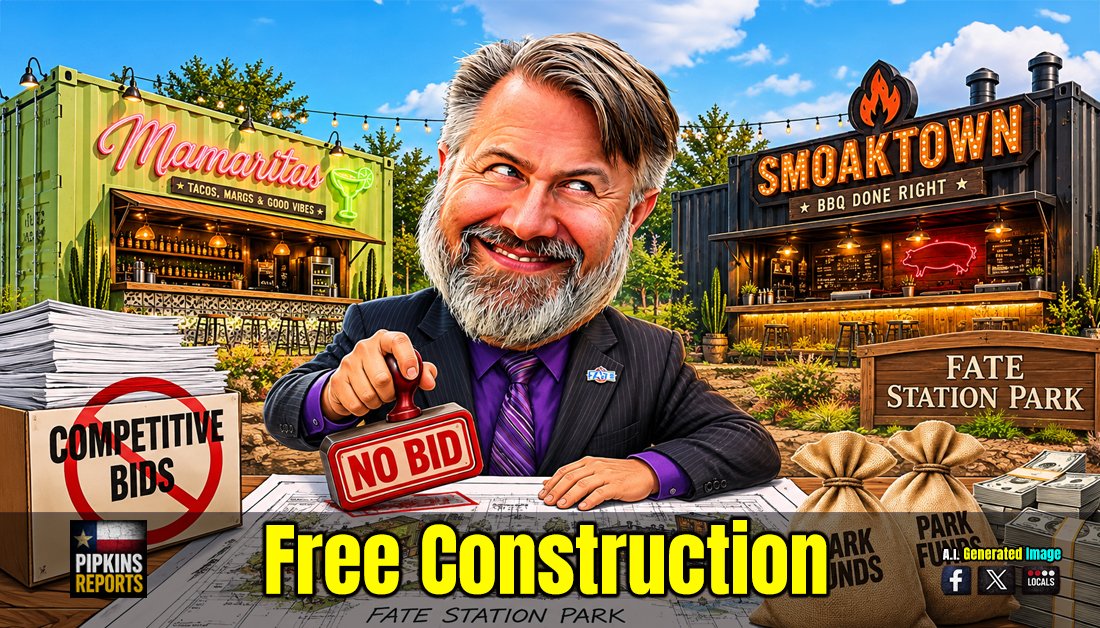
The $6 Million Food Haul Deal Raises Questions

Fate, TX – City records show public park resources are being used to build a new restaurant destination around two private businesses that were selected without any apparent competitive bidding process. And the tab will cost Fate plenty.
Fate Station Park (ie: Fate Food Haul) is being developed as an approximately $6 million project, according to Economic Development Director Emily Goodrum. City records show Fate is designing the restaurant spaces around the needs of Smoak Town BBQ and Mamaritas, while the City has agreed to absorb most of the costs normally carried by private restaurant tenants.
The original Opinion of Probable Cost (OPC) was $4.7 million provided by Steven Downs in an email to City Manager Michael Kovacs, discussed by city officials at a November 10, 2025 meeting. The new figure represents an increase of 36.2% or $1.7 million. Downs also said the City did not originally envision the park as a hub for numerous restaurants.
This comes as a revelation considering how the project was sold to the public as a way to keep the “Food Truck” style of dining … that the citizens of Fate enjoy so much.
The public costs of the project include tenant improvements and finish-out, property maintenance, property taxes, building insurance and most common-area maintenance, according to Goodrum’s explanation of the proposed lease structure. The City is also providing heaters, fans and shade structures for the restaurant areas.
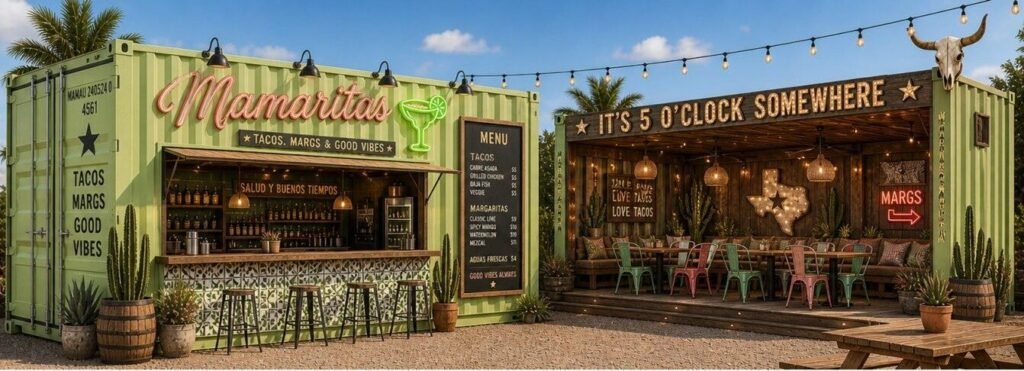
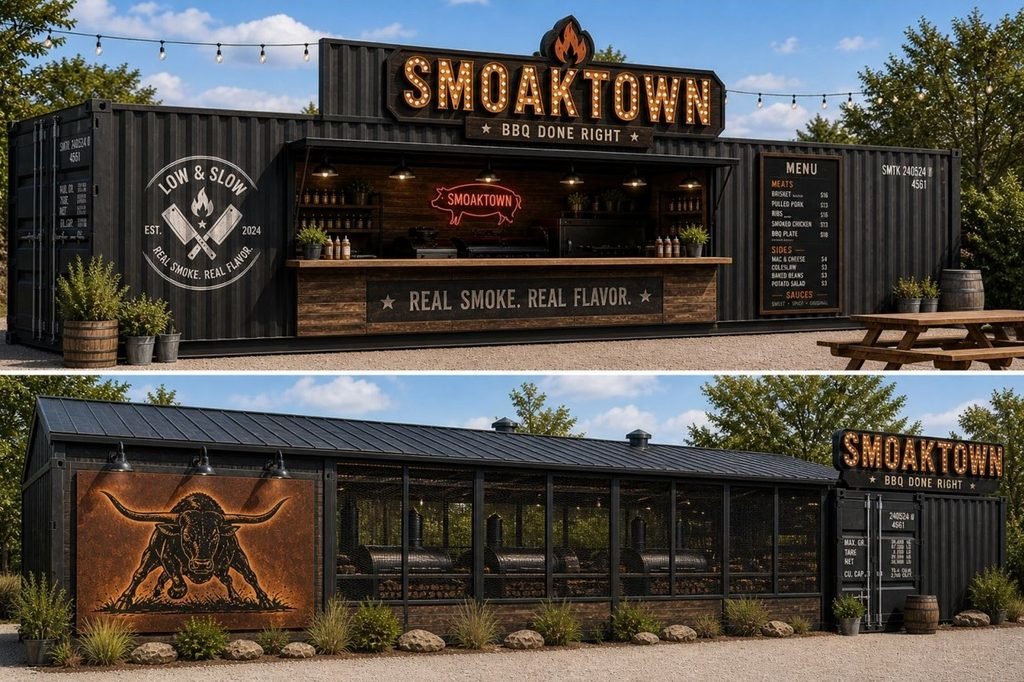
The city provides the actual buildings (metal container buildings) and all of the equipment, except for kitchen equipment. The city provides the installation of the grease interceptor and all underground utilities. For monthly usage, the restaurants will have a maximum out of pocket expense of $1000 per month, according to the draft of the lease agreements, which are not yet final.
In other words, the businesses aren’t simply renting a vacant box and bringing their own buildout. The City is building out a public asset to specifically accommodate those two restaurants. With no financing, design or development costs necessary for the restaurants. That’s quite a benefit to private business with public funds. A perk that no other restaurant owner would have the good fortune to obtain if they were building on their own.
Oddly, one item that the city is not providing is the signage. The singular feature that makes the design of the restaurants fit with the concept and tie the entire park into a cohesive design. Go figure.
The arrangement with the two restaurants becomes even more interesting when you look at how the tenants were selected.
Records obtained by Pipkins Reports show that on June 15, Assistant City Manager Steven Downs told Councilman Mark Hatley that the City was negotiating with Mamarita’s and SmoakTown. Those were the two businesses identified for the shipping-container restaurant spaces. Downs said the City was negotiating the terms with those businesses and that lease revenue would be dedicated back to the parks system.
The records reviewed by Pipkins Reports do not show any competitive solicitation for those restaurant spaces, nor do they show an open process in which other restaurants were invited to compete for the opportunity.
That raises a basic question: Why these two businesses?
The answer matters because public money has an opportunity cost. Money spent constructing tenant improvements, providing utilities and maintaining private restaurant facilities cannot simultaneously be spent somewhere else in the parks system. Calling the money “park money” does not make the underlying economic choice disappear.
The deflection of saying that, “no property tax money is used“, should not give anyone comfort. It’s still the citizens money whether it comes from the parks system, rent, sales tax, or property tax. Based on anticipated rental rates, the ROI for the City of Fate to make back the cost of construction of the two restaurants is approximately, 8-11 years.
The ROI of the entire cost of the park, ($6 mil) based on just the rental rates of those two restaurants is approximately 76 years.
76 YEARS
The City has a legitimate interest in making Fate Station Park successful. It has also explained that rent from the restaurant spaces must return to the park and will be used for programming designed to bring customers to downtown businesses.
Free Design Services
Goodrum told Mamaritas that the City’s design documents were still being developed and that the dimensions of the restaurant areas would remain approximately the same. She specifically provided design documents to the business while they were still in progress. She also invited Mamaritas to participate in meetings with the full design team when its portion of the project was discussed.
Smoak Town received similar treatment. In July, Cameron Haley told city officials that the proposed space would work for the business but that several lease provisions still needed to be negotiated, including operating hours and future improvements. Rob Haley was also directly involved in those discussions.
The proposed leases even contemplate the City Manager, Michael Kovacs, signing for the City…without any approval by the City Council. As of this publication, neither lease has been executed, and the City Council has not seen or approved the individual agreements in open session.
Pipkins Reports contacted representatives of both SmoakTown BBQ and Mamaritas for comment. Neither business responded to our inquiries before publication.
Mamaritas is owned by Laura Smith, who has publicly described herself as the company’s owner. Her husband and co-owner, Tyler Smith, has also been identified publicly as a Fate police officer. Neither of them have any prior restaurant operation experience before opening a bar at the food haul.
Being an employee of the city does not disqualify a person from owning a business in that city. Nor does it establish improper conduct. It does, however, make transparency especially valuable when a city is using public resources to create a facility intended to benefit private businesses.
Fate residents should be able to see the numbers, the selection process and the legal authority before the deal is done, not after.
Because once the concrete is poured and the contracts are signed, asking whether taxpayers got a fair deal becomes considerably harder than asking before the money is spent.







You must be logged in to post a comment Login