Texas Tourists Sheltering in Israel Amidst Hamas Attacks

A group of Texas tourists, who embarked on an educational journey to Israel with the Florida-based tour company Mejdi Tours, now find themselves in a precarious situation as the conflict between Israel and Hamas intensifies. These Lone Star State visitors are anxiously awaiting confirmation of safe passage out of the country while the volatile situation unfolds around them.
Mejdi Tours, founded by Aziz Abu Sarah and Scott Cooper, has long been dedicated to providing travelers with unique and immersive experiences in regions deeply impacted by religious and political divisions. This innovative company offers a distinct approach, employing both a Jewish or Israeli guide and a Palestinian guide on their tours. This dual-guide system allows tourists to gain a multifaceted perspective on the complex historical and cultural landscape of Israel and the occupied territories.
The co-founders, Abu Sarah and Cooper, come from diverse backgrounds themselves. Abu Sarah, with Palestinian roots, and Cooper, who is Jewish, aim to foster understanding and empathy among their tour participants. Their tours serve as a microcosm of their mission: to break down the barriers of ignorance, fear, and hatred that have divided communities for generations.
In the wake of the surprise attack by Hamas militants in Gaza, the Texas tourists chose to remain in Israel as they awaited their chance to leave through neighboring Jordan. Aziz Abu Sarah, ever committed to his mission, emphasized the group’s collective heartbreak and the pervasive sense of despair that has gripped the country.
While nearly 50 American tourists were in Israel at the time of the Hamas attack, the majority managed to exit the country safely through Jordan. However, this particular group from Texas, driven by a desire to understand the complexities of the region, made the difficult decision to stay behind.
The conflict, which escalated into a full-fledged war following the attack, has already claimed the lives of over 1,100 people on both sides, with thousands more suffering injuries. The violence shows no signs of abating as Hamas continues to launch rockets into Israel, met with retaliatory airstrikes.
The situation took a grim turn when CNN reported on video evidence showing at least four civilians who had been killed while in the custody of Hamas militants near the Gaza border. The authenticity of these videos was verified by the news outlet, raising concerns about the safety of hostages held by Hamas and other Palestinian armed groups. Among these hostages are high-ranking army officers and individuals from various nationalities.
The community of Be’eri, situated just three miles from the eastern border of Gaza, was one of the first to bear the brunt of the Hamas attack. Israeli authorities confirmed that most Hamas militants in Be’eri have been neutralized, but Israeli troops are working tirelessly to secure the area and eliminate any remaining threats.
As the conflict rages on, the fate of the hostages remains uncertain. Reports indicate that Hamas has taken more than 100 Israelis hostage, with their location in Gaza unknown. Another Palestinian armed group, Islamic Jihad, has also claimed to be holding at least 30 hostages in Gaza, though these claims remain unverified.
The situation remains fluid and highly volatile, with Israel deploying troops and maintaining a state of high alert along its borders to safeguard vulnerable areas and prevent further incursions. The Texas tourists, like many others caught in the crossfire, can only hope for a swift and peaceful resolution to the ongoing conflict that has touched the lives of so many on both sides.




Featured
Fauci Takes the Fifth, Democrats Rush to His Defense While Sidestepping His Own Pandemic Diary
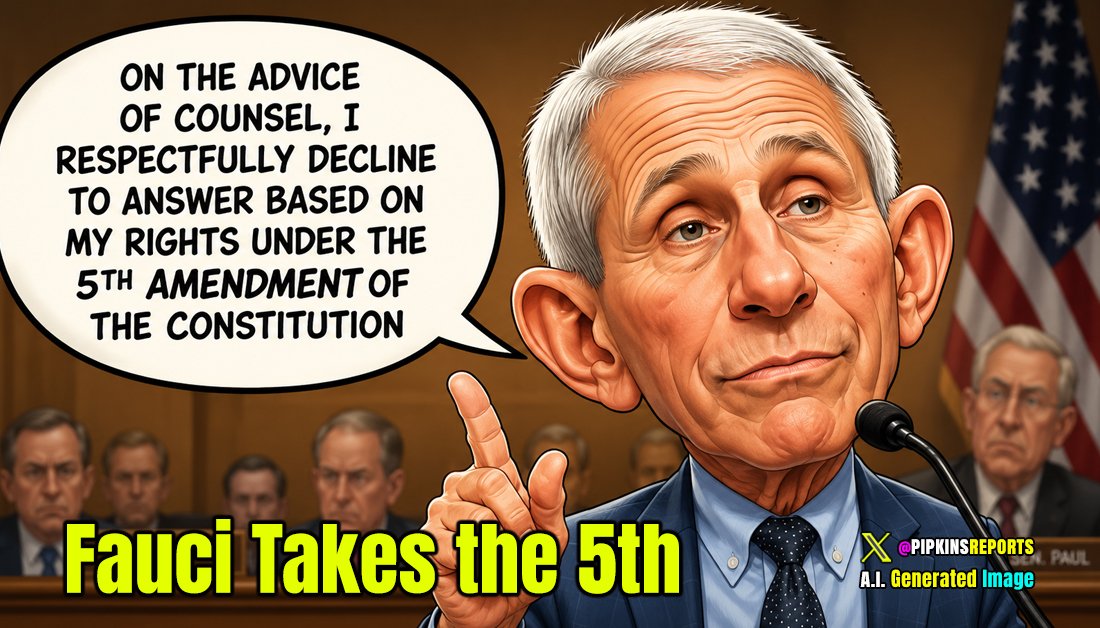
Washington, D.C. — One of the most recognizable faces of the COVID-19 pandemic sat before a U.S. Senate committee Wednesday, raised no dramatic objections, launched no fiery defense of his decisions, and then declined to answer lawmakers’ questions by invoking the Fifth Amendment. It was a moment that instantly became one of the defining political images of the post-pandemic era.
Dr. Anthony Fauci, the former director of the National Institute of Allergy and Infectious Diseases, appeared under subpoena before the Republican-led Senate Homeland Security and Governmental Affairs Committee after being called by Sen. Rand Paul, R-Ky. Rather than respond to questions about his role during the pandemic, Fauci told the committee he was following the advice of counsel and would invoke his constitutional right against self-incrimination.
The hearing quickly became a familiar partisan clash.
Paul argued that Fauci should answer questions surrounding government funding for research connected to the Wuhan Institute of Virology, shifting public statements regarding COVID-19’s origins, and decisions that shaped federal pandemic policy. Democrats, led by Ranking Member Sen. Gary Peters, D-Mich., countered that the hearing was little more than political theater designed to relitigate the pandemic instead of addressing current national security concerns.
But amid hours of defending Fauci’s reputation, Democratic members largely avoided discussing one subject that has increasingly drawn attention in recent days: Fauci’s own pandemic diary.
Before Wednesday’s hearing, Paul released more than 1,000 pages of Fauci’s government-maintained diary covering key periods of the pandemic. The senator argued that the private entries reveal inconsistencies between Fauci’s internal assessments and his public messaging during COVID-19.
[ Read and Download the Diary Here ]
Paul wrote on X that Fauci’s diary showed “what he wrote privately and what he told the country are two different stories.“
Some entries reportedly document uncertainty during the earliest weeks of the outbreak, uncertainty that many scientists shared as information rapidly evolved. Portions of those same observations had previously appeared in Fauci’s 2024 memoir and public interviews, according to the Associated Press. Other critics argue the diary raises additional questions deserving public examination.
Yet during Wednesday’s hearing, Democratic senators spent little time addressing the contents of the diary itself. Instead, much of their defense centered on Fauci’s decades of public service and repeated assertions that there is no credible evidence proving he committed criminal wrongdoing.
Scientists and public health officials likewise defended Fauci ahead of the hearing. More than 150 infectious disease experts signed a public letter rejecting accusations against him and urging Congress to end what they characterized as political attacks. Fauci has consistently denied misleading Congress and has maintained that the available scientific evidence favors a natural origin for COVID-19 rather than a laboratory leak.
Paul, however, has argued the hearing was necessary because Congress still has unanswered questions. He also noted that invoking the Fifth Amendment prevents lawmakers from obtaining sworn testimony that could either confirm or refute allegations surrounding Fauci’s public statements.
Fauci’s attorney, David Schertler, called Paul’s accusations “false and disgraceful” and said they would consider legal options in response.
The hearing also unfolded against an unusual legal backdrop. Former President Joe Biden previously granted Fauci a presidential pardon covering potential federal offenses tied to his government service, though legal scholars have noted that such pardons do not shield a witness from future perjury or contempt allegations arising from new testimony. That reality made Fauci’s decision to invoke the Fifth all the more politically significant, regardless of the legal reasons offered by his attorneys.
Whether Republicans ultimately pursue a contempt referral remains uncertain.
What is certain is that Wednesday’s hearing added another chapter to one of the most divisive political debates in modern American history.
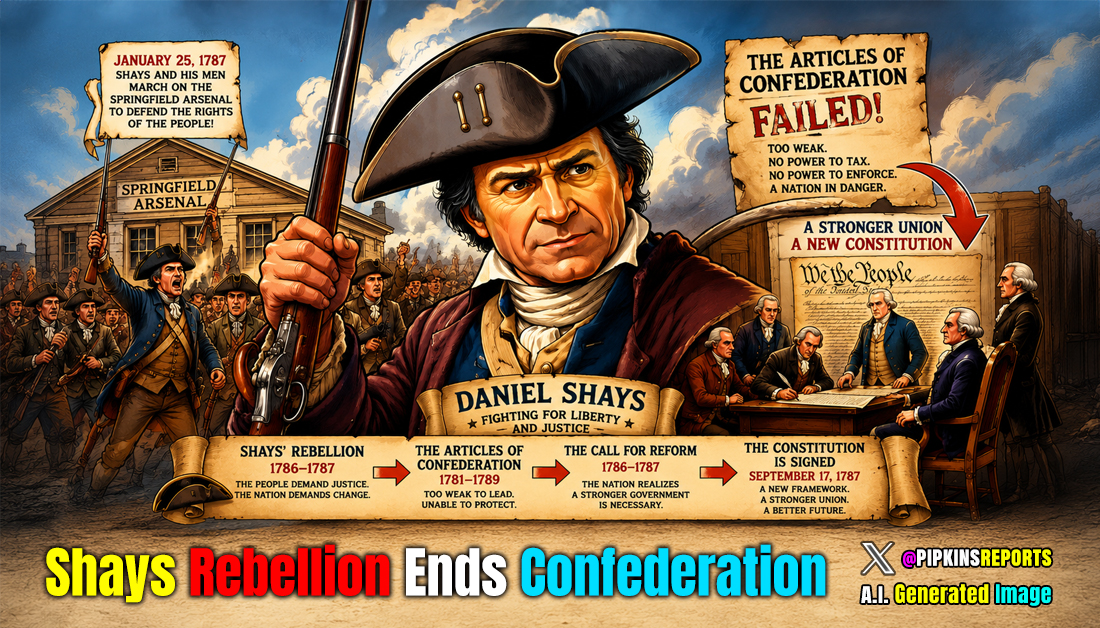
HISTORY – As Americans prepare to celebrate the 250th anniversary of the Declaration of Independence, it’s worth remembering something many school textbooks and social media historians tend to skip these days. The Constitution that hangs behind glass in the Rotunda for the Charters of Freedom, was not America’s first constitution.
It was the second.
Long before James Madison and the delegates gathered in Philadelphia in 1787, the young nation experimented with another system of government, one born amid war, shaped by distrust of centralized authority, and ultimately abandoned when its flaws became impossible to ignore.
On July 4, 1776, the Continental Congress adopted the Declaration of Independence, formally announcing that the Thirteen Colonies of Britain considered themselves free and independent states. Yet true independence would have to be won on the battlefield.
The Revolutionary War had already begun more than a year earlier with the battles of Lexington and Concord in April 1775. For eight years, General George Washington‘s Continental Army fought the British Empire through defeats, shortages, and brutal winters. Victory was never guaranteed. It would end with Britain’s surrender at Yorktown in October 1781, although the war was formally concluded with the Treaty of Paris in September 1783.
However, while the war was still raging, Congress recognized that the new nation, if it were to be successful in its rebellion, needed a framework for government.
Delegates drafted the Articles of Confederation in November 1777. After years of debate among the states, the Articles were finally ratified on March 1, 1781, becoming America’s first constitution.
The Articles established what was essentially a loose alliance of 13 sovereign states. Congress could conduct diplomacy, declare war, and manage western territories, but its powers were intentionally limited. There was no president. No national judiciary. Congress could request money from the states, but had no authority to compel payment or levy taxes.
At the time, the arrangement made sense.
Americans were still fighting for independence, and few had any appetite for creating a strong national government that might resemble the British system they were trying to escape. Nobody wanted to trade George III for another distant authority. So the states retained most of their power, and Congress remained intentionally weak.
But peace exposed weaknesses that war had masked.
States often ignored Congress. They imposed tariffs against one another, printed competing currencies, and frequently refused to contribute money to the national government. War debts mounted. Foreign powers questioned whether the United States could survive as a unified nation. There was no executive branch to enforce laws and no national courts to settle disputes.
Then came Shays’ Rebellion in 1786.
Shays’ Rebellion erupted in western Massachusetts in the fall of 1786, when farmers burdened by debt and heavy taxes faced foreclosures and possible imprisonment. Many were Revolutionary War veterans who believed they had sacrificed for independence only to find themselves losing their farms.
Led by former Continental Army captain Daniel Shays, groups of armed men shut down courts to prevent foreclosures and, in January 1787, attempted to seize the federal arsenal at Springfield. The uprising was ultimately suppressed by a privately funded state militia, but the episode sent shockwaves throughout the country. To many national leaders, the rebellion exposed the inability of the Confederation government to maintain order or provide for the common defense.
The uprising by Massachusetts farmers alarmed George Washington, James Madison, and Alexander Hamilton. Washington even wrote in a letter to Henry Lee that he was, “mortified beyond expression” and worried that Americans were proving incapable of self-government. James Madison viewed the rebellion as proof that excessive democracy and weak national authority endangered republican government, and Alexander Hamilton practically used the rebellion as Exhibit A to propose a stronger central government. It became painfully clear that merely tweaking the Articles would not solve the problem.
So delegates assembled in Philadelphia in May 1787 with the stated purpose of revising the Articles of Confederation. But instead, they scrapped them altogether.
Over the course of four months, the Constitutional Convention produced an entirely new framework. Completed in September 1787, the United States Constitution officially took effect on March 4, 1789. It created three branches of government, gave Congress the power to tax and regulate commerce, and established a system of checks and balances intended to preserve liberty while providing enough national authority to hold the republic together.
Most importantly, the States regained most of their independence. With the Federal Government becoming the arbitrator of conflict between them. Any power not specifically specified as belonging to the federal government is reserved for the States, or the People.
Over the years, many amendments have been made. Perhaps the most disastrous amendment that is still in effect today is the 17th amendment … which stripped away representation by the States, which were so important to our founding fathers.
Opinion
Modern political debates often treat the Constitution as though it sprang into existence fully formed in 1787, but those of us who follow history understand another side of the story.
With the Articles of Confederation, the Founders first tried a decentralized system that left most authority with the States. But they learned through experience that a weak national government could be nearly as dangerous as one that is too strong.
That doesn’t mean they intended to create the sprawling administrative state Americans know today. Far from it. Their goal was balance, national unity without sacrificing liberty, federal authority restrained by checks, balances, and state sovereignty.
As the nation approaches its semiquincentennial (250th anniversary), Americans should remember that the Constitution itself was born from a humble trial and error. The Founders recognized when their first attempt wasn’t working, and had the wisdom to take steps and fix it.
It’s a reminder that self-government requires both principle and the willingness to confront reality when facts demand it.
OPINION
The United States of America – The framers of our Constitution weren’t building a pure democracy; they were building a balancing act. And they knew exactly what they were doing.
The original Constitution divided political power among different interests. The People elected the House of Representatives. State legislatures selected Senators. The Executive branch was headed by a President chosen through the Electoral College. Everybody had skin in the game. Everybody had a seat at the table. And nobody got all the power.
That arrangement wasn’t some accident buried in old parchment. It was deliberate.
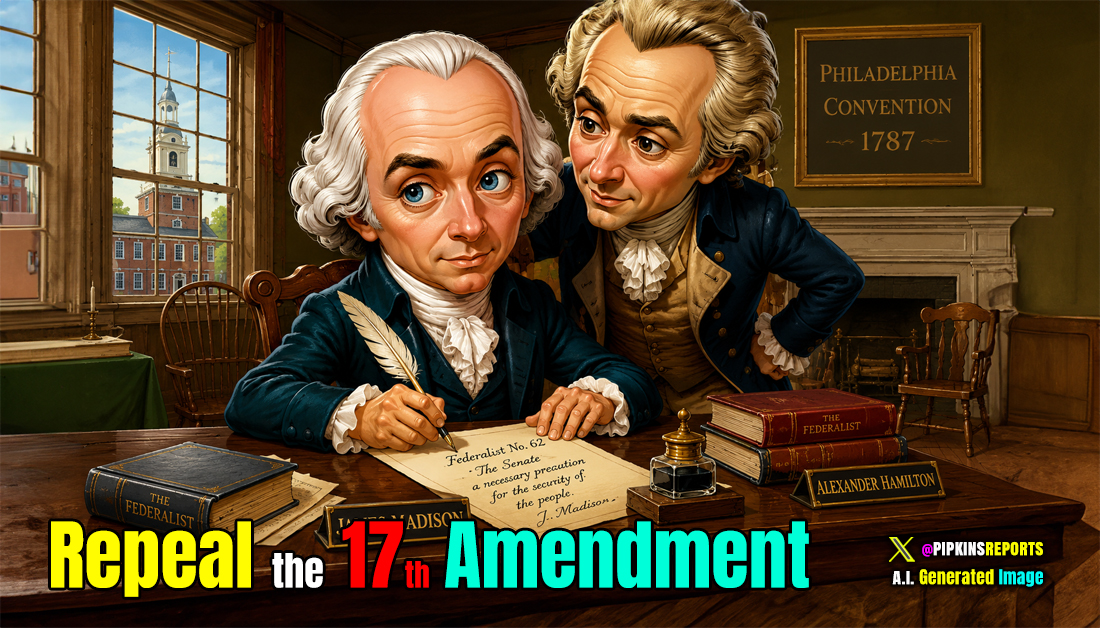
Article I, Section 3 of the Constitution plainly stated that senators would be “chosen by the Legislature” of each state. According to James Madison in Federalist No. 62, appointment by state legislatures was designed to create a direct connection between the states and the federal government. He wrote that this method would “form a convenient link between the two systems.” The Senate was never intended to represent the passions of the public. The House already did that. The Senate represented the states themselves.
And that’s because the United States was formed by sovereign states entering into a union, not by Washington handing power down from on high.
During the Constitutional Convention of 1787, delegates spent weeks fighting over representation. Large states wanted population-based representation. Smaller states feared being steamrolled. The eventual Connecticut Compromise created two chambers, one representing the People and one representing the States. It was a compromise that helped save the convention from collapse. Benjamin Franklin himself urged concessions to preserve the union.
Madison argued repeatedly that the Senate’s structure would act as a stabilizing force. The upper chamber would provide experience and continuity while insulating the country from sudden swings in public opinion. The U.S. Senate’s own historical records note that senators were intentionally made older and selected by state legislatures to provide stability and restraint.
Then came 1913.
The Seventeenth Amendment fundamentally changed the arrangement by transferring the election of senators from state legislatures to popular vote. Supporters argued it would reduce corruption and legislative deadlocks. It certainly changed things, but it also removed the states themselves from direct representation in Washington. The National Constitution Center describes the amendment as the only major constitutional change affecting the structure of Congress since the Bill of Rights.
Since then, senators have become national politicians rather than ambassadors of their state governments. Their incentives changed. Governors and legislatures may protest federal mandates, but their senators often answer first to national donors, party leadership and television cameras.
That’s a very different system than the one the founders designed.
State governments today have no institutional voice inside Congress. They sue Washington. They lobby Washington. They beg Washington. But they no longer possess representation within Washington itself, which is exactly what the original Senate provided.
Supporters of the Seventeenth Amendment point to corruption scandals that occurred before 1913. Those problems were real. But replacing one flaw with another doesn’t necessarily count as progress, history is full of reforms that created new problems while solving old ones.
The Constitution was built on competing interests checking one another. The House represented the people. The Senate represented the states. The president represented the nation as a whole. It wasn’t complicated.
We’ve drifted far from that arrangement.
Today Washington treats states less like partners and more like administrative districts. Federal agencies dictate policy, Congress spends borrowed money with abandon, and senators spend more time chasing campaign cash than defending state sovereignty.
Maybe the old system wasn’t perfect. Nothing designed by human beings ever is. But the framers understood something modern politicians often forget… Power needs rivals.
Repealing the Seventeenth Amendment wouldn’t weaken democracy. It would restore federalism. It would give state governments a genuine stake in the game again and force Washington to remember that the states created the federal government, not the other way around.
We shouldn’t expect the people who benefit from the current arrangement to voluntarily surrender power. Congress is not likely to repeal the Seventeenth Amendment, and senators certainly aren’t inclined to vote themselves out of their present status. The framers anticipated moments like this.
That’s why Article V of the Constitution gives the states another path, a convention for proposing amendments called by two-thirds of the state legislatures. If Americans truly want to restore federalism and return the states to their rightful place in the constitutional order, the answer probably won’t come from Washington. It’ll have to come from the states themselves, from the People. The people created the states, the states created the federal government, and sometimes it’s necessary to remind Washington who’s really supposed to be in charge.
For those who believe the time has come to restore the constitutional balance our founders envisioned, organizations like Convention of States Action are already leading the fight. Visit https://conventionofstates.com/, get informed, and get involved, because Washington isn’t going to limit itself unless the states and the people demand it.
Sources: Article I of the Constitution, James Madison’s Federalist No. 62, Madison’s notes from the Constitutional Convention, and historical material from the U.S. Senate and Library of Congress.
You must be logged in to post a comment Login