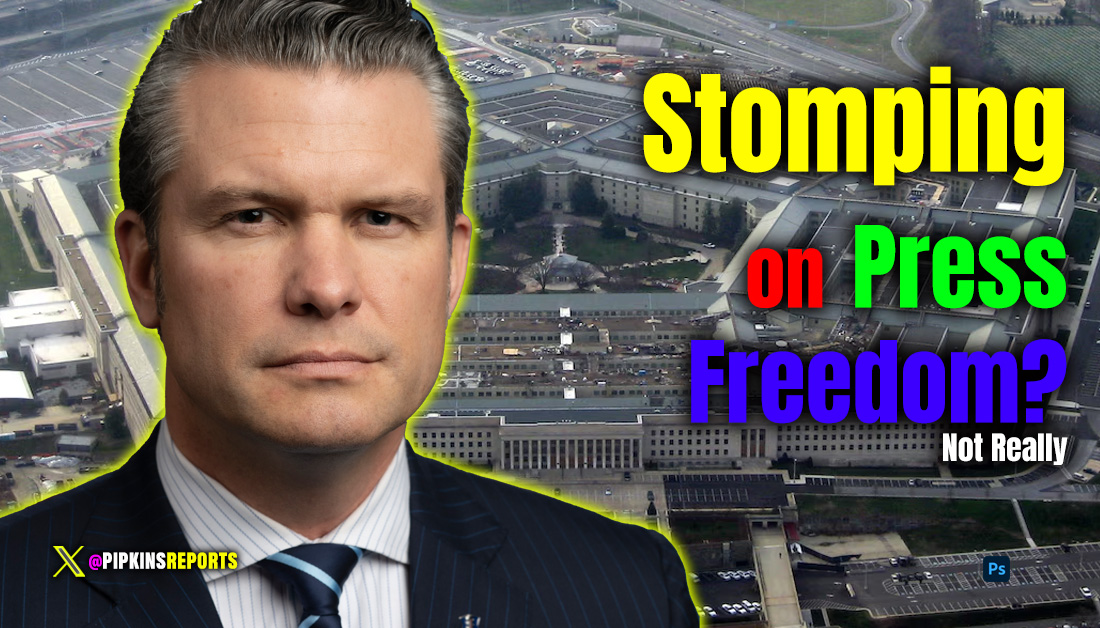
New Pentagon Media Access Rules: Balancing Security and Scrutiny in a Military Stronghold

Arlington, VA – The Pentagon has rolled out updated rules for media access this week, effective October 15, 2025. Dubbed Pentagon Facility Alternative Credentials (PFACs), these guidelines replace previous protocols with a structured framework aimed at safeguarding a building that’s as much a nerve center for national defense as it is a hub for public information.
While dozens of journalists from major outlets like The New York Times, CNN, and even Fox News have dramatically turned in their badges in protest—vacating shared workspaces in a symbolic walkout—the changes deserve a measured nod of approval. After all, this isn’t the open-air spectacle of Congress, where elected officials thrive on unscripted drama. The Pentagon is a working military facility, teeming with classified operations and personnel whose daily tasks could tip the scales of global security. Prioritizing leak prevention over a reporter’s dash for an exclusive “scoop” from an undisclosed source isn’t just prudent—it’s essential.
The new rules, outlined in a May 2025 memo and refined through an October 6 update, stem from the Pentagon Force Protection Agency’s (PFPA) need to tighten physical and information controls amid rising threats. At their core, they require media members to complete a “Security Awareness Briefing” and sign an acknowledgment pledging compliance with Department of War (DoW) policies—no small ask, but one that underscores the gravity of the environment. Key provisions include:
- Visible Credentials and Escort Mandates: PFACs must be worn above the waist at all times (except during approved events like briefings), and unescorted access is limited to narrow zones, such as the first-floor food court between Corridors 1 and 10 or specific paths on upper floors (detailed in Appendices C and D). Elsewhere, public affairs escorts are required, ensuring journalists don’t inadvertently wander into sensitive areas.
- Information Safeguards: The briefing explicitly warns against unauthorized disclosure of Classified National Security Information (CNSI) or Controlled Unclassified Information (CUI), with potential revocation for violations under laws like 18 U.S.C. §§ 793 and 952. This isn’t a gag order on reporting—media can still publish anything they learn through proper channels—but it draws a firm line against soliciting or handling non-public materials that could endanger lives or operations.
- Filming and Recording Restrictions: Per 32 CFR 234.15, cameras and recorders are prohibited without at least one week’s advance approval from PFPA or the Assistant Secretary of Defense for Public Affairs. Exceptions abound for official press events, unilateral stand-ups in the Briefing Room, or DoD-monitored interviews, preserving the visual storytelling that defines modern coverage.
These measures aren’t born of paranoia; they’re a direct response to the Pentagon’s unique mandate. Unlike the Capitol, where transparency is baked into democratic oversight, the E-Ring houses strategists plotting responses to cyber threats, missile defenses, and covert ops. A leaked memo or ambushed official spilling beans mid-corridor isn’t just embarrassing—it’s a vector for adversaries. The rules affirm that access is a “privilege subject to the discretion of government officials,” not an unfettered right, aligning with longstanding regs like 32 CFR Part 234.
And crucially, they don’t shutter the doors to journalism: Reporters retain full entree to public briefings, podium announcements, and any declassified info shared via the Office of the Assistant Secretary of Defense for Public Affairs (OATSD(PA)). No story is off-limits; the only taboo is the ambush-style sourcing that turns a secure workspace into a free-for-all.
That said, the framework isn’t flawless, and here’s where reservations creep in:
These rules could inadvertently squeeze independent media, the scrappy underdogs who often deliver the most unvarnished takes on defense matters. Requirements like sponsorship through a U.S. public affairs office and proof of “minimum monthly” visits for renewals (initial three-month PFACs, then six-month probationary periods) favor entrenched outlets with deep pockets and dedicated Pentagon beats.
Freelancers or solo operators—think podcasters dissecting procurement scandals or bloggers tracking drone ethics—might struggle to secure that elusive sponsor or log the requisite face time without institutional backing. Add vague revocation triggers like “unprofessional conduct” or “soliciting non-public info,” and the chilling effect on diverse voices grows. As one defense trade press statement lamented, this risks sidelining “smaller publications specializing in military coverage” at a time when broad scrutiny is vital.
It’s a fair critique, echoed in the en masse badge surrenders: Over 30 outlets, from giants to niche players, opted out rather than ink the pledge, warning of eroded First Amendment ground. Yet even here, the Pentagon’s revisions show flexibility—issuance for existing PFACs extends through October 31, and parking perks like designated “PRESS” spots remain for compliant crews. During emergencies, from pandemics to active threats, access might tighten for all, but that’s workforce protection, not press persecution.
Ultimately, these rules fortify the Pentagon’s dual role: a fortress of secrets and a fountain of facts. By channeling media energy toward structured engagement—escorted interviews, approved footage, and robust briefings—they enhance, rather than hinder, accountable reporting. Independents deserve a carve-out to level the field, perhaps via streamlined sponsorship for verified freelancers. But in a world of hybrid warfare and info ops, national security can’t play second fiddle to the thrill of the scoop.
As the dust settles from this week’s exodus, let’s hope cooler heads prevail. But let us not forget that the press, who have set their own hair on fire over this issue, have reported 90% negative news coverage of the Trump administration and are, without any doubt, hostile to every action taken by this administration. So, a bit of perspective is in order.
** A copy of the entire rules and regulations can be found here:
Pipkins Reports is committed to fair, fact-based coverage of defense and national security. Views expressed are those of the author.


La Marque, TX – Keith Bell, 53, the mayor of La Marque, was arrested Friday in Angleton on a warrant charging him with indecent exposure, a Class B misdemeanor. He was released Saturday after posting a $75,000 bond, with a judge ordering him to have no contact with the woman who reported the incident, stay away from her residence and stay away from the school she attends.
According to the Houston Chronicle, Bell was allegedly seen masturbating in the lobby of an office building in Angleton on Friday morning. A woman, whose identity is being withheld, reportedly witnessed the incident and contacted authorities, prompting Brazoria County Sheriff’s deputies to respond. The Chronicle reported that Bell was taken into custody and booked into the county detention center.
Those are allegations, not a conviction. Bell has not been found guilty of the charge, and the publicly available reporting does not identify an attorney representing him or provide a statement from Bell disputing the accusation.
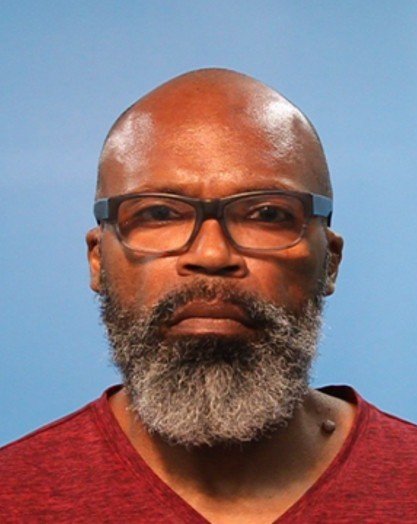
The City of La Marque confirmed the arrest Friday, in a statement where they stated, “To the residents of La Marque, we recognize that this is a shocking and disheartening development during a period that has already brought significant uncertainty and challenges to our community. We understand and share your concerns.” City officials also emphasized that the alleged conduct occurred outside Bell’s official duties as mayor and said the city would follow its charter and applicable law while gathering verified information.
Bell’s arrest does not automatically remove him from office. The city said Saturday that Bell remains mayor unless he resigns or is removed through the procedures established by the city charter and Texas law. City leadership said it had not communicated with Bell following his release, and Bell had not contacted city staff at the time of reporting.
This isn’t Bell’s first trip with controversy.
Bell has been involved in La Marque government for years. He served on the council for 17 years before becoming mayor, and he was sworn into the mayor’s office in January 2021. He was reelected in May 2024, defeating Joel Camacho with 63.57 percent of the vote, according to official Galveston County election results.
Bell also survived a 2022 recall election. More recently, he faced another recall effort in 2025, which Bell disputed as based on false allegations. That political history doesn’t establish anything about the current criminal case, but it does mean La Marque’s mayor has never exactly been a stranger to controversy.
Under Texas Penal Code §21.08, indecent exposure involves exposing the anus or genitals with intent to arouse or gratify sexual desire while being reckless about whether another person is present who will be offended or alarmed. A first offense is generally a Class B misdemeanor.
Kentucky, USA – Mitch McConnell has been out of public view for 71 days. No speech. No interview. No video. No public appearance. Not even a short phone recording of the 84-year-old senator telling Kentucky voters, in his own voice, that he’s doing OK.
For a man who spent nearly two decades at the center of American political power, that is an extraordinary silence. And it has created a vacuum, as every vacuum eventually does, that the internet has been more than happy to fill.
McConnell’s last confirmed in-person Senate vote came June 11, when he voted on a cloture motion involving judicial nominee Justin D. Smith. He had also been present during the Senate’s marathon June 4 vote-a-rama, which ran into the early morning hours, and Senate records show him presiding over a Defense Appropriations subcommittee hearing June 9.
Three days after that last confirmed Senate appearance, McConnell was hospitalized following a fall at his Washington residence that left him “briefly unconscious”. His office later said he suffered a mild case of pneumonia and was undergoing rehabilitation.
On July 12, McConnell allegedly addressed Kentuckians in a written statement, saying he was recovering from the fall and pneumonia. His office released a photograph showing him sitting beside his wife, Elaine Chao, holding that day’s Washington Post.
That photo did not end the questions. It multiplied them.
A second photograph, released July 27 and reportedly dated July 26, showed McConnell again with Chao. Neither image included video or audio of McConnell speaking.
McConnell was discharged from a rehabilitation facility Aug. 6 and said he would continue intensive physical therapy at home while remaining engaged with Senate business remotely. His office has not announced when, or whether, he will return to the Capitol.
Republican colleagues have said they have spoken privately with him. Former McConnell adviser Scott Jennings described a lengthy conversation in which he said McConnell sounded alert and discussed politics and world affairs. But those conversations remain private.
And that is the heart of the problem.
Kentucky Gov. Andy Beshear, a Democrat, has repeatedly called for McConnell to provide a direct public update. Beshear recently said he had received “absolutely nothing” back from McConnell despite reaching out.
Meanwhile, social media has gone full Texas-sized conspiracy mill.
Benny Johnson on X wrote July 7 that McConnell’s family should answer demands for “proof of life,” while raising questions about Chao’s China connections and travel. Laura Loomer on X went considerably further, claiming without publicly established evidence that McConnell was “brain dead” and being kept alive by machines.
There is no actual evidence establishing those claims.
But dismissing every question as a conspiracy theory is equally lazy. The public record really is unusual: an elderly senator suffers a serious fall, spends weeks hospitalized and in rehabilitation, releases two questionable photographs and written statements, and remains completely absent from public view.
If he were truly coherent, a 30-second video would solve the issue … speculation grows that this is simply not possible and that is the reason they haven’t provided one.
There is now a natural deadline looming over this strange saga: September 14, 2026. That is the date the Senate is scheduled to return to regular business after its August recess, meaning McConnell will have been absent from public view for 95 days since his last confirmed appearance on June 11.
By then, a photograph and another written statement attributed to McConnell simply won’t cut it. If he is healthy enough to continue serving, his constituents should be able to see and hear him. If he isn’t, Kentucky voters deserve to know that, too.
September 14 shouldn’t necessarily be a literal deadline for his medical recovery, but it is a reasonable public accountability deadline: when the Senate comes back to work, the senator whose name appears on the roll should be able to demonstrate, in his own voice and on camera, that he is alive, aware and capable of carrying out the job for which Kentucky elected him.
If the nation doesn’t hear from him by September 14th, a criminal investigation should take place.
Featured
Rowlett Police Officers, Drugs and a Barroom Encounter: What the Chief Didn’t Tell the Public
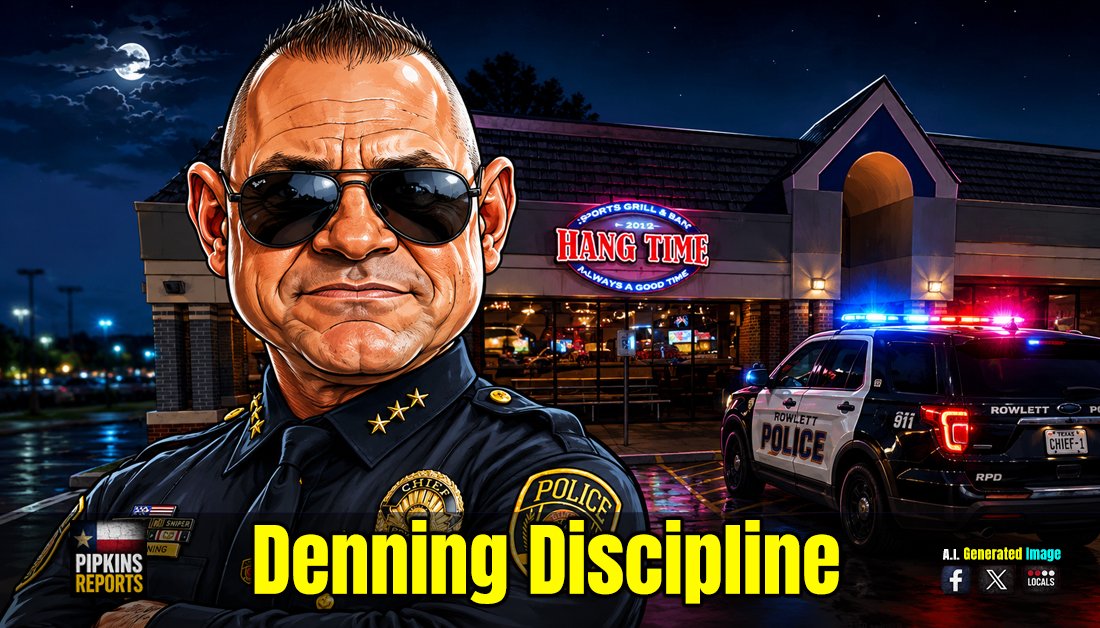
Rowlett, TX – On July 28, 2026, Rowlett Police Chief Michael Denning took to Facebook with what he called a message of “transparency and accountability” concerning an incident involving three off-duty Rowlett police officers at a local bar in 2025.
Denning said the officers had been approached by a man who didn’t know they were police. The man allegedly produced what appeared to be an illegal substance and said he was known to deal drugs at the establishment. According to Denning, one officer recognized an opportunity to gather intelligence on local narcotics activity, briefly engaged the man and arranged a follow-up narcotics transaction at another location. No transaction occurred, Denning said.
“The officers”, according to the chief’s account, realized the encounter could become an unauthorized investigation and promptly notified an on-duty supervisor. They were told to disengage and go home, and they complied.
Denning also acknowledged something else: all three officers had violated department policy and had received discipline.
What the chief didn’t tell Rowlett residents was exactly what happened inside that bar, what the officers did after leaving it, which department policies they violated, and how serious the resulting discipline actually was.
Pipkins Reports has now obtained the Rowlett Police Department’s internal affairs records concerning the incident. The department’s own investigation provides a much fuller account.
And it’s considerably less tidy than the Facebook version.
According to the March 11, 2025 internal affairs report, the incident began on Jan. 23, 2025, after the three officers had finished their shift. They met for drinks, first going to Brass Tap in Rockwall before heading to Hang Time in Rowlett. The report states that at least some of the officers had consumed alcohol.
At Hang Time, a patron identified in the investigation as “Shane” approached the officers, apparently unaware that they were police officers. During the conversation, one officer detected a strong odor of marijuana and asked Shane whether he had any.
Shane produced a bag containing an unknown substance and placed it on the table.
One of the officers picked up the bag, examined its contents, and removed some of the substance to smell it. They used the flash on their cellphone to illuminate the substance, which may have contributed to alerting the public. The officer later told investigators that he believed the substance was Delta 9. The bag was returned to the table, where Shane retrieved it, the report says.
The conversation then moved beyond marijuana.
Shane told the officers he could obtain other narcotics, including mushrooms, and asked whether they wanted to meet him to obtain them. The officer agreed.
At one point, Shane expressed concern about being robbed. An officer responded by lifting his shirt and displaying his department-issued firearm. The investigative report says he did so on three occasions during the encounter, including once when he indicated the weapon with his right hand.
This was not an authorized Rowlett Police Department undercover operation. It was three off-duty officers at a bar. And that distinction becomes important when the department’s findings are examined.
This was an off-duty encounter that eventually produced an internal affairs investigation, multiple sustained policy violations, and disciplinary action against all three officers. The Rowlett Police Department’s own investigative report tells a considerably more complicated story than the sanitized version that Chief Michael Denning presented to the public in a July 28 Facebook statement.
After some interaction inside the bar, which was recorded on various surveillance cameras and reviewed during the investigation, Shane suddenly became eager to leave and stated he would meet them at a nearby gas station.
While Shane was leaving, one of the officers contacted Sgt. Hughes, with Rowlett Police, and reported that Shane might be driving while intoxicated and that he had attempted to sell the officers narcotics. The sergeant advised that the officers should leave and let on-duty police handle the situation.
Before they could leave, however, the bar manager confronted them after being told they were attempting to sell narcotics, which would not be permitted in their establishment. The officers identified themselves as police and explained they weren’t involved in illegal activity. They told the manager they had already reported the incident to the on-duty sergeant. They paid their bill and left.
But the encounter wasn’t quite over.
After leaving Hang Time, one officer went home. The other two drove past Shane’s residence, using an address obtained during their conversation at the bar.
After speaking with Sgt. Hughes, the officers decided to get fuel at a different gas station than the EZ Mart on their way home.
What the Investigation Found
The department did not conclude that the officers committed a crime involving marijuana. Investigators found insufficient evidence to establish a violation of Texas Health and Safety Code §481.121, noting questions about whether the substance was actually marijuana and the lack of testing to establish its composition. The video also did not clearly establish what was inside the bag.
The internal investigation did, however, sustain several departmental violations.
Among them were violations involving conduct, off-duty law enforcement actions, firearms and alcohol, and displaying police identification. This is what the officers were disciplined for. The investigation also found that the officers’ actions amounted to an unauthorized operational plan because they were off duty and the encounter was not an official police operation.
The department recommended a two-day, 20-hour suspension without pay for one officer, along with ABLE training.
Another officer received a written reprimand and was required to complete an ABLE refresher.
The most severe discipline went to the officer who displayed the firearm. The department recommended a four-day, 40-hour suspension without pay (Reduced to 30 hours by Chief Denning), removal from the Problem-Solving Unit (PSU), reassignment to Patrol, ABLE training, and a law-enforcement de-escalation course.
A Note About Names
Pipkins Reports received the complete 91-page investigative report, but one officer’s identity was redacted in the records provided to us. We are not going to speculate about the reason for that redaction.
We have chosen to redact the names of the other officers in this article. Their identities do not change the facts, the department’s findings, or the discipline imposed, and in our opinion, publishing their names serves no legitimate public interest. Our redactions are clearly labeled in the accompanying copy of the report; the department’s original redactions are not labeled.
You must be logged in to post a comment Login