New Pentagon Media Access Rules: Balancing Security and Scrutiny in a Military Stronghold
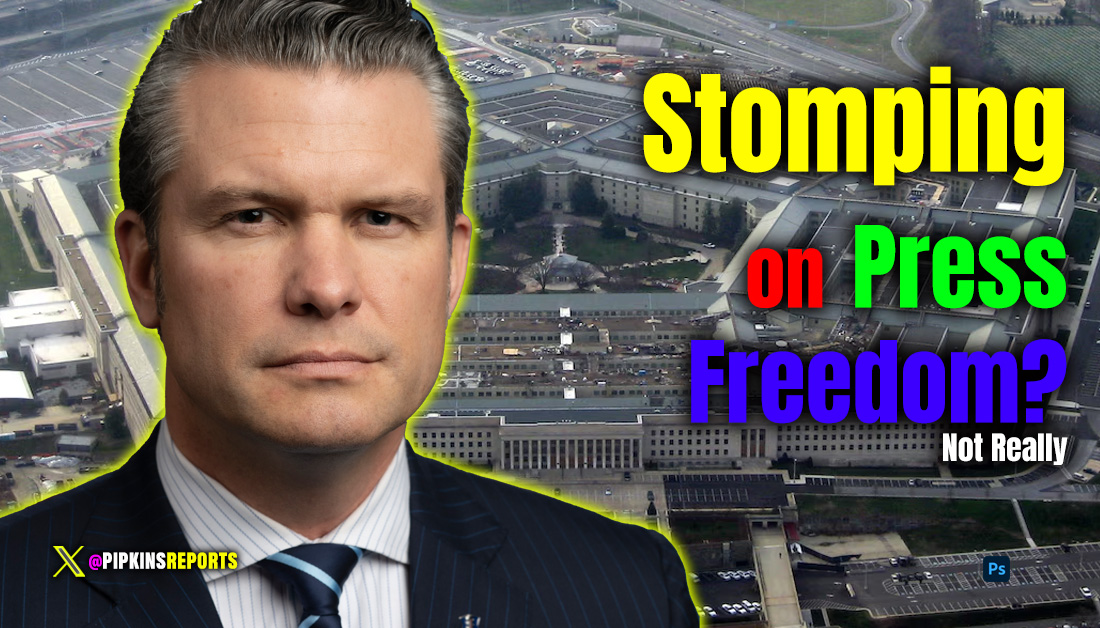
Arlington, VA – The Pentagon has rolled out updated rules for media access this week, effective October 15, 2025. Dubbed Pentagon Facility Alternative Credentials (PFACs), these guidelines replace previous protocols with a structured framework aimed at safeguarding a building that’s as much a nerve center for national defense as it is a hub for public information.
While dozens of journalists from major outlets like The New York Times, CNN, and even Fox News have dramatically turned in their badges in protest—vacating shared workspaces in a symbolic walkout—the changes deserve a measured nod of approval. After all, this isn’t the open-air spectacle of Congress, where elected officials thrive on unscripted drama. The Pentagon is a working military facility, teeming with classified operations and personnel whose daily tasks could tip the scales of global security. Prioritizing leak prevention over a reporter’s dash for an exclusive “scoop” from an undisclosed source isn’t just prudent—it’s essential.
The new rules, outlined in a May 2025 memo and refined through an October 6 update, stem from the Pentagon Force Protection Agency’s (PFPA) need to tighten physical and information controls amid rising threats. At their core, they require media members to complete a “Security Awareness Briefing” and sign an acknowledgment pledging compliance with Department of War (DoW) policies—no small ask, but one that underscores the gravity of the environment. Key provisions include:
- Visible Credentials and Escort Mandates: PFACs must be worn above the waist at all times (except during approved events like briefings), and unescorted access is limited to narrow zones, such as the first-floor food court between Corridors 1 and 10 or specific paths on upper floors (detailed in Appendices C and D). Elsewhere, public affairs escorts are required, ensuring journalists don’t inadvertently wander into sensitive areas.
- Information Safeguards: The briefing explicitly warns against unauthorized disclosure of Classified National Security Information (CNSI) or Controlled Unclassified Information (CUI), with potential revocation for violations under laws like 18 U.S.C. §§ 793 and 952. This isn’t a gag order on reporting—media can still publish anything they learn through proper channels—but it draws a firm line against soliciting or handling non-public materials that could endanger lives or operations.
- Filming and Recording Restrictions: Per 32 CFR 234.15, cameras and recorders are prohibited without at least one week’s advance approval from PFPA or the Assistant Secretary of Defense for Public Affairs. Exceptions abound for official press events, unilateral stand-ups in the Briefing Room, or DoD-monitored interviews, preserving the visual storytelling that defines modern coverage.
These measures aren’t born of paranoia; they’re a direct response to the Pentagon’s unique mandate. Unlike the Capitol, where transparency is baked into democratic oversight, the E-Ring houses strategists plotting responses to cyber threats, missile defenses, and covert ops. A leaked memo or ambushed official spilling beans mid-corridor isn’t just embarrassing—it’s a vector for adversaries. The rules affirm that access is a “privilege subject to the discretion of government officials,” not an unfettered right, aligning with longstanding regs like 32 CFR Part 234.
And crucially, they don’t shutter the doors to journalism: Reporters retain full entree to public briefings, podium announcements, and any declassified info shared via the Office of the Assistant Secretary of Defense for Public Affairs (OATSD(PA)). No story is off-limits; the only taboo is the ambush-style sourcing that turns a secure workspace into a free-for-all.
That said, the framework isn’t flawless, and here’s where reservations creep in:
These rules could inadvertently squeeze independent media, the scrappy underdogs who often deliver the most unvarnished takes on defense matters. Requirements like sponsorship through a U.S. public affairs office and proof of “minimum monthly” visits for renewals (initial three-month PFACs, then six-month probationary periods) favor entrenched outlets with deep pockets and dedicated Pentagon beats.
Freelancers or solo operators—think podcasters dissecting procurement scandals or bloggers tracking drone ethics—might struggle to secure that elusive sponsor or log the requisite face time without institutional backing. Add vague revocation triggers like “unprofessional conduct” or “soliciting non-public info,” and the chilling effect on diverse voices grows. As one defense trade press statement lamented, this risks sidelining “smaller publications specializing in military coverage” at a time when broad scrutiny is vital.
It’s a fair critique, echoed in the en masse badge surrenders: Over 30 outlets, from giants to niche players, opted out rather than ink the pledge, warning of eroded First Amendment ground. Yet even here, the Pentagon’s revisions show flexibility—issuance for existing PFACs extends through October 31, and parking perks like designated “PRESS” spots remain for compliant crews. During emergencies, from pandemics to active threats, access might tighten for all, but that’s workforce protection, not press persecution.
Ultimately, these rules fortify the Pentagon’s dual role: a fortress of secrets and a fountain of facts. By channeling media energy toward structured engagement—escorted interviews, approved footage, and robust briefings—they enhance, rather than hinder, accountable reporting. Independents deserve a carve-out to level the field, perhaps via streamlined sponsorship for verified freelancers. But in a world of hybrid warfare and info ops, national security can’t play second fiddle to the thrill of the scoop.
As the dust settles from this week’s exodus, let’s hope cooler heads prevail. But let us not forget that the press, who have set their own hair on fire over this issue, have reported 90% negative news coverage of the Trump administration and are, without any doubt, hostile to every action taken by this administration. So, a bit of perspective is in order.
** A copy of the entire rules and regulations can be found here:
Pipkins Reports is committed to fair, fact-based coverage of defense and national security. Views expressed are those of the author.
Featured
Kristi Noem Commemorates Border Crossing Decline with National Leaders
WASHINGTON, D.C. – Secretary of Homeland Security Kristi Noem joined national security leaders in a dual-state event to commemorate a historic decline in border crossings, according to an official release from the Department of Homeland Security. The event spanned two locations, Arizona and North Dakota, in a single day, highlighting coordinated efforts to strengthen border security. Noem, alongside other officials, marked the achievement as a significant milestone in national security policy.
The Department of Homeland Security reported a measurable drop in unauthorized border crossings, attributing the success to enhanced enforcement measures and inter-agency collaboration. Specific data on the decline was not detailed in the initial announcement, though officials emphasized the impact of recent policy implementations. The two-state commemoration underscored the geographic breadth of the issue, addressing both southern and northern border concerns.
In Arizona, Noem and security leaders reviewed operations along the southern border, a longstanding focal point for immigration enforcement. Later in the day, the group traveled to North Dakota to assess northern border security, an area often overlooked in national discussions but critical to comprehensive policy. The dual focus aimed to demonstrate a unified approach to protecting all U.S. borders, per the department’s statement.
The official release from Homeland Security included remarks from Noem, who praised the dedication of personnel involved in the effort. “This decline in crossings is a testament to the hard work of our agents and the effectiveness of our strategies,” she said. Her comments were echoed by other leaders present, though no additional direct quotations were provided in the initial report.
Background on the border security initiatives reveals a multi-year push to address vulnerabilities at both entry points. Southern border challenges, particularly in Arizona, have long dominated policy debates due to high volumes of crossings and complex terrain. Meanwhile, northern border issues in states like North Dakota often involve different dynamics, including trade security and seasonal migration patterns. The Department of Homeland Security has prioritized resources for both regions, though specific funding allocations remain undisclosed in the latest update.
The cause of the reported decline ties directly to recent enforcement actions, though exact mechanisms were not specified in the announcement. Officials pointed to improved technology, increased staffing, and stronger partnerships with local and state authorities as contributing factors. Further details on these efforts are expected in forthcoming reports from the department, which has committed to transparency on border metrics.
Opinion
The recognition of a decline in border crossings signals a potential turning point in how the nation secures its frontiers. Celebrating this achievement in two distinct regions reinforces the importance of a comprehensive strategy that does not neglect less-discussed areas like the northern border.
Events like these also serve as a reminder that security is not a partisan issue but a fundamental duty of government. Prioritizing resources and personnel to protect sovereignty while maintaining lawful entry processes should remain a core focus, ensuring that progress is sustained through consistent policy and accountability.
Featured
Trump Says U.S. Used Classified “Discombobulator” to Paralyze Venezuelan Defenses
CARACAS, VENEZUELA — When President Donald J. Trump dropped the phrase “Discombobulator” in a recent interview, the world sat up and took notice. According to the president, the United States deployed a secret weapon to render Venezuelan military systems useless as U.S. forces executed a daring raid that resulted in the capture of Nicolás Maduro.
In an interview with the New York Post, Trump stated the device “made the equipment not work,” and that Venezuelan radar, missiles, and defensive systems “never got their rockets off” during the operation. “I’m not allowed to talk about it,” he said, referring to the classified nature of the technology.
The remarks have sparked curiosity, skepticism, and intense speculation about what the “Discombobulator” might actually be — and what its use means for U.S. military capability and foreign policy.
What Happened: The Maduro Raid and the Discombobulator Claim
On January 3, 2026, U.S. special operations forces carried out a rapid, highly coordinated mission in Caracas that culminated in the capture of Venezuela’s president, Nicolás Maduro, and his wife, Cilia Flores. The operation, code-named Operation Absolute Resolve, involved aircraft, helicopters, unmanned drones, and elite troops.
Speaking about the raid, Trump took credit for the success, telling the New York Post and others that a classified weapon, the so-called Discombobulator, as he called it, played a decisive role. He claimed that the device disabled Venezuelan military equipment, including systems supplied by Russia and China, before U.S. forces landed.
According to Trump’s account, Venezuelan troops tried to activate their defenses, “pressed buttons,” and found nothing worked. The president’s description suggests a form of electronic or directed-energy warfare — although he offered no detail on mechanism or development.
Context: Military Technology and Secrecy
The U.S. military has long invested in electronic warfare and directed-energy research. Systems that jam radar, disrupt communications, and interfere with electronic signals have been under development for decades. Yet no publicly acknowledged program has been confirmed to match Trump’s description of the Discombobulator.
Wartime secrecy and classification make it entirely plausible that capabilities not widely known could exist. Still, without independent verification or military documentation, journalists and analysts caution against jumping to definitive claims based on the president’s interview alone.
Conservative Commentary and Conclusion (Opinion)
The success of the Maduro raid reflects decisive leadership and a willingness to act where lesser administrations have hesitated. The Discombobulator claim — irrespective of its accuracy — underscores a broader theme: American ingenuity paired with bold strategy is unstoppable.
If such a capability exists and was responsibly employed to save lives and neutralize threats without explosive conflict, it represents a powerful demonstration of military superiority. Critics who mock the name risk missing the larger strategic point.
Whether the Discombobulator ends up in the annals of military history or remains a rhetorical flourish, the episode has already ignited fear in our adversaries about American power, innovation, and military might.
Sources:
- President Trump comments on “Discombobulator,” PBS NewsHour, Jan. 26, 2026.
- AP News reporting on Trump’s interview and weapon description.
- Gulf News analysis of unnamed weapon and its reported effects.
- Axios on use of U.S. drones and technology in operation.
- Wikipedia entry on 2026 United States intervention in Venezuela.
Council
Fate City Council Votes to Release Secret Recordings
Councilman Mark Harper walks out of meeting before adjournment.
FATE, TX – The Fate City Council voted late Monday night to waive deliberative privilege, opening the door to the public release of secret audio recordings that may have driven a recall election against Councilwoman Codi Chinn. The decision came after hours of public criticism, procedural friction, and a lengthy executive session with legal counsel.
The meeting, held Monday, February 2, was streamed live by the city and is available on YouTube at: https://www.youtube.com/live/zQVN0i-d8C0 (Embedded Below)
(Source: City of Fate, official meeting broadcast)
Timeline for Readers
- 00:33:52 – Public comments begin, largely focused on the recall election of Councilwoman Codi Chinn.
- 00:56:10 – Councilman Harper interrupts public Comment.
- 00:57:00 – Councilman Harper interrupts public Comment.
- 00:58:00 – Councilman Harper interrupts public Comment.
- 02:21:00 – Executive Session – Council enters closed session to consult with legal counsel.
- 03:22:52 – Council reconvenes in open session.
- Primary motion – Council votes to “waive deliberative privilege”, allowing release of disputed audio recordings.
Public Comment and Visible Strain
Public comments began just after the 33 minute mark and quickly centered on the recall election. Speaker after speaker questioned the conduct of city officials and demanded transparency regarding audio recordings that have circulated privately but remained unavailable to the public.
During one speaker’s remarks, critical of Councilwoman Chinn, procedural tension became visible. Three separate times, Councilman Mark Harper interrupted to remind Mayor Andrew Greenberg that the speaker had exceeded the three-minute time limit. Each time, Mayor Greenberg thanked Harper for the reminder, then directed the speaker to continue.
The exchange stood out. While council rules clearly limit speakers to three minutes, the mayor’s repeated decision to allow the speaker to proceed suggested an effort to avoid the appearance of silencing criticism during a highly charged meeting.
Clarifying the Recordings
Contrary to some early assumptions, the audio recordings at issue were not recordings of executive sessions. Instead, they are one-party consent recordings, the existence of which has been previously reported and alluded to on Pipkins Reports. Their precise origin has not been publicly detailed, but their contents have been referenced repeatedly by both supporters and critics of the recall effort.
Behind Closed Doors
Following the public meeting, the council entered executive session to consult with legal counsel. After about an hour, members returned to open session at approximately 3:22:52 .
The primary motion coming out of that session was to “waive deliberative privilege“. The effect of the vote was to remove a legal obstacle to releasing the secret audio recordings that have been at the center of the controversy.
No excerpts were played, and no conclusions were announced. The council did not rule on the legality of the recordings, nor did it weigh in on the merits of the recall election itself.
Why the Vote Matters
The decision does not resolve the recall of Councilwoman Chinn. It does not validate or refute claims made by either side. What it does is shift the debate away from rumor and secondhand accounts.
According to guidance from the Texas Municipal League, governing bodies may waive certain privileges when transparency is deemed to serve the public interest, particularly when litigation risk is balanced against public trust (Texas Municipal League, Open Meetings Act resources).
Opinion and Perspective
The council’s action was a necessary step. Secret recordings, selectively referenced and strategically leaked, undermine confidence in local government. So does a refusal to confront them directly.
Transparency is not about protecting officials from embarrassment. It is NOT the job of the council to assist the city in concealing information that may be used against it in legal proceedings when the City Manager, or Councilmen, may have done bad things. It is about protecting citizens from manipulation. If the recordings exonerate those involved, their release will restore credibility. If they raise concerns, voters deserve to hear them unfiltered before making decisions in a recall election.
Monday night in Fate did not end the controversy. It ended the excuse for keeping the public in the dark.
You must be logged in to post a comment Login