Fort Worth Councilmember’s Post on Charlie Kirk Sparks Backlash, Exposes Deep Divisions at City Hall

When 31-year-old conservative activist Charlie Kirk was assassinated this week while speaking at Utah Valley University, most Americans reacted with horror. Leaders across the political spectrum condemned the act, recognizing that political violence—no matter the target—strikes at the very core of a free society. But in Fort Worth, instead of uniting around that simple truth, the tragedy has become another flashpoint in the simmering factional war inside City Hall.
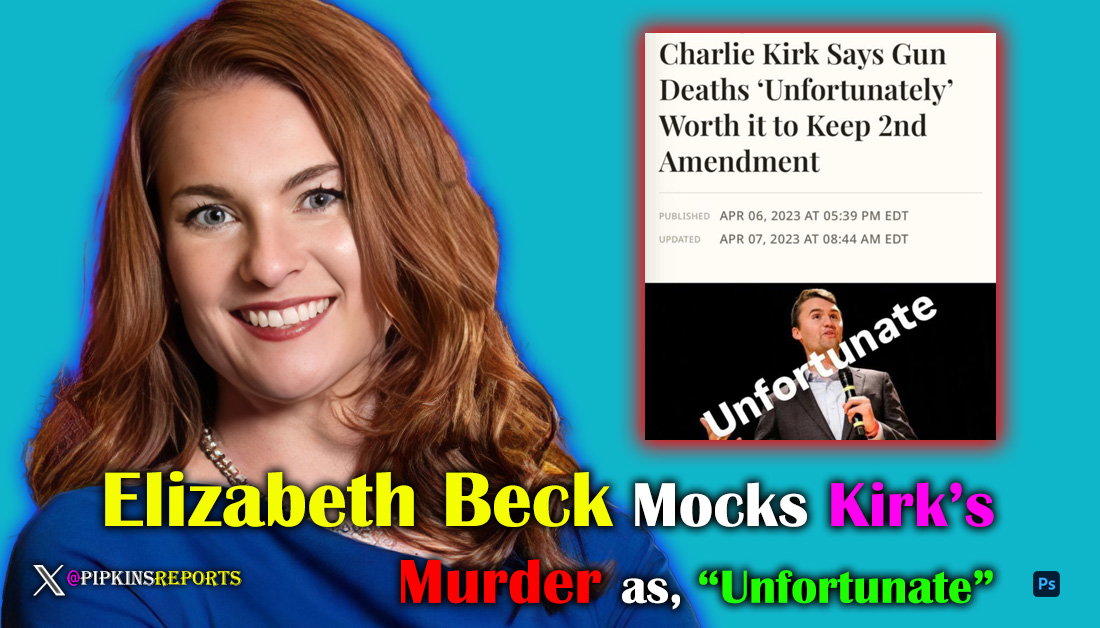
The controversy centers on Councilmember Elizabeth Beck, a Democrat-aligned lawyer elected in 2021, who briefly shared a post referencing an old Kirk quote from a 2023 Newsweek piece. The article had quoted Kirk as saying that gun deaths were “unfortunately” worth it to preserve Second Amendment rights. The image Beck reposted superimposed the word “unfortunate” over Kirk’s face.
Within hours of Kirk’s murder, the post carried a grotesque undertone, seeming to mock the slain activist’s death. Beck deleted it—but not before screenshots circulated widely and drew condemnation from citizens and colleagues alike.
The Mayor Steps In
Mayor Mattie Parker, a Republican who has carefully built her brand around civility and competent governance, wasted little time in rebuking Beck. Without naming her colleague directly, Parker issued a statement blasting the post as “the worst example” of an elected official essentially condoning violence. She called Kirk’s killing a “political assassination” and reminded fellow officeholders of their duty to be “above board” and to encourage “civility, kindness, and decency.”
Her words struck a chord. After all, Kirk’s murder was not an ambiguous tragedy. It was a targeted act of violence against a conservative voice, something progressives often insist is merely a right-wing talking point.
But instead of prompting reflection, Parker’s statement triggered another round of infighting.
Nettles Accuses Parker of Division
Chris Nettles, another progressive councilmember, quickly leapt to Beck’s defense. He accused the mayor herself of sowing division, saying Parker’s comments “don’t unite our city; they further divide it and put lives and families in danger.” He cast the mayor’s rebuke as hypocritical, claiming leaders cannot “preach unity while practicing division.”
It was a stunning inversion. In Nettles’ telling, the offense was not Beck’s decision to circulate a cruel post about a murdered conservative—it was Parker’s decision to publicly call it out.
This rhetorical judo is emblematic of how Fort Worth’s progressive bloc operates: shift blame, weaponize accusations of “division,” and insulate their own side from accountability.
The Progressive Playbook
The Beck-Kirk controversy is not isolated. It fits into a broader pattern of how the progressive wing at City Hall—anchored by Beck and Nettles—uses national political flashpoints to redefine local debates.
- On policing, they often frame the Fort Worth Police Department as a systemic problem, demanding “equity” reviews and painting law enforcement in adversarial terms.
- On development, they elevate “equity” and “affordable housing” over the pro-growth strategies championed by Parker and the business community.
- On rhetoric, they lean heavily on national talking points about “hate,” “division,” and “bigotry” whenever challenged, turning disagreement into moral accusation.
In other words, the Beck-Nettles faction governs less like a city council and more like a Twitter feed—quick to amplify grievance, slow to accept responsibility, and always eager to recast themselves as victims.
Beck’s Defense
For her part, Beck issued a carefully worded statement distancing herself from the implications of her post. She claimed society suffers from “extreme tribalism” and insisted political violence “cannot and should not be tolerated. Left. Right. Center. Period.”
Yet her words rang hollow to many. If political violence is intolerable, why share a mocking post about a man gunned down hours earlier? Why not lead with condolences to Kirk’s widow and children? The sequence of events suggests Beck only adopted her posture of nonpartisanship after facing political blowback.
The fact that she required increased police security at her home following the controversy underscores just how reckless her initial post was in a volatile moment.
What It Reveals About Fort Worth Politics
The fight over Beck’s post reveals something larger than a single poor decision. It highlights the factional breakdown inside Fort Worth’s government:
- Mayor Parker represents the old guard of civic leadership, emphasizing order, growth, and a veneer of bipartisanship.
- Beck and Nettles represent a newer, progressive wing that thrives on nationalized conflict, framing local governance as another battlefield in America’s culture wars.
The tension is not new. It has surfaced over policing budgets, housing initiatives, and public statements on national issues. But the assassination of a conservative figure has brought those tensions into sharp relief.
At a time when Americans desperately need leaders to reaffirm the sanctity of life and the absolute rejection of political violence, Fort Worth’s progressives chose instead to posture, deflect, and accuse.
The Bottom Line
Charlie Kirk’s death was a national tragedy. But in Fort Worth, it became a litmus test. Would leaders rise above partisanship to condemn violence unequivocally? Or would they use the moment to jockey for political advantage?
Mayor Parker chose the former. Beck and Nettles chose the latter.
And the people of Fort Worth are left watching a city council that seems more interested in waging culture wars than in serving the citizens they were elected to represent.




You must be logged in to post a comment Login