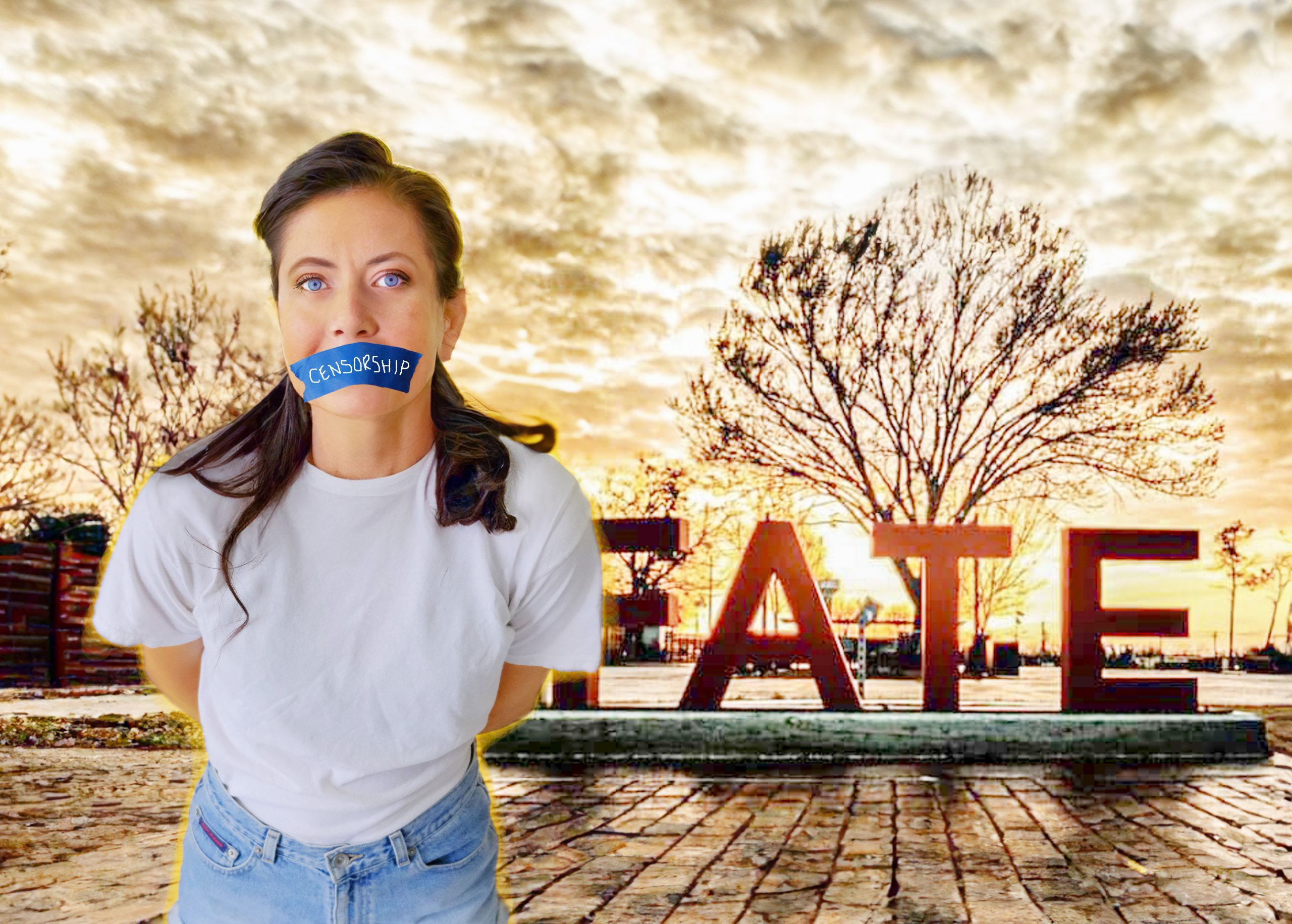
Facebook Groups: Censorship Disguised as Civility
In a world that cherishes free expression and the exchange of diverse ideas, we find ourselves grappling with a recurring issue in digital communities: censorship masked as civility. Facebook groups and similar online platforms, designed to foster open dialogue and communication, are increasingly becoming battlegrounds where the principles of free speech are under siege.
Across the virtual landscape, it’s crucial to recognize that every human being has formed within them an innate bias. These biases shape our perspectives and influence our actions, even when they remain unspoken. Yet, good stewards of democracy will acknowledge this inherent bias and intentionally take steps to allow others to voice their dissenting opinions. This recognition and willingness to embrace diversity of thought are essential for the health of any democratic society.
However, sometimes in these digital communities we often find administrators who wield the power to silence opposition, and they do so with an iron fist. These individuals operate with hidden agendas that they keep concealed from their members but exhibit unmistakably through their acts of censorship. This pattern raises fundamental questions about the values we uphold in our interconnected world and the role of digital spaces in shaping our collective discourse.
Communities of all kinds exist in the online sphere of Facebook, each with its own set of rules and guidelines for engagement. Typically, these rules aim to create a respectful and inclusive environment for members. However, when administrators harbor their own undisclosed biases, these well-intentioned rules can become tools for suppressing dissenting voices.
The notion of “Be Kind and Courteous” and “No hate speech or bullying” is a common refrain in these digital spaces. These principles appear to encourage positive interactions and safeguard against harmful behavior. However, when administrators, influenced by their hidden biases, use these guidelines to stifle criticism or controversial discussions, they inevitably contribute to the societal decay of democracy.
Sometimes, administrators see themselves as the saviors of civility. They earnestly believe that by attempting to maintain a veneer of “civil” discourse and stopping hate speech, they are fulfilling their duty to create a harmonious online community. However, they fail to comprehend that in their zeal to preserve a semblance of politeness, they become the purveyors of an even greater hate: censorship.
Censorship, often carried out under the banner of promoting civility, can have dire consequences for the democratic spirit. The suppression of dissenting voices and differing opinions not only curtails free expression but also fosters an environment where conformity and groupthink prevail. This stifling of diversity of thought not only undermines democracy but also creates a breeding ground for frustration and resentment among members who feel silenced.
At the Fate Tribune, our goal is to expose corruption and false liberal ideology wherever we may find it. We are stewards of the truth for the benefit of our fellow citizens of Fate. When a Facebook group censors one of our postings, they are not only silencing a debate but, in a much more destructive way, they are preventing the dissemination of ideas and knowledge that citizens need in order to make good decisions in the election of their leaders. The exposure of corruption and hidden leftist agenda of our elected is a necessary component of democracy… and yes, there is plenty of corruption and hidden agenda to be found in Fate.
The real issue arises when administrators, driven by their concealed biases or their misguided belief in their role as saviors of civility, use these guidelines to suppress views that do not align with their own agenda or their notion of civility. This manipulation of the rules obstructs open dialogue and, in turn, stifles the diversity of voices that digital communities should embrace.
In our interconnected world, the potential for bias and manipulation looms large. Administrators with their own biases can inadvertently—or sometimes deliberately—obstruct open dialogue. When this happens, digital communities risk losing their credibility and their ability to foster genuine discourse.
To combat this trend, it is imperative for individuals to be vigilant about their digital engagements. Members of these online communities should actively seek alternative platforms where their voices can flourish without fear of censorship driven by hidden biases or a misguided quest for civility. There are numerous forums that prioritize open discussion and inclusivity, where diverse viewpoints are celebrated, not stifled.
The battle for free expression in digital communities is a reflection of broader societal struggles over the principles of democracy, accountability, and free speech. As we navigate this evolving landscape, we must remember that the values we hold dear in our community should also extend to the digital realm. True dialogue and progress are only possible when the exchange of ideas is open, unrestricted, inclusive, and free from the hidden agendas of biased administrators and the misguided notions of civility that lead to censorship. Those who silence opposition, whether due to their biases or their belief in their role as saviors of civility, are inevitably contributing to the societal decay of democracy, and it is our collective responsibility to uphold the principles of free expression and diversity of thought.
Fate, TX
Fate Power Play: Councilman Threat That Led to DPS Chief’s Sudden Firing
FATE, Texas — The abrupt firing of Fate’s longtime Director of Public Safety, Lyle Lombard, has sparked intense scrutiny over the political maneuvering inside city hall, and raised serious questions about whether Fate City Manager, Michael Kovacs was pressured into removing a respected public-safety leader without cause.
City officials publicly announced on Nov. 21 that Lombard was no longer employed with the Department of Public Safety.
Under Lombard’s leadership, Fate rose to recognition as one of the safest cities in Texas, a point frequently highlighted in city communications and by elected officials. Yet behind the scenes, tensions were building.
Through an inquiry to the City of Fate, Pipkins Reports confirmed that it was Councilman Codi Chinn who formally requested that Lombard’s employment be discussed in executive session. Her request was seconded by Councilman Scott Kelley, triggering the closed-door meeting that preceded Lombard’s dismissal.
Neither the Council, nor the City, has publicly disclosed why the discussion was initiated, nor what concerns Chinn or Kelley raised during the session. What happened afterward, however, has become the center of the controversy. Although the executive session gave the appearance that the council played a decisive role, Fate’s city charter makes one fact unmistakably clear: only the City Manager can terminate city employees, including the Director of Public Safety.
The council has no legal authority over city staff. Despite this, multiple individuals familiar with internal discussions describe a far more aggressive dynamic playing out in private.
According to sources with direct knowledge of the situation, Councilman Chinn pressured City Manager Michael Kovacs to fire Lombard, allegedly threatening his own position if he refused. These sources say the push came suddenly and forcefully.
City Manager Kovacs ultimately executed the termination, and the city has offered no explanation for the decision. Kovacs has remained silent during and after the executive session, even as community concern mounted. Pipkins Reports reached out to Kovacs for comment, and he has declined to respond. For many Fate residents, that silence is difficult to reconcile with Lombard’s long service record and the department’s stable performance.
Deputy Mayor Pro Tem Mark Hatley publicly opposed the firing, stating he had spoken with Kovacs and an executive staff member and, “heard nothing that any reasonable person would interpret as justification.” As reported by Maci Smith (WFAA), Hatley credited Lombard’s leadership for Fate’s strong public-safety metrics and high resident confidence.
The involvement of councilmembers in a personnel matter has also raised legal and procedural questions. City councils generally have no authority to direct, influence, or interfere with employee-related decisions. This boundary is designed to prevent political targeting of staff and to keep personnel matters within the city manager’s professional purview.
Even more concerning for residents is the absence of any public accusation, documented performance issue, or allegation of wrongdoing against Lombard. The lack of transparency and the appearance of political motivation have fueled widespread speculation about the true reason for the chief’s removal. The firing also arrives at a time when debate over the structure of Fate’s Department of Public Safety has intensified.
Some city leaders have pushed to dismantle the unified DPS model and separate police and fire operations into distinct departments. While no official link has been made between that debate and Lombard’s termination, the timing has not gone unnoticed. Following Lombard’s removal, the city designated Ryan Ragan to oversee police operations and Captain John Taylor to oversee fire services.
Some citizens have called for the public to express their concerns TONIGHT, Monday, December 1st, during the council meeting. Social media is buzzing about holding City Manager Michael Kovacs, Councilman Codi Chinn, and Councilman Scott Kelley accountable. Calls are now growing for the termination of Kovacs and a recall election for Chinn. Kelley is up for reelection in May, and his participation in this event may put that plan in jeopardy.
Michael Kovacs’ fate will ultimately be determined by the City Council … Pipkins Reports (Fate Tribune) has published multiple articles outlining various controversies surrounding the City Manager. But citizens will have to engage and demand that the City Council take action and restore justice to Chief Lombard.
*This is an ongoing story, and Pipkins Reports has requested additional information as part of an open records request which is still pending review. We continue to interview multiple witnesses with knowledge of the facts. As we obtain more information, we will provide updates to this story.
Arlington
Kash Patel – FBI Sweep Took 21 Alleged Gang Members Off Arlington Streets
Arlington, TX – Federal agents, local police, and two SWAT teams swept through the city and surrounding suburbs in a coordinated takedown of what authorities describe as one of the region’s most violent street gangs. 21 alleged members of the “Kiccdoe” gang were rounded up, ending a violent spree that officials say included drive-by shootings, retaliation murders, drug trafficking, and years of terror in Arlington neighborhoods.
According to the U.S. Attorney’s Office for the Northern District of Texas, federal complaints filed on November 4 led to the arrests, with all suspects in custody by November 7. Seventeen defendants made their first court appearances that Friday, with the remaining individuals appearing the next day. The arrests stem from a joint investigation by the FBI’s Dallas Field Office and the Arlington Police Department, which began examining Kiccdoe’s activities in April 2024 after a gang member was shot and killed on an Arlington high-school campus. The homicide sparked a string of revenge shootings between Kiccdoe and rival gangs, accelerating the urgency of the investigation.
Authorities allege that the organization, which traces its roots to the 600 block of East Arkansas Lane, spent the past three years building its identity around violence, intimidation, and a steady pipeline of narcotics. Court records show that alleged members promoted their affiliation using identifiers such as “Kiccdoe,” “KDN,” “6,” and “600,” often displayed on social media, clothing, and even in self-produced music videos. Investigators say these symbols weren’t just branding—they served as recruitment tools and public declarations of allegiance.
The Justice Department’s complaint outlines a broad racketeering enterprise. To maintain standing within the gang, members were expected to commit “stripes”—violent acts carried out to boost the group’s reputation and enforce control. Federal prosecutors list one murder, six attempted murders, nine robberies, numerous assaults with deadly weapons, and persistent trafficking of fentanyl and marijuana among the offenses tied to the enterprise. The overarching goal, according to prosecutors, was simple: expand territory, increase profits, and keep the community terrified enough not to resist.
The federal charges range from RICO conspiracy and murder in aid of racketeering to drug-distribution conspiracies and firearms violations. Those charged include individuals as young as 18 and as old as 22, many of them already known to Arlington police for previous violent encounters. The Justice Department emphasized that charges remain allegations and that each defendant is presumed innocent until proven otherwise. If convicted, some face up to life in federal prison.
This federal push followed years of strained local resources. The Arlington Police Department reports that since January 2022 it has documented at least 180 criminal incidents involving Kiccdoe members—everything from aggravated assaults and burglaries to shootings and narcotics offenses. While APD had previously filed state charges against several members, Chief Al Jones said the department needed a more powerful tool to halt the gang’s growing influence. In 2024, Arlington police formally approached the FBI to pursue federal RICO charges—an effort that culminated in last week’s sweep.
Chief Jones praised the operation, declaring, “Our city is safer with these individuals off the streets.” FBI Dallas Special Agent in Charge R. Joseph Rothrock echoed that sentiment, crediting the partnership between federal and local agencies for what he described as a significant blow to violent crime in the region. Acting U.S. Attorney Nancy Larson similarly emphasized the importance of joint operations and vowed that federal prosecutors “will continue to pursue justice against brazen offenders who terrorize our communities.”
The investigation and arrests fall under Operation Take Back America, a national Department of Justice initiative aimed at dismantling violent gangs, drug networks, and transnational criminal organizations through coordinated federal action. The operation brings together multiple law-enforcement efforts, including OCDETF and Project Safe Neighborhoods, to target high-impact criminal groups.
The case now moves into the federal courts, where prosecutors will begin presenting evidence gathered over the nearly two-year investigation. For Arlington residents who have endured drive-bys, school-campus violence, and open drug dealing, the arrests mark a turning point—one that many hope signals a more assertive federal posture against gangs operating in suburban Texas communities.
Those charged in the complaint include:
• Michael Mensah, 18, of Grand Prairie, Texas, charged with conspiracy to conduct the affairs of an enterprise through a pattern of racketeering (RICO conspiracy), assault with a dangerous weapon in aid of racketeering, and conspiracy to distribute a controlled substance.
• Raphael Opare, 19, of Arlington, Texas, charged with RICO conspiracy and conspiracy to distribute a controlled substance.
• Dillen Opare, 20, of Arlington, Texas, charged with RICO conspiracy and conspiracy to distribute a controlled substance.
• Isaiah Wiley, 21, of Dallas, Texas, charged with RICO conspiracy, conspiracy to commit murder and assault with a dangerous weapon in aid of racketeering, conspiracy to distribute a controlled substance, and possession of a firearm in furtherance of a drug trafficking crime.
• Kyron Oates, 22, of Grand Prairie, Texas, charged with RICO conspiracy, assault with a dangerous weapon in aid of racketeering, conspiracy to distribute a controlled substance, and possession of a firearm in furtherance of a drug trafficking crime.
• Vernell Woods, 19, of Arlington, Texas, charged with RICO conspiracy and conspiracy to distribute a controlled substance.
• DeMarco Westmoreland, 19, of Mansfield, Texas, charged with RICO conspiracy, conspiracy to commit murder and assault with a dangerous weapon in aid of racketeering, and conspiracy to distribute a controlled substance.
• Cortez Atkinson, 18, of Fort Worth, Texas, charged with RICO conspiracy, conspiracy to commit murder and assault with a dangerous weapon in aid of racketeering, and conspiracy to distribute a controlled substance.
• Bradley McArthur, Jr., 21, of Fort Worth, Texas charged with RICO conspiracy, assault with a dangerous weapon in aid of racketeering, and conspiracy to distribute a controlled substance.
• DaTraven Warren, 18, of Mansfield, Texas, charged with RICO conspiracy and conspiracy to commit murder in aid of racketeering.
• Sadedrick Wilson, 22, of Fort Worth, Texas, charged with RICO conspiracy and conspiracy to distribute a controlled substance.
• Joseph Hill, 18, of Fort Worth, Texas, charged with RICO conspiracy and conspiracy to distribute a controlled substance.
• Chauncey Ross, 22, of Arlington, Texas, charged with RICO conspiracy, murder and assault with a dangerous weapon in aid of racketeering, conspiracy to distribute a controlled substance, and possession of a machine gun in furtherance of a drug trafficking crime.
• Marcus Shaw, 20, of Arlington, Texas, charged with RICO conspiracy and conspiracy to distribute a controlled substance.
• KeyShawn Burton, 20, of Arlington, Texas, charged with RICO conspiracy, conspiracy to commit murder in aid of racketeering, and conspiracy to distribute a controlled substance.
• LaMarion Austin, 21, of Dallas, Texas, charged with RICO conspiracy, conspiracy to commit murder in aid of racketeering, and conspiracy to distribute a controlled substance.
• Blake Aaron Scott, 22, of Arlington, Texas, charged with RICO conspiracy, assault with a dangerous weapon in aid of racketeering, and conspiracy to distribute a controlled substance.
• Sir James Mack Williams, 21, of Arlington, Texas, charged with conspiracy to commit murder in aid of racketeering.
• Jaylen Jeshawn Franklin, of Arlington, Texas, 22, charged with conspiracy to commit murder in aid of racketeering.
• JaMarion Manogin, 20, of Forney, Texas, charged with assault with a dangerous weapon in aid of racketeering and discharge of a firearm in relation to a crime of violence in aid of racketeering.
• Jakayla Totten, 21, of DeSoto, Texas, charged with assault with a dangerous weapon in aid of racketeering.
Dallas
CNN Turns the Tables: Texas Rep. Jasmine Crockett Fact-Checked on Air Over Fake Trump–Epstein Link
Dallas, TX – Rep. Jasmine Crockett (D-TX) walked into CNN on Wednesday, probably expecting an easy segment about alleged “Epstein cover-ups.” Instead, she walked into a trap of her own making. During a live interview on The Situation Room, CNN anchor Pamela Brown dismantled the congresswoman’s claim that President Donald Trump was somehow tied to Jeffrey Epstein’s pedo network—exposing that the email Crockett cited had been selectively redacted by Democrats, not Republicans.
The exchange, which aired November 12, 2025, was a rare moment of accountability for a member of Congress, who is accustomed to friendly treatment from progressive media. Crockett, whose Dallas-area district has been redrawn in a way that puts her reelection in doubt, attempted to portray Trump as a “predator” connected to Epstein through correspondence released by Democrats on the House Oversight Committee. The “tranche of emails,” spanning 2011 to 2019, was presented as proof of Trump’s proximity to Epstein. But as CNN grudgingly revealed, the documents had been cherry-picked and selectively redacted. Leaving out the one name that would have immediately destroyed their narrative: Virginia Giuffre.
Giuffre, one of Epstein’s most well-known victims, repeatedly stated, under oath, that Trump never acted inappropriately toward her, never flirted with her, and that she never saw him with Epstein. In depositions released earlier this year, she was explicit: Trump was never part of Epstein’s orbit of abuse. Despite that, Democrats redacted her name from the released emails to deliberately create a false narrative. Thus, allowing Crockett, and others, to insinuate that the unnamed “victim” had been linked to Trump.
Pamela Brown confronted Crockett with this fact on live television. Referencing the email, Brown noted, “Republicans are saying the victim is Virginia Giuffre, who has publicly said Trump never acted inappropriately toward her. What do you make of that?” Crockett tried to dodge the question. “Yeah, I don’t know,” she stammered. “Obviously, it’s redacted who the victim is, so I won’t necessarily take the Republicans’ word on who it is that’s redacted.” But Brown pressed on, pointing out that the redactions were made by Democrats. The visibly uncomfortable congresswoman had no answer.
The confrontation has since reverberated online, with even left-leaning commentators admitting it was a poor showing. As reported by The Gateway Pundit’s Jim Hoft, the Democratic release of Epstein documents was “a fake political hit” that collapsed upon inspection. The moment also marks an unusual departure for CNN, which has recently taken steps to appear more balanced in its coverage. Perhaps fear of litigation by Trump has had an effect on their reporting.
For Crockett, the episode could hardly come at a worse time. Redistricting has left her seat uncertain, and political insiders now whisper that the misstep could signal desperation. What was meant as a headline-grabbing attack on Trump instead became a televised reminder of how easily political spin can unravel under actual scrutiny. In a single exchange, CNN showed the difference between investigation and manipulation—and Crockett learned that when you build your case on redactions, the truth has a way of bleeding through.
You must be logged in to post a comment Login