Connect with us

Published

on


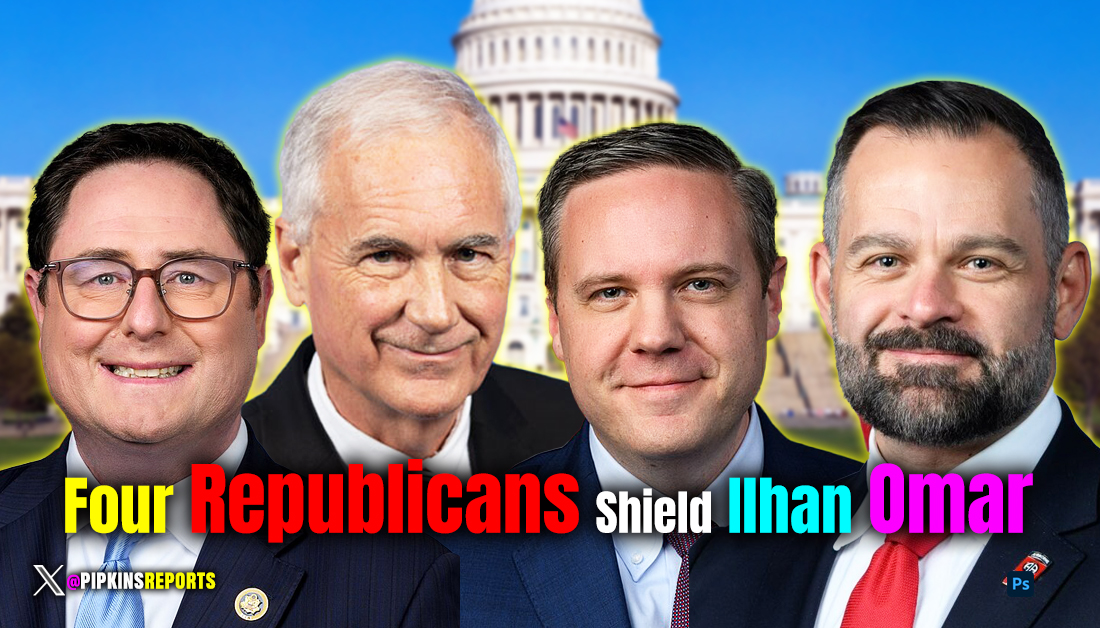
Four Republicans—Mike Flood of Nebraska, Jeff Hurd of Colorado, Cory Mills of Florida, and Tom McClintock of California—cast votes on September 17, 2025, to shield Rep. Ilhan Omar, of Minnesota, from facing any consequences for her vile reposts mocking the assassination of conservative icon Charlie Kirk.

This 214-213 House vote to table Rep. Nancy Mace’s censure resolution isn’t just a political misstep; it’s a gut punch to the very principles of constitutional conservatism that have long anchored the Republican Party. Let’s unpack this betrayal, piece by perplexing piece, and ask: What in the world were these lawmakers thinking?

First, let’s set the stage. Charlie Kirk, founder of Turning Point USA and a tireless defender of American values, was gunned down on September 10, 2025, by a deranged transgender activist at Utah Valley University. The nation reeled, and rightfully so. Yet, in the aftermath, Omar—never one to miss a chance to stoke division—reposted content labeling Kirk a “stochastic terrorist,” a term dripping with justification for the violence that ended his life.

Rep. Mace, a fierce patriot, introduced a resolution to censure Omar and strip her of her committee assignments, a move rooted in the House’s constitutional authority to discipline its members (Article I, Section 5). It should have been a slam dunk. Instead, four GOP turncoats joined Democrats to protect this radical, fracturing party unity and spitting on the graves of those who’ve fought for free speech without incitement.

Take Mike Flood, Nebraska’s supposed conservative stalwart. This former Speaker of the Nebraska Legislature has built a career on rural values and limited government—until now. His vote to shield Omar suggests either a stunning lapse in judgment or a craven bow to some unseen pressure. Flood’s district, reliant on agriculture, deserves a representative who stands firm against those who glorify violence, not one who coddles a congresswoman with ties to radical ideologies.

The backlash is already brewing—X users like McCall Calhoun (@the_J6_Lawyer) are calling for his ouster in the primaries. Good luck, indeed.

Then there’s Jeff Hurd, the freshman from Colorado’s 3rd District, who rode into Congress on a wave of rural healthcare promises. Hurd’s vote reeks of naiveté or worse—perhaps a misguided nod to “free speech” that ignores the Constitution’s clear allowance for Congress to police its own. His district, with its Medicaid-dependent population, might tolerate this if he spins it as compassion, but constitutional conservatives know better: protecting Omar’s seat undermines the rule of law.

Cory Mills, Florida’s Bronze Star veteran, is perhaps the most confounding of the bunch. A Trump ally with a record of pushing border security and anti-China legislation, Mills’ vote against censure is a head-scratcher. His district, once a GOP stronghold, now questions his loyalty—Rick Waite (@RJWaite) branded him a “disgrace.”

Is this a tactical pivot to moderates, or did his military background lead him to avoid escalating tensions post-Kirk? Whatever the reason, it’s a betrayal of the constitutional principle that elected officials must face accountability, not a free pass to incite violence.

Finally, Tom McClintock, California’s libertarian-leaning veteran, offers a twist. Known for ditching the House Freedom Caucus in 2015 over strategy, his vote aligns with his free-speech absolutism—evidenced by his own statement defending Omar’s First Amendment rights. But this is where the perplexity peaks: Does McClintock not see that Omar’s rhetoric crossed into incitement, a line the Supreme Court has long recognized (e.g., Brandenburg v. Ohio, 1969)? His deregulatory zeal doesn’t excuse shielding a lawmaker who mocks a murdered American husband and father. The “RINO” cries on X Baxter Allen (@baxterallen2) are harsh but not unwarranted.

This vote isn’t just a procedural hiccup; it’s a seismic shift away from Republican principles. Constitutional conservatism demands accountability, a strong defense of life, and a rejection of radical ideologies—principles these four have abandoned. The House’s power to discipline members isn’t a suggestion; it’s a safeguard against those like Omar, who’ve supported ISIS and the Muslim Brotherhood, as Rep. Mace rightly noted. Yet, Flood, Hurd, Mills, and McClintock chose party discord over duty, handing Democrats a victory in a 214-213 squeaker that leaves conservatives reeling.

The fallout is already chaotic. X is ablaze with calls to primary these defectors, with Zack Everett (@ZachObryan13) urging checks for challengers. The Reuters/Ipsos poll showing 67% of Americans linking rhetoric to violence underscores the stakes—yet these four ignored the public’s cry for sanity.

As a constitutional conservative, I’m left wondering: If Republicans won’t police their own house, who will? The primaries in 2026 will be the battleground, and these unprincipled four should brace for a reckoning. Stay tuned, Texas—corruption and cowardice know no state lines.


Michael Pipkins focuses on public integrity, governance, constitutional issues, and political developments affecting Texans. His investigative reporting covers public-record disputes, city-government controversies, campaign finance matters, and the use of public authority. Pipkins is a member of the Society of Professional Journalists (SPJ). As an SPJ member, Pipkins adheres to established principles of ethical reporting, including accuracy, fairness, source protection, and independent journalism.

Election

“MAGA Mayes” vs. “RINO Roy” for Texas Attorney General

Published

on

MAGA Mayes vs RINO Roy

OPINION – Texas conservatives have seen this movie before. A polished Republican talks tough on the Constitution, quotes the Founders on cue, rails against Washington corruption, and convinces voters he is one of the good guys. Then the pressure hits. The cameras come on. The media starts demanding blood. And suddenly the “fighter” voters elected folds faster than a lawn chair at a church picnic.

That is the growing fear surrounding Congressman Chip Roy as speculation intensifies over the Texas Attorney General race. For many grassroots conservatives, Roy is not simply another establishment Republican. He represents something more dangerous, a Republican who knows exactly how conservatives think, exactly what they want to hear, and exactly when to abandon them to protect his standing with the political class.

That perception hardened permanently after January 6.

While Democrats, corporate media, and anti Trump Republicans launched a coordinated political assault against President Donald Trump, Roy joined the feeding frenzy at the exact moment conservatives expected Republicans to stand firm. On January 13, 2021, Roy took to the House floor and declared Trump’s conduct was “clearly impeachable.” The comments were widely covered by outlets including CNN and The Texas Tribune.

At the time, Democrats were aggressively pushing impeachment while left wing media outlets painted millions of Trump supporters as domestic extremists. Conservatives across the country watched banks deplatform citizens, federal agencies ramp up investigations, and political dissent become increasingly criminalized. And there was Chip Roy, sounding almost indistinguishable from the Republicans conservatives had spent years fighting against.

Worse still, Roy’s rhetoric placed him in alignment with some of the most despised anti Trump Republicans in modern history, including Liz Cheney and Congressman Thomas Massie. Cheney ultimately became the public face of the January 6 Committee, a committee many conservatives viewed as less interested in truth than in politically destroying Trump and intimidating his supporters. Roy may not have joined that committee, but to many voters, he helped legitimize the narrative driving it.

This matters because the Attorney General’s office is not ceremonial. The Texas AG is often the final line of defense against federal overreach, politically motivated prosecutions, censorship efforts, and constitutional violations. Every time a city government wants to object to an open records request by a citizen, they need the permission of the AG. Conservatives are not looking for another Republican who caves once the editorial boards and Sunday shows begin screeching. They want someone willing to absorb political punishment without turning on the movement that elected him.

That is why Texas State Senator Mays Middleton is gaining traction among MAGA conservatives. Known by supporters as “MAGA Mayes,” Middleton has cultivated a reputation as an unapologetic America First conservative. He backed election integrity legislation, border enforcement measures, anti-ESG policies, and efforts to stop taxpayer funded lobbying by local governments. More importantly, he has not spent the past several years publicly distancing himself from the voters who dominate today’s Republican base.

To many conservatives, the contrast is glaring. Middleton looks like a man preparing for political combat. Roy increasingly looks like a man carefully managing his reputation with DC insiders while hoping Texas voters forget what happened in 2021.

And conservatives should ask themselves an uncomfortable question. If Roy was willing to publicly break with Trump during the biggest coordinated political attack against conservatives in modern history, what happens when the next crisis arrives? What happens when federal agencies pressure Texas? What happens when media outlets begin demanding prosecutions, investigations, or compromise? Does Roy suddenly rediscover his “constitutional concerns” while conservatives once again get thrown under the bus?

Roy’s defenders will point to his conservative voting record, and that’s fair. He has opposed Biden administration policies and marketed himself as a constitutional hardliner. But conservative voters are increasingly learning that voting scorecards mean very little when pressure reveals someone’s instincts.

And Roy’s instincts, at the defining moment, were not to protect the movement. They were to condemn it alongside people who openly despised it.

Texas conservatives have spent years warning about Republicans who campaign like MAGA warriors back home while quietly serving the priorities of the donor class and establishment once inside Washington. Many now fear Chip Roy fits that mold perfectly, polished, articulate, deeply ambitious, and ultimately unreliable when the stakes become uncomfortable.

The time has come to end the political careers of all who oppose the People, those who oppose the MAGA agenda.

Continue Reading

Election

Texas Conservatives Turn on Cornyn as Paxton Surges

Published

on

Cornyn vs Paxton

OPINION – For years, Texas conservatives have watched Republicans campaign as fighters back home, only to return to Washington and govern like cautious corporate managers. That frustration is now boiling over in the growing divide between Texas Attorney General Ken Paxton and U.S. Senator John Cornyn, a battle that increasingly defines the Republican Party in Texas.

Paxton has become one of the most aggressive conservative legal figures in America. Cornyn, meanwhile, is increasingly viewed by grassroots Republicans as an establishment insider tied to the old Bush era wing of the GOP. The contrast could hardly be sharper.

Paxton built his reputation fighting the Biden administration on immigration, election disputes, COVID mandates, and federal overreach. Supporters say he has consistently used the Attorney General’s office to defend Texas sovereignty and conservative values. President Donald Trump praised Paxton during his 2022 reelection fight, calling him “a true warrior for conservative values” while endorsing him against challenger George P. Bush.

For many Texas Republicans, Trump’s support mattered because Paxton was already viewed as willing to confront Washington directly rather than negotiate with it.

Cornyn has found himself on the opposite side of many of those same debates. Conservatives sharply criticized his role in bipartisan gun negotiations after the Uvalde shooting, but immigration remains the biggest source of anger among the Republican base. Cornyn has long supported expansions of employment based immigration programs, including H1B visa policies favored by major corporations.

Critics argue those programs have displaced American workers in industries like engineering, healthcare, technology, and data services by allowing companies to import cheaper foreign labor. Over the years, outsourcing firms and tech companies have repeatedly faced backlash after replacing American employees with foreign visa workers, sometimes even requiring laid off staff to train their replacements before leaving.

Cornyn argues skilled immigration helps fill labor shortages and strengthens the economy. But many Texas conservatives increasingly see the system as benefiting multinational corporations while middle-class American workers fall behind.

Paxton has aligned himself almost entirely with border hawks and immigration enforcement advocates. He has repeatedly sued the Biden administration over border policies and backed Texas efforts to secure the southern border independently of federal action. Supporters argue those lawsuits helped slow federal policies they believed encouraged illegal immigration and weakened state sovereignty.

Some conservatives also frame the immigration debate in cultural and security terms, warning that unchecked migration and weak assimilation policies can destabilize communities and strain public resources. Paxton supporters often portray him as defending Texas from the kinds of social fragmentation seen in parts of Europe.

Cornyn’s critics increasingly label him a “RINO,” shorthand for Republican In Name Only, arguing that he represents donor class priorities rather than grassroots conservatives. Trump allies have also criticized Cornyn as part of the “old Republican guard” that voters rejected during Trump’s rise. Cornyn’s primary supporter is the Lone Star Freedom Project, a dark money 501c(4) operated by former Texas Governor Rick Perry.

Opinion sections are where political realities become unavoidable. The reality is this: many Texas Republicans no longer want cautious institutional Republicans who focus on compromise while Democrats aggressively push cultural and political change nationwide.

They want confrontation. They want resistance. They want politicians willing to fight publicly and relentlessly.

That explains why Paxton continues to maintain strong support despite years of legal and political attacks. Many conservatives interpret those attacks not as proof he should step aside, but as proof he threatens entrenched political interests.

Cornyn, meanwhile, increasingly represents a Republican era many grassroots voters believe failed to defend the border, protect American workers, or stand firmly against Washington’s expansion of power. In today’s Texas Republican politics, that perception may be impossible to overcome.

Continue Reading

Featured

“Judge Speedy” Hits the Wall: Bexar County Jurist Resigns, Accepts Lifetime Ban from Texas Bench

Published

on

Rosie Speedlin Gonzalez

SAN ANTONIO, Texas — The political and legal downfall of Bexar County Judge Rosie Speedlin-Gonzalez came to a dramatic conclusion after the embattled jurist resigned from office and accepted a permanent lifetime ban from serving on the Texas bench .

The resignation agreement, signed in April and confirmed by the State Commission on Judicial Conduct, ends months of controversy surrounding Speedlin-Gonzalez, who faced criminal charges and multiple judicial misconduct complaints stemming from a heated courtroom confrontation involving a San Antonio defense attorney.

Speedlin-Gonzalez, an openly gay Democrat who had served on Bexar County Court-at-Law No. 13 since 2018, formally agreed she would be, “forever disqualified from judicial service in the State of Texas.” The agreement prohibits her from serving as a judge, accepting judicial appointments, or performing judicial duties in the future.

The scandal centered on a December 2024 courtroom incident involving defense attorney Elizabeth Russell. Prosecutors alleged Speedlin-Gonzalez ordered Russell handcuffed and detained in the jury box during a contentious exchange after accusing the attorney of coaching her client during a probation revocation hearing.

A Bexar County grand jury later indicted the judge on charges of unlawful restraint and official oppression. Court documents alleged that Speedlin-Gonzalez knowingly restrained Russell without consent while acting under the authority of her judicial office.

The incident generated national attention and quickly became one of the most talked about judicial controversies in Texas. Video clips and courtroom details circulated widely online, while critics questioned whether the judge had crossed a clear constitutional line by using courtroom authority against a practicing attorney during active proceedings.

KSAT reported last month that special prosecutor Brian Cromeens later moved to dismiss the criminal charges after Speedlin-Gonzalez agreed to resign and permanently leave the judiciary. According to reports, prosecutors concluded the resignation and lifetime ban sufficiently addressed the public interest concerns surrounding the case.

The resignation agreement also referenced several additional complaints against the now former judge. One complaint alleged she displayed an “unprofessional demeanor” toward a criminal defendant and failed to timely address motions involving bond modifications and habeas corpus requests. Three additional complaints accused her of abusing judicial authority by issuing “no contact” orders restricting communications among court personnel and former employees.

Speedlin-Gonzalez had already faced disciplinary scrutiny before the handcuffing controversy erupted. According to the San Antonio Express-News, the State Commission on Judicial Conduct previously issued a public warning after she congratulated winning attorneys on social media and posted their photographs on her official judicial Facebook page. The commission also reportedly ordered additional education after complaints involving a pride flag displayed inside her courtroom.

In January, shortly after the indictment became public, Speedlin-Gonzalez defended herself in comments to the New York Post.

I’m a proud public servant, I’m LGBTQ, I own a gun, I’m bilingual, I’m an American citizen, and I have every right to defend myself,” Gonzalez told the outlet. “As long as I walk in righteousness and have God at my side I will be fine.

The judge was suspended without pay earlier this year while disciplinary proceedings continued. During that suspension, visiting judges rotated through County Court-at-Law No. 13 to handle pending cases and specialty court matters.

Court-at-Law No. 13 is known in part for overseeing Reflejo Court, a specialty program focused on first time domestic violence offenders and treatment based intervention programs.

The controversy also arrived during a difficult reelection season for Speedlin-Gonzalez. In March, she lost her Democratic primary race to challenger Alicia Perez, effectively ending her political future even before the disciplinary case concluded.

The agreement signed by Speedlin-Gonzalez states that by accepting resignation and permanent disqualification, she does not admit fault or guilt regarding the allegations against her. Such provisions are common in negotiated judicial disciplinary settlements.

One narrow exception remains under the agreement. Speedlin-Gonzalez may still officiate wedding ceremonies, provided she does not wear judicial robes or imply she retains judicial authority while conducting them.

Speedlin-Gonzalez was widely described as the first openly LGBT judge elected in Bexar County. Supporters frequently highlighted that milestone during her tenure on the bench, while critics argued the attention surrounding identity politics often overshadowed concerns about courtroom conduct and professionalism.

Permanent judicial disqualifications remain relatively uncommon in Texas, particularly involving sitting elected county judges. The case now joins a growing list of disciplinary actions taken by the State Commission on Judicial Conduct against jurists accused of misconduct or abuse of authority.

Continue Reading