Connect with us

Published

on

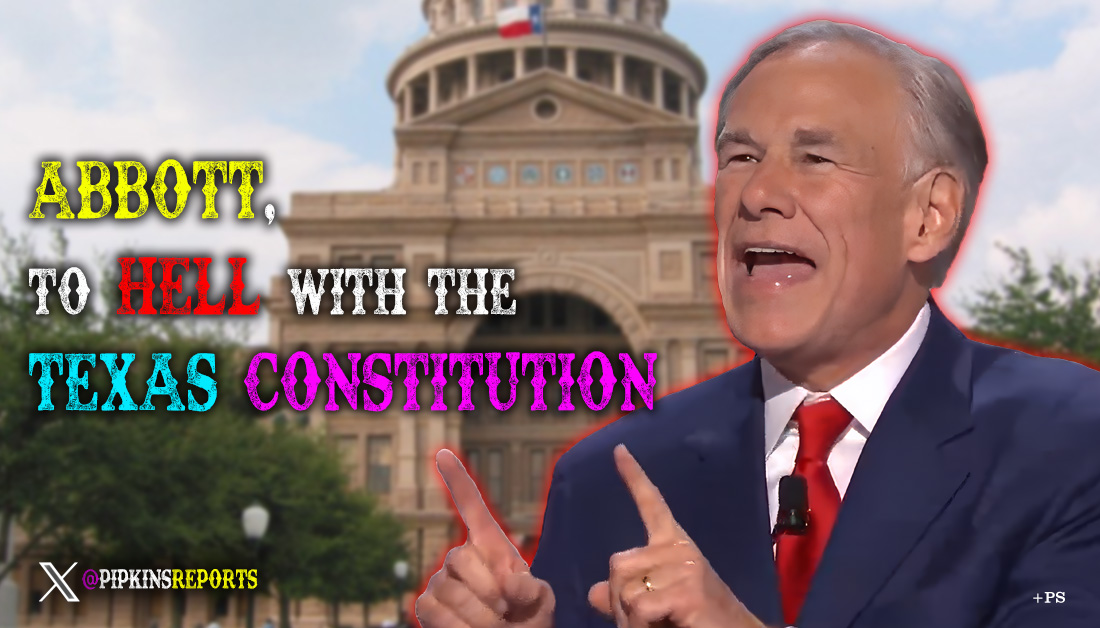
In a calculated maneuver that has sent shockwaves through grassroots conservative circles, Texas Governor Greg Abbott has bypassed the standard legislative confirmation process to install outgoing State Senator Kelly Hancock into the role of Texas Comptroller—without the public scrutiny, vetting, or constitutional confirmation typically required by law.

The move, which critics are calling a “legal sleight of hand” and a “raw power grab,” appears designed to give Hancock the advantage of incumbency ahead of the 2026 Republican primary, where he’ll face two formidable, independently-minded opponents: former State Senator Don Huffines and current Railroad Commissioner Christi Craddick.

But beyond its political implications, the scheme raises deeper questions about rule of law, the erosion of constitutional norms in Texas governance, and whether voters are being force-fed another establishment pick wrapped in a bow of bureaucratic trickery.

The Setup: Avoid the Constitution, Install a Loyalist

On June 19, Hancock formally resigned from the Texas Senate and was immediately sworn in—not as Comptroller—but as “chief clerk” of the Comptroller’s office by outgoing Comptroller Glenn Hegar. That title, while bureaucratically bland, comes with sweeping authority over the agency’s operations for the remainder of Hegar’s term, which runs through January 2027.

Hegar, who is leaving to become chancellor of the Texas A&M University System on July 1, heaped praise on Hancock and handed him the reins with the enthusiastic blessing of Abbott.

But here’s the catch: Abbott didn’t appoint Hancock as Comptroller—a move that would have triggered mandatory Senate confirmation under Texas law. Instead, Hancock’s insertion as “chief clerk” is a workaround—a newly invented interim title designed to give him all the power of the office, with none of the accountability.

The workaround skirts a 2002 legal opinion written by none other than then-Attorney General Greg Abbott himself. That opinion declared that a sitting legislator cannot be appointed to a position requiring Senate confirmation during the term for which they were elected. Hancock’s resignation was intended to dodge that prohibition, yet critics say he still falls under constitutional limits due to Texas’ “holdover” clause—a provision that allows legislators to technically retain office until a successor is qualified.

In plain terms: Hancock may not be legally out of the Senate yet, and therefore not legally eligible to hold this new office either.

The Real Goal: An Unelected Incumbency

Why the rush to appoint a placeholder Comptroller for a year and a half? The answer is pure politics: incumbency.

Abbott and his allies understand the power of incumbency in statewide races. Name recognition, official letterhead, media exposure, and the implied authority of office all combine to give Hancock a serious leg up over his grassroots challengers. By installing him now, Abbott ensures that his preferred successor runs not as a candidate—but as the sitting Comptroller.

Hancock wasted no time launching his campaign. Within hours of his swearing-in, he rolled out a slick announcement touting his legislative experience, fiscal conservatism, and support for border security. But that very record is already drawing fire from conservatives, especially his vote to impeach Attorney General Ken Paxton and his siding with Democrats to dilute a ban on taxpayer-funded lobbying.

That record hasn’t gone unnoticed by primary voters, either.

Don Huffines: “They Fear You”

Former State Senator Don Huffines didn’t mince words in his response.

“The political elite are manipulating the system to install another go-along-to-get-along lap dog as State Comptroller,” Huffines said. “They don’t just fear me—they fear you, the taxpayers.”

Huffines, who has already earned endorsements from U.S. Sen. Ted Cruz, Ron Paul, and a majority of the State Republican Executive Committee, framed the maneuver as part of a broader establishment pattern of undermining grassroots efforts and insulating power among insiders.

“They know that true transparency, the kind I’ve promised, would expose everything,” he said.

Huffines’ campaign is already tapping into the anti-establishment fervor that helped fuel Trump’s rise. He paints Hancock not as a fighter for fiscal integrity, but as a symbol of cronyism and cowardice—a man who lacked the courage to earn the job honestly and instead snuck in through the back door.

Christi Craddick: “I’ve Done the Job”

Current Railroad Commissioner Christi Craddick, a no-nonsense fiscal hawk with actual statewide executive experience, also entered the race undeterred by Hancock’s sudden rise to power.

“I’m the only candidate in this race with statewide experience and a proven record,” she said. “While others play games, I deliver results.”

Craddick has run one of the most revenue-critical agencies in Texas—the Railroad Commission—overseeing billions in oil and gas revenues that fund schools, roads, and law enforcement. She’s pledging to bring that same results-driven approach to the Comptroller’s office.

“I trust the voters to see through political gimmicks. They know what leadership looks like,” she said.

Legal Questions Linger

Beyond the optics and political fallout, constitutional questions still loom. Article XVI, Section 40 of the Texas Constitution prohibits a legislator from being appointed or employed in a civil office during their elected term. The Abbott-Hancock team contends that Hancock’s resignation makes the restriction moot.

But constitutional scholars and conservative legal minds aren’t so sure.

Because Hancock’s replacement hasn’t yet been elected in a special election, he may technically still be “holding over” his Senate seat. That would render his new role unconstitutional—even if it comes with a carefully worded job title designed to muddy the waters.

“This is a clear violation of both the spirit and the letter of the Texas Constitution,” said one former legislative attorney who asked not to be named due to potential backlash. “It’s a loophole engineered for a political ally, and it disrespects the very laws these men swore to uphold.”

Abbott’s Real Message to Texans

Governor Abbott’s rapid endorsement of Hancock—along with his backhanded swipe at Don Huffines as a “candidate who already lost to a Democrat”—reveals much about the governor’s priorities. Abbott appears less interested in an open, transparent race for the state’s chief financial officer and more focused on installing a loyalist who will support his education agenda, including school choice and other spending priorities.

The entire operation has the feel of a political chess game, with Abbott moving pieces behind the curtain to ensure control, compliance, and consolidation of power.

To many observers, the stunt feels less like governance and more like a monarchy: appointments made in private, authority granted by favor, and the people kept safely at arm’s length.

What’s at Stake in March 2026

The 2026 Republican primary for Comptroller is now shaping up to be more than just a contest for a relatively obscure financial office. It’s becoming a litmus test for whether grassroots conservatives still have a say in Texas politics—or whether power brokers like Abbott will continue to manipulate the machinery to protect their allies and sideline principled insurgents.

Texans should pay close attention. If the Comptroller’s office can be quietly handed to a hand-picked insider without constitutional confirmation or public scrutiny, what’s next? Attorney General? Land Commissioner? Lieutenant Governor?

The Hancock appointment is more than a cynical political move. It’s a bellwether. And if Texas conservatives don’t push back hard, they may wake up in a state where elections are merely formalities and public offices are auctioned behind closed doors.

This is about who runs Texas: the people, or the political class.

And in March 2026, the people will have their say—if they’re paying attention.

Michael Pipkins focuses on public integrity, governance, constitutional issues, and political developments affecting Texans. His investigative reporting covers public-record disputes, city-government controversies, campaign finance matters, and the use of public authority. Pipkins is a member of the Society of Professional Journalists (SPJ). As an SPJ member, Pipkins adheres to established principles of ethical reporting, including accuracy, fairness, source protection, and independent journalism.

Continue Reading
Click to comment

You must be logged in to post a comment Login

Leave a Reply

Election

“MAGA Mayes” vs. “RINO Roy” for Texas Attorney General

Published

on

MAGA Mayes vs RINO Roy

OPINION – Texas conservatives have seen this movie before. A polished Republican talks tough on the Constitution, quotes the Founders on cue, rails against Washington corruption, and convinces voters he is one of the good guys. Then the pressure hits. The cameras come on. The media starts demanding blood. And suddenly the “fighter” voters elected folds faster than a lawn chair at a church picnic.

That is the growing fear surrounding Congressman Chip Roy as speculation intensifies over the Texas Attorney General race. For many grassroots conservatives, Roy is not simply another establishment Republican. He represents something more dangerous, a Republican who knows exactly how conservatives think, exactly what they want to hear, and exactly when to abandon them to protect his standing with the political class.

That perception hardened permanently after January 6.

While Democrats, corporate media, and anti Trump Republicans launched a coordinated political assault against President Donald Trump, Roy joined the feeding frenzy at the exact moment conservatives expected Republicans to stand firm. On January 13, 2021, Roy took to the House floor and declared Trump’s conduct was “clearly impeachable.” The comments were widely covered by outlets including CNN and The Texas Tribune.

At the time, Democrats were aggressively pushing impeachment while left wing media outlets painted millions of Trump supporters as domestic extremists. Conservatives across the country watched banks deplatform citizens, federal agencies ramp up investigations, and political dissent become increasingly criminalized. And there was Chip Roy, sounding almost indistinguishable from the Republicans conservatives had spent years fighting against.

Worse still, Roy’s rhetoric placed him in alignment with some of the most despised anti Trump Republicans in modern history, including Liz Cheney and Congressman Thomas Massie. Cheney ultimately became the public face of the January 6 Committee, a committee many conservatives viewed as less interested in truth than in politically destroying Trump and intimidating his supporters. Roy may not have joined that committee, but to many voters, he helped legitimize the narrative driving it.

This matters because the Attorney General’s office is not ceremonial. The Texas AG is often the final line of defense against federal overreach, politically motivated prosecutions, censorship efforts, and constitutional violations. Every time a city government wants to object to an open records request by a citizen, they need the permission of the AG. Conservatives are not looking for another Republican who caves once the editorial boards and Sunday shows begin screeching. They want someone willing to absorb political punishment without turning on the movement that elected him.

That is why Texas State Senator Mays Middleton is gaining traction among MAGA conservatives. Known by supporters as “MAGA Mayes,” Middleton has cultivated a reputation as an unapologetic America First conservative. He backed election integrity legislation, border enforcement measures, anti-ESG policies, and efforts to stop taxpayer funded lobbying by local governments. More importantly, he has not spent the past several years publicly distancing himself from the voters who dominate today’s Republican base.

To many conservatives, the contrast is glaring. Middleton looks like a man preparing for political combat. Roy increasingly looks like a man carefully managing his reputation with DC insiders while hoping Texas voters forget what happened in 2021.

And conservatives should ask themselves an uncomfortable question. If Roy was willing to publicly break with Trump during the biggest coordinated political attack against conservatives in modern history, what happens when the next crisis arrives? What happens when federal agencies pressure Texas? What happens when media outlets begin demanding prosecutions, investigations, or compromise? Does Roy suddenly rediscover his “constitutional concerns” while conservatives once again get thrown under the bus?

Roy’s defenders will point to his conservative voting record, and that’s fair. He has opposed Biden administration policies and marketed himself as a constitutional hardliner. But conservative voters are increasingly learning that voting scorecards mean very little when pressure reveals someone’s instincts.

And Roy’s instincts, at the defining moment, were not to protect the movement. They were to condemn it alongside people who openly despised it.

Texas conservatives have spent years warning about Republicans who campaign like MAGA warriors back home while quietly serving the priorities of the donor class and establishment once inside Washington. Many now fear Chip Roy fits that mold perfectly, polished, articulate, deeply ambitious, and ultimately unreliable when the stakes become uncomfortable.

The time has come to end the political careers of all who oppose the People, those who oppose the MAGA agenda.

Continue Reading

Election

Texas Conservatives Turn on Cornyn as Paxton Surges

Published

on

Cornyn vs Paxton

OPINION – For years, Texas conservatives have watched Republicans campaign as fighters back home, only to return to Washington and govern like cautious corporate managers. That frustration is now boiling over in the growing divide between Texas Attorney General Ken Paxton and U.S. Senator John Cornyn, a battle that increasingly defines the Republican Party in Texas.

Paxton has become one of the most aggressive conservative legal figures in America. Cornyn, meanwhile, is increasingly viewed by grassroots Republicans as an establishment insider tied to the old Bush era wing of the GOP. The contrast could hardly be sharper.

Paxton built his reputation fighting the Biden administration on immigration, election disputes, COVID mandates, and federal overreach. Supporters say he has consistently used the Attorney General’s office to defend Texas sovereignty and conservative values. President Donald Trump praised Paxton during his 2022 reelection fight, calling him “a true warrior for conservative values” while endorsing him against challenger George P. Bush.

For many Texas Republicans, Trump’s support mattered because Paxton was already viewed as willing to confront Washington directly rather than negotiate with it.

Cornyn has found himself on the opposite side of many of those same debates. Conservatives sharply criticized his role in bipartisan gun negotiations after the Uvalde shooting, but immigration remains the biggest source of anger among the Republican base. Cornyn has long supported expansions of employment based immigration programs, including H1B visa policies favored by major corporations.

Critics argue those programs have displaced American workers in industries like engineering, healthcare, technology, and data services by allowing companies to import cheaper foreign labor. Over the years, outsourcing firms and tech companies have repeatedly faced backlash after replacing American employees with foreign visa workers, sometimes even requiring laid off staff to train their replacements before leaving.

Cornyn argues skilled immigration helps fill labor shortages and strengthens the economy. But many Texas conservatives increasingly see the system as benefiting multinational corporations while middle-class American workers fall behind.

Paxton has aligned himself almost entirely with border hawks and immigration enforcement advocates. He has repeatedly sued the Biden administration over border policies and backed Texas efforts to secure the southern border independently of federal action. Supporters argue those lawsuits helped slow federal policies they believed encouraged illegal immigration and weakened state sovereignty.

Some conservatives also frame the immigration debate in cultural and security terms, warning that unchecked migration and weak assimilation policies can destabilize communities and strain public resources. Paxton supporters often portray him as defending Texas from the kinds of social fragmentation seen in parts of Europe.

Cornyn’s critics increasingly label him a “RINO,” shorthand for Republican In Name Only, arguing that he represents donor class priorities rather than grassroots conservatives. Trump allies have also criticized Cornyn as part of the “old Republican guard” that voters rejected during Trump’s rise. Cornyn’s primary supporter is the Lone Star Freedom Project, a dark money 501c(4) operated by former Texas Governor Rick Perry.

Opinion sections are where political realities become unavoidable. The reality is this: many Texas Republicans no longer want cautious institutional Republicans who focus on compromise while Democrats aggressively push cultural and political change nationwide.

They want confrontation. They want resistance. They want politicians willing to fight publicly and relentlessly.

That explains why Paxton continues to maintain strong support despite years of legal and political attacks. Many conservatives interpret those attacks not as proof he should step aside, but as proof he threatens entrenched political interests.

Cornyn, meanwhile, increasingly represents a Republican era many grassroots voters believe failed to defend the border, protect American workers, or stand firmly against Washington’s expansion of power. In today’s Texas Republican politics, that perception may be impossible to overcome.

Continue Reading

Council

Ethics Fight Ends in Censure of Councilman Mark Hatley

Published

on

Ethics Censure Hatley

FATE, TX — The Fate City Council voted last night to censure Councilman Mark Hatley following a contentious ethics hearing that exposed deep divisions among elected officials.

The censure stems from two ethics complaints alleging Hatley improperly disclosed confidential information tied to internal discussions about the potential firing of former Department of Public Safety Chief Lyle Lombard. According to testimony, Hatley shared details with local journalist Michael Pipkins of PipkinsReports.com, including references to recorded conversations with City Manager Michael Kovacs.

The complaint was filed by outgoing councilman Scott Kelley, who played a central role throughout the proceedings and ultimately did not recuse himself and voted in favor of censure.

Monday’s meeting included a formal evidentiary hearing where Hatley, represented by attorney David Dodd, presented a defense and attempted to question fellow council members. The process, however, was repeatedly constrained by legal warnings from City Attorney Jennifer Richie, who advised council members not to answer questions related to Lombard’s termination due to ongoing litigation. That guidance, issued numerous times during the hearing, limited testimony and narrowed the scope of cross-examination.

The council ultimately split along familiar lines. Kelley was joined by outgoing councilman Mark Harper and recalled councilwoman Codi Chinn in supporting the censure. Mayor Andrew Greenberg and Councilman Rick Maneval opposed it, creating a 3–2 divide before the deciding vote was cast. Councilwoman Martha Huffman ultimately sided with the majority, breaking what would have otherwise been a tie, and would have quashed the censure.

Under Texas municipal norms, a censure is a formal statement of disapproval by a governing body against one of its own members. It carries no direct legal penalty, meaning Hatley retains his elected position and voting authority. However, such a reprimand can damage political standing, limit influence within the council, and shape future electoral prospects…if the electorate so decides.

The underlying controversy traces back to the dismissal of Lombard, which has since evolved into a broader legal dispute involving claims of wrongful termination. During Monday’s hearing, repeated references to that litigation underscored the complexity of the case and the limits placed on public disclosure. Richie’s guidance, aimed at protecting the city’s legal position, effectively curtailed testimony that might have clarified key details. Critics argue this dynamic left Hatley unable to fully defend himself against the allegations.

The political context surrounding the vote is difficult to ignore. This was Chinn’s last meeting, as she was recalled from office by the voters, in part due to her involvement in the Lombard matter. Kelley, who initiated the ethics complaint, participated fully in the decision-making process knowing that this was his last meeting. Harper has also been linked in prior discussions about leadership conflicts within city administration, and for he as well, this was his last meeting. Meanwhile, all three have supported recall efforts targeting Hatley, Greenberg, Maneval, and Huffman, for additional recall, along with two new councilmen who will take their seats at the next meeting.

From a procedural standpoint, the meeting reflected a council operating under significant strain. Testimony was fragmented, legal cautions were frequent, and the final vote appeared to follow established political alliances rather than shifting based on evidence presented during the hearing. Even Hatley’s legal representation struggled to gain traction within the constraints imposed by the city’s legal posture.

Opinion

The battle for power in Fate is very real. What unfolded Monday night was not merely an ethics hearing; it was the visible culmination of an ongoing political battle inside Fate’s leadership. When a complainant votes on his own accusation; when key witnesses are effectively shielded from cross examination; when you have councilmen under recall by the very people bringing charges against their opponents; the process begins to look less like a search for truth and more like a managed outcome. It’s cut-throat politics at its worst.

What’s changed due to this Hearing? Essentially, nothing. Hatley gets a political black eye, but that’s about it. The sides were already defined, and the votes exactly as expected. Councilmen whose terms were ending anyway are now gone after delivering one last poke in the eye to their opponents. And the City Manager, who is at the heart of this debacle because of his employee decisions, and his inability to stand up to influence from Council Members… is still employed.

For residents of Fate, the final result is an up-close view into how dirty local politics can get. It diminishes the desirability of the city to new residents, hurts economic growth, and the entire process gives citizens the perspective that their city government is completely dysfunctional.

Disclosure

The author of this article was referenced during the hearing as a recipient of information discussed in the ethics complaints. The reporting above is based on observations of the public meeting and review of the proceedings.

Continue Reading