Connect with us

Published

on

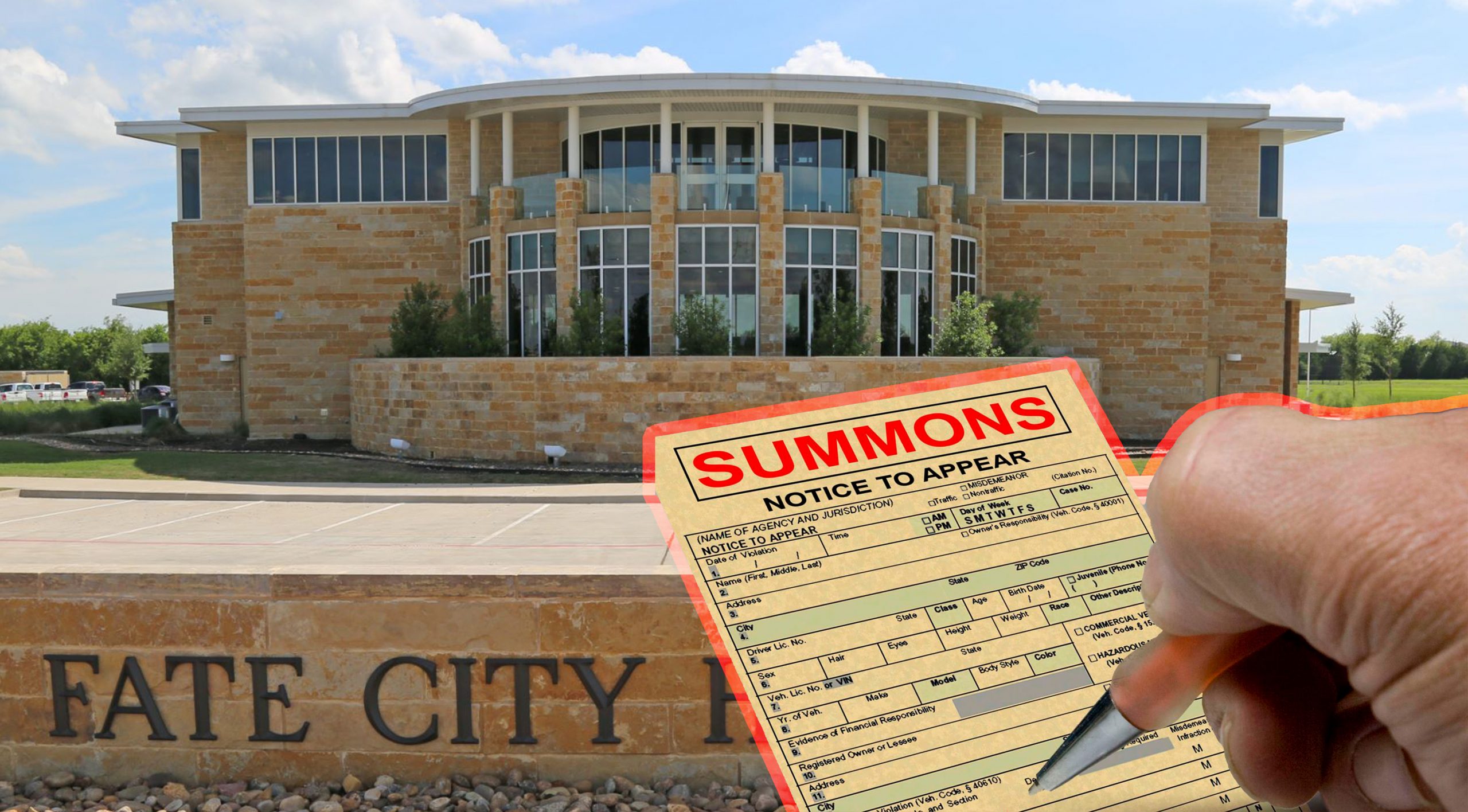
On August 7, 2023, at the City Council meeting, an alarming ordinance was unveiled that could shake the very foundations of the freedoms we hold dear. City Attorney Jon Thatcher presented Ordinance No. O-2023-022, a seemingly innocuous “Citation Program,” with a sinister underbelly that threatens to weaponize our government against its own citizens.

Under the cloak of vague language, Thatcher’s proposal allows designated individuals to wield the authority of criminal citations. While he assured the council with direct statements that this ordinance would be confined to the Community Services and Public Works departments, the written text of the ordinance tells a different story. The deliberately ambiguous wording opens the floodgates for any department director to unleash this power. The main paragraph of the ordinance reads (emphasis added):

“In addition to any express authority provided in this Code, the director of the City departments including Community Services and Public Works may issue one or more citations to a person to appear in Municipal Court, if the director reasonably believes that the person has engaged in conduct that violates a law or ordinance that relates to the operations of the department for which the director is responsible as assigned by the City Manager.”

Section 1-16 b(1)

Nowhere in the ordinance is there any sort of exclusionary language to limit the ordinance to the two departments as portrayed by Jon Thatcher. However, at least some of the Council believed that there was.

Council Member Heather Buegeler’s casual remark during the meeting exposes the deception at play in real time – she acknowledged the change in the ordinance’s scope, echoing Thatcher’s false representation. “I would have approved this the last time”, she said.  Tepid laughter ensued from the council after her remark. Her words mirror the depth of the issue at hand, where misdirection hides behind eloquent assurances.

An Inescapable Crisis

The Council’s unanimous approval of this proposal raises questions about their accountability. Their actions and explanations, while revealing their intentions, fail to justify the lack of scrutiny given to the ordinance’s language. Mayor Pro Tem Allen Robbins, Councilman Scott Kelley, Councilman Lance Megyesi, and Councilman Mark Harper each shared their perspective in response to our inquiry.

  • Mayor Pro Tem Allen Robbins – “We currently have code enforcement and citation authority in building inspection, structure, construction, streets, animal control, fire, water and sewer but none for storm water. To enforce existing ordinances, I voted in favor to codify the enforcement/citation program to remain consistent across all departments and services. Nothing changes to existing ordinances, violations or penalties. Only the ordinance granting enforcement and citation to the experts in the field.”
  • Councilman Scott Kelley – “Regarding my vote on item 6d:  I supported this item as a way to streamline and speed up the process to address code enforcement issues.  By allowing this process we can more quickly address issues like stormwater runoff that have impacted several areas in town recently, especially our older neighborhoods but also in our developments where corporate owners may be incented to not address issues timely.  I am for having efficient processes to address issues that can create significant pain points for our homeowners and residents.”
  • Councilman Lance Megyesi – “Ordinance 2023-022 will codify the delegation of such authority to code enforcement officers and will additionally authorize specific employees within the public works department to issue citations for violations limited to the City’s ordinances regulating the City’s stormwater management program.”
  • Councilman Mark Harper – “My vote was yes. I voted yes because this is needed for the efficient operation of the city in the sewer and storm water area. I feel sufficient checks and balances are in the ordinance to provide the best service to residents without the ability to overreach authority.”

Mr. Robbins, later responded in a follow up email that he, “… read and understand all ordinances I vote on. No exceptions. Your assertion that I voted based on “verbal assurances” is completely wrong and without fact. My previous reply stands. The ability to safeguard our community and enforce existing ordinances with a citation program is needed”.

The following represents analysis and interpretation based on public records, statements, and observations.

So this basically means that he completely understood that Mr. Thatcher was misrepresenting the language of the ordinance. It raises questions about whether miscommunication or deeper coordination may have influenced the vote, which warrants further scrutiny. One could only wonder what the legal implications of this might be.

The other explanations may be proof that they based their vote on false representations made by Mr. Thatcher. Indeed, one can only view the recorded video on the town’s website to see the misrepresentations made by Mr. Thatcher. You can view the video for yourself here: https://fatetx.new.swagit.com/videos/268576 The agenda item is 6D and the video begins at about 2:15:00 in the player.

The Crossroads We Face

This isn’t merely a case of miscommunication or misinterpretation; it’s an issue of the utmost importance for our community. Aside from Mr. Robbins, did the Council members genuinely overlook the language, or was their vote a result of more troubling collusion? We must ponder whether ignorance or collusion is the greater evil.

Furthermore, Mr. Thatcher’s response to our email inquiry was simply to send us a copy of the ordinance and direct our attention to the very paragraph that indicates the conflict between his statements and the written language. He did not provide a substantive explanation when requested, leaving room for interpretation about his intentions. The absence of a straightforward explanation raises pertinent questions about his intent or ignorance in this matter.

The lack of clarification by Mr. Thatcher fuels concerns that his veiled language and obfuscation were likely purposeful, leaving the community to grapple with uncertainty and unease. As a city, we deserve clarity, transparency, and accountability from those entrusted with our governance.

The truth is clear – Mr. Thatcher’s deliberate obfuscation demands action. Whether he intentionally misled the Council or incompetently drafted the ordinance, his role in this matter is untenable. He must be held accountable. Admonishment must also be given to the council by the citizens, for they have failed in their duty to vet the facts of what they are voting on.

The ordinance’s passage under false pretenses, if not to the Council itself, but most assuredly to the People, is an affront to the principles of honesty and transparency that our city deserves. If even a single Council member sees the deception, they must demand immediate repeal of the ordinance.

Preserving Our Community’s Integrity

The implications of this ordinance are dire. This ordinance is not limited to a single department or a specific violation, despite claims to the contrary. It opens the door to a future where any city director can wield the sword of citations against us. Imagine facing criminal charges for the slightest infraction, with escalating fines accruing daily that could spiral into the thousands. This isn’t the community we envision.

This isn’t about partisan politics or bureaucratic jargon. It’s about safeguarding the sanctity of our community and the freedom of its citizens. The weaponization of government against its own people is a harrowing reality we cannot ignore. Lest we forget, our elected leaders are supposed to represent the People, NOT the City. It’s not their job to put in an efficient, fast lane for city employees to persecute citizens.

It falls upon each of us to rise, unite, and demand accountability. Our voices, our unity, can be the catalyst for change. Let’s hold our leaders accountable, ensure transparency, and prevent the weaponization of our government against its citizens.

The choice is ours – to either allow deception and unchecked power to erode our community’s foundation or to stand strong and fight for the future we deserve.

###

We only publish verifiable content. You may find the entire ordinance here: https://www.fatetx.gov/AgendaCenter/ViewFile/Item/10004?fileID=31083

You can find the video here: https://fatetx.new.swagit.com/videos/268576

Our email correspondence is documented and quoted, however it’s not conducive to publish them all in their entirety. We will however retain the records for litigation if it is ever required or if it is requested by a court of law.

Editors Note:

This article reports on Ordinance No. O-2023-022 using public records, video recordings, and documented correspondence. Sections labeled “Analysis” represent the author’s interpretation of events and do not assert the personal intent or misconduct of named officials. All factual references—including ordinance language and council statements—are verifiable through the provided links.


Michael Pipkins focuses on public integrity, governance, constitutional issues, and political developments affecting Texans. His investigative reporting covers public-record disputes, city-government controversies, campaign finance matters, and the use of public authority. Pipkins is a member of the Society of Professional Journalists (SPJ). As an SPJ member, Pipkins adheres to established principles of ethical reporting, including accuracy, fairness, source protection, and independent journalism.

Continue Reading
Click to comment

You must be logged in to post a comment Login

Leave a Reply

Council

Ethics Fight Ends in Censure of Councilman Mark Hatley

Published

on

Ethics Censure Hatley

FATE, TX — The Fate City Council voted last night to censure Councilman Mark Hatley following a contentious ethics hearing that exposed deep divisions among elected officials.

The censure stems from two ethics complaints alleging Hatley improperly disclosed confidential information tied to internal discussions about the potential firing of former Department of Public Safety Chief Lyle Lombard. According to testimony, Hatley shared details with local journalist Michael Pipkins of PipkinsReports.com, including references to recorded conversations with City Manager Michael Kovacs.

The complaint was filed by outgoing councilman Scott Kelley, who played a central role throughout the proceedings and ultimately did not recuse himself and voted in favor of censure.

Monday’s meeting included a formal evidentiary hearing where Hatley, represented by attorney David Dodd, presented a defense and attempted to question fellow council members. The process, however, was repeatedly constrained by legal warnings from City Attorney Jennifer Richie, who advised council members not to answer questions related to Lombard’s termination due to ongoing litigation. That guidance, issued numerous times during the hearing, limited testimony and narrowed the scope of cross-examination.

The council ultimately split along familiar lines. Kelley was joined by outgoing councilman Mark Harper and recalled councilwoman Codi Chinn in supporting the censure. Mayor Andrew Greenberg and Councilman Rick Maneval opposed it, creating a 3–2 divide before the deciding vote was cast. Councilwoman Martha Huffman ultimately sided with the majority, breaking what would have otherwise been a tie, and would have quashed the censure.

Under Texas municipal norms, a censure is a formal statement of disapproval by a governing body against one of its own members. It carries no direct legal penalty, meaning Hatley retains his elected position and voting authority. However, such a reprimand can damage political standing, limit influence within the council, and shape future electoral prospects…if the electorate so decides.

The underlying controversy traces back to the dismissal of Lombard, which has since evolved into a broader legal dispute involving claims of wrongful termination. During Monday’s hearing, repeated references to that litigation underscored the complexity of the case and the limits placed on public disclosure. Richie’s guidance, aimed at protecting the city’s legal position, effectively curtailed testimony that might have clarified key details. Critics argue this dynamic left Hatley unable to fully defend himself against the allegations.

The political context surrounding the vote is difficult to ignore. This was Chinn’s last meeting, as she was recalled from office by the voters, in part due to her involvement in the Lombard matter. Kelley, who initiated the ethics complaint, participated fully in the decision-making process knowing that this was his last meeting. Harper has also been linked in prior discussions about leadership conflicts within city administration, and for he as well, this was his last meeting. Meanwhile, all three have supported recall efforts targeting Hatley, Greenberg, Maneval, and Huffman, for additional recall, along with two new councilmen who will take their seats at the next meeting.

From a procedural standpoint, the meeting reflected a council operating under significant strain. Testimony was fragmented, legal cautions were frequent, and the final vote appeared to follow established political alliances rather than shifting based on evidence presented during the hearing. Even Hatley’s legal representation struggled to gain traction within the constraints imposed by the city’s legal posture.

Opinion

The battle for power in Fate is very real. What unfolded Monday night was not merely an ethics hearing; it was the visible culmination of an ongoing political battle inside Fate’s leadership. When a complainant votes on his own accusation; when key witnesses are effectively shielded from cross examination; when you have councilmen under recall by the very people bringing charges against their opponents; the process begins to look less like a search for truth and more like a managed outcome. It’s cut-throat politics at its worst.

What’s changed due to this Hearing? Essentially, nothing. Hatley gets a political black eye, but that’s about it. The sides were already defined, and the votes exactly as expected. Councilmen whose terms were ending anyway are now gone after delivering one last poke in the eye to their opponents. And the City Manager, who is at the heart of this debacle because of his employee decisions, and his inability to stand up to influence from Council Members… is still employed.

For residents of Fate, the final result is an up-close view into how dirty local politics can get. It diminishes the desirability of the city to new residents, hurts economic growth, and the entire process gives citizens the perspective that their city government is completely dysfunctional.

Disclosure

The author of this article was referenced during the hearing as a recipient of information discussed in the ethics complaints. The reporting above is based on observations of the public meeting and review of the proceedings.

Continue Reading

Election

Fate Voters Go Familiar: Robbins Edges McCarthy in Tight Place 3 Race

Published

on

Robbins wins race against McCarthy

FATE, TX — Allen Robbins defeated newcomer Melinda McCarthy for Place 3 on the Fate City Council in the May 2, 2026 election, signaling that a slim majority of voters preferred experience over change.

The seat, previously held by Scott Kelley, was open after Kelley declined to seek reelection, setting up a direct contest between Robbins’ prior service and McCarthy’s outsider campaign.

Unofficial results show Robbins winning with 52.22% of the vote, 883 votes, to McCarthy’s 47.78%, 808 votes, out of 1,691 ballots cast. The margin reflects a divided electorate, with nearly half backing a first-time candidate.

Robbins campaigned on experience, but his record on the council became a central issue. Public records show he supported a roughly 5.96 percent property tax rate increase, higher solid waste fees, and a $3 monthly road fee applied broadly to residents.

He also backed zoning changes and approved a 179-unit townhome development, decisions that critics argue contributed to rapid growth and increased density. Some residents have tied those policies to worsening traffic and a perceived decline in quality of life in Fate.

McCarthy’s campaign focused on transparency, responsiveness, and reevaluating growth decisions. Her message resonated with a significant share of voters but fell short against Robbins’ name recognition and governing background.

The results remain subject to canvassing, but Robbins is expected to return to the council as debates over growth, taxation, and infrastructure continue.

Analysis and Commentary

This race underscores a familiar tension in local politics. Voters often voice frustration with growth and rising costs, yet still choose candidates they believe understand the system.

Robbins’ win suggests that, for now, experience outweighs dissatisfaction. But the narrow margin tells a different story beneath the surface.

Nearly half the electorate signaled a desire for change, and those concerns are unlikely to fade. If anything, they will follow Robbins back into office, where the consequences of past decisions, and future ones, will be closely watched.

Continue Reading

Election

Knockout! Rains Beats Grove for Fate City Council – Place 2

Published

on

Rains Beats Grove. Knockout!

FATE, TX — In a decisive and unexpected outcome, Ashley Rains defeated Lorna Grove for Fate City Council Place 2, delivering a clear upset against a candidate backed by a unified slate of local Republican leadership.

Unofficial results from May 2 show Rains winning with 56.38% of the vote (945 votes) to Grove’s 43.62% (731 votes). The margin, more than 200 votes, signals a strong voter preference that defied expectations heading into election night.

The seat opened after Councilman Mark Harper declined to seek reelection, setting up a race that quickly became a referendum on the direction of city leadership.

Establishment Support Falls Short

Grove entered the race with significant political backing, including endorsements from State Senator Bob Hall, Jace Yarbrough, John Stacy, Dennis London, and Darcy Gildon. Fate Mayor Andrew Greenberg and every Republican precinct chair in Rockwall County also supported her candidacy, forming a rare, consolidated front in a local race.

Despite that support, voters broke the other direction.

Rains positioned herself as a grassroots alternative, emphasizing accountability and independence from what some voters viewed as coordinated political influence. The result suggests that message resonated more strongly than institutional endorsements.

Recall Effort Played a Key Role

A secondary, but important, factor in the race was Rains’ leadership role in the ongoing recall effort targeting three council members and the mayor. The effort will likely be placed on the November election ballot, giving Rains elevated visibility and an engaged base of supporters.

While she did not run solely on the recall, her involvement helped frame her candidacy as part of a broader push for change at City Hall. That connection likely contributed to turnout among voters already invested in the issue.

What It Means Going Forward

Rains’ victory may serve as an early indicator of voter sentiment ahead of the November recall election, though the two contests are not perfectly aligned.

With 1,676 total votes cast, turnout was solid for a municipal race, and the nearly 13-point margin suggests a clear mandate—at least in this contest.

The results remain unofficial pending canvassing, but the outcome is unlikely to change.

For now, the takeaway is straightforward: Fate voters rejected a unified political slate and elevated a candidate tied to grassroots activism, signaling a shift in the city’s political landscape with more tests to come this fall.

Continue Reading