Connect with us

Published

on

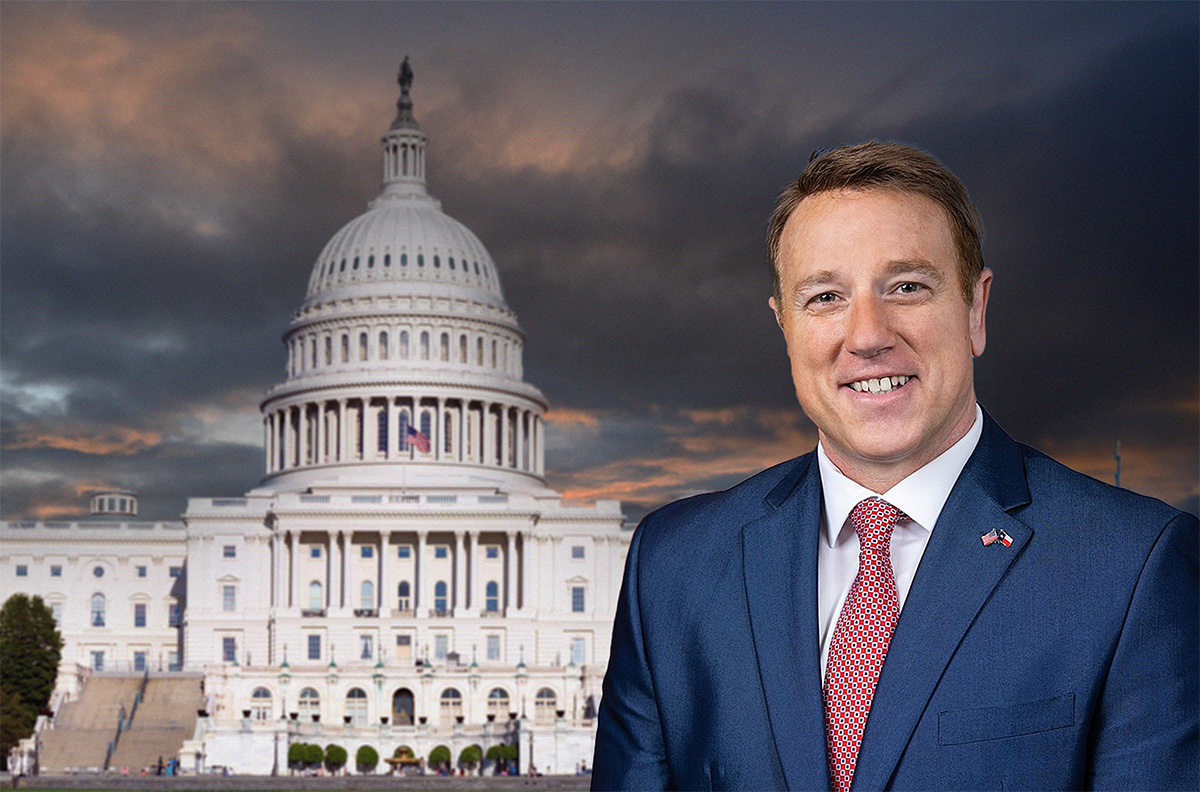
Pat Fallon – Flip Flops on Re-Election Bid

In a surprising turn of events, Texas U.S. House Representative Pat Fallon has announced that he will reverse his decision to retire from Congress and instead seek reelection for his House seat in 2024. This decision comes just a day after initial reports suggested that Fallon was planning to leave Congress to run for the Texas Senate District 30 seat. Fallon, a former resident of Prosper and current resident of Sherman, initially indicated his intention to pursue a seat in the Texas Senate after his current term. However, he has now reversed that decision and will once again seek to represent the Texas 4th in Washington.

Fallon’s communications director, Peter Vicenzi, confirmed the change in plans, stating that Fallon will indeed run for a third term in the U.S. House of Representatives. The Texas Tribune had reported earlier that Fallon planned to vacate his 4th District House seat to pursue a return to the Texas Senate, following the retirement of incumbent Republican Drew Springer.

The decision appears to have been a result of mixed feelings within Fallon’s family, as reported by various Texas news organizations. Fallon had prepared filing materials for both the Texas Senate and the U.S. House, indicating uncertainty about his political future. According to The Dallas Morning News, Fallon’s oldest son played a pivotal role in convincing him to stay in Congress, along with support from constituents in his home district.

Pat Fallon, who represents the Texas 4th congressional district, succeeded fellow Republican John Ratcliffe in 2020. Ratcliffe had left the House of Representatives to become the Director of National Intelligence for President Donald Trump.

The Texas 4th congressional district has undergone changes over the years, no longer including most of Northeast Texas. The district now follows the Red River from Bowie County to Grayson County, encompassing Fannin, Lamar, Delta, Hopkins, Rains, and Rockwall counties, as well as far southern Hunt County.

Pat Fallon’s unexpected decision to run for reelection adds an intriguing dimension to the political landscape in Texas, leaving political observers and constituents eager to see how this development will shape the upcoming 2024 elections. Furthermore, with Fallon’s initial plans to vie for the Texas Senate District 30 now abandoned, the race for his old state legislative seat becomes an unknown factor, adding an element of uncertainty as to who will replace the outgoing Senator Drew Springer.


Michael Pipkins focuses on public integrity, governance, constitutional issues, and political developments affecting Texans. His investigative reporting covers public-record disputes, city-government controversies, campaign finance matters, and the use of public authority. Pipkins is a member of the Society of Professional Journalists (SPJ). As an SPJ member, Pipkins adheres to established principles of ethical reporting, including accuracy, fairness, source protection, and independent journalism.

Election

Recall Pressure Mounts as Petition Targeting Codi Chinn Reaches Required Signatures

Published

on

Codi Chinn Recalled

Fate, Texas — A recall effort targeting Fate City Councilwoman Codi Chinn escalated sharply after organizers behind the petition announced they had collected enough signatures to meet the threshold required under the city charter, setting the stage for a recall election in May.

According to organizers, the petition, submitted yesterday, contains 403 signatures from registered Fate voters, exceeding the minimum threshold of 351 signatures required under the charter. City Secretary Vickey Raduechel is expected to validate the signatures and determine whether the petition is sufficient. If certified, the Fate City Council will be legally obligated to call a recall election, placing Chinn’s political future directly in the hands of voters.

From Petition to Ballot

The recall effort began formally on January 5, 2026, when an application for a recall petition under Fate’s home rule charter was filed with the City.

Within hours of that filing, Chinn received a copy of the petition via her official city email account. She subsequently published images of the document on social media using her personal Facebook profile, exposing the names, signatures, and home addresses of all recall committee members.

That decision became a catalyst—galvanizing supporters of the recall while intensifying criticism of Chinn’s conduct as an elected official.

Beyond the mechanics of the petition itself, several residents pointed to Chinn’s own conduct as an accelerant to the recall effort. In recent months, Chinn has engaged in online exchanges that critics describe as unprofessional and caustic—at times directed not at political opponents, but at individuals who had previously supported her. For many voters, that behavior was viewed as unbecoming of an elected official and inconsistent with the expectations of public service. Coupled with her prominent role in the termination of Fate DPS Chief Lyle Lombard, these actions appear to have served as a catalyst for the unusually swift and decisive outpouring of support behind the recall petition.

From Chinn’s perspective, however, the unfolding backlash is framed very differently. In public comments and online posts, she has portrayed herself as a “freedom fighter,” casting her actions as principled stands taken in the face of overwhelming opposition. Chinn has suggested that the criticism directed at her reflects resistance from a crowd unwilling to accept dissenting views, rather than dissatisfaction with her conduct or decisions. To her supporters, this framing underscores conviction and resolve; to critics, it further illustrates the widening gap between Chinn’s self-perception and how her leadership style is received by a growing segment of the electorate.

Pipkins Reports reached out to Councilman Chinn for a response to the submission of the recall petition. She did not respond prior to publication.

The Signature Drive

What followed was an aggressive and highly organized signature drive that unfolded both online and on the ground. Recall organizers coordinated neighborhood canvassing, direct outreach to registered voters, and private meetups to gather signatures during the charter’s circulation window.

Multiple sources involved in the effort described turnout that exceeded expectations, particularly among longtime residents and voters who had previously remained disengaged from city politics.

What the Council Must Do Now

Under Fate’s charter, once a recall petition is verified, the City Council has no discretion to block or delay the process. The council must formally order a recall election within a defined timeframe, with the election date set in accordance with Texas election law.

If the timing holds steady, the recall is expected to be placed on the May election ballot along with the election of two other offices, Place 2 & Place 3, which are currently held by Mark Harper and Scott Kelley, respectively. Fortunately for Fate Citizens, this process would ensure no additional cost above and beyond the normal election.

Ironically, this puts all three Councilmen, who played a role in the removal of Chief Lyle Lombard on the same ballot. As for Chinn, there would not be an opponent running against her. Instead, the recall ballot will present voters with a simple question: whether Codi Chinn should be removed from office before the expiration of her term, which is May of 2027.

The outcome will be decided by a simple majority. If it passes, and Chinn is removed, the vacancy will be filled by the Council.

If the recall fails, Chinn will retain her seat for the remainder of her term. Politically, however, the survival of a recall may not equate to stability. A failed recall would still leave a deeply divided electorate and a council struggling to function cohesively.

Either outcome will reverberate far beyond the ballot box.

A Decision Now in Voters’ Hands

With the petition certified (shortly) and an election looming, the recall effort will move out of City Hall and into the public square where it belongs. The coming weeks will test not only Chinn’s political support but the capacity of Fate’s civic culture to withstand sustained conflict.

The final judgment will not be rendered in Facebook comments, council chambers, or competing press releases—but at the ballot box, where Fate voters will decide whether this chapter ends with removal, redemption, or something in between.

Continue Reading

Election

Crockett Jumps Into Texas Senate Race in Futile Attempt to Flip Texas

Published

on

Jasmine Crockett Cartoon

Jasmine Crockett did not ease her way into the 2026 U.S. Senate race. She crashed through the door. Filing paperwork just hours before the deadline, the Dallas congresswoman made her move at the last possible moment, detonating what is already shaping up to be the most expensive and ideologically charged Senate contest in Texas history.

Crockett, 44, officially entered the Democratic primary for Texas’s U.S. Senate seat on December 8, 2025. With that filing, Crockett confirmed she will not seek reelection to her House seat in Texas’s 30th Congressional District, a seat she has held since January 2023 (NBC DFW).

The timing was no accident. Crockett’s entry came against the backdrop of mid-decade redistricting by Texas Republicans earlier in 2025, a move that significantly reshaped her district and made it extremely unlikely for her to win the district she currently represents. A lower-court challenge to those maps was paused in late November when the U.S. Supreme Court declined to block them for the 2026 cycle, effectively locking in the new lines (Fox 4 News).

With her House seat suddenly impossible to recapture, Crockett opted for a higher-risk, higher-reward gamble: a Senate seat that Democrats have not won since 1993.

The Democratic primary is scheduled for March 3, 2026, with runoffs expected in late May if no candidate clears 50 percent. The general election will be held on November 3, 2026 (Newsweek).

Crockett enters a Democratic field that was already forming before her filing. State Sen. James Talarico announced his bid in October and has emphasized crossover appeal with independents and moderate Republicans. Polling from the University of Houston and Texas Southern University places Crockett narrowly ahead with about 31 percent support, followed by Talarico at roughly 25 percent (The Grio). Early polling has also tested familiar Democratic names, including former Rep. Beto O’Rourke and Rep. Joaquin Castro, though neither had filed as of December 8.

Notably absent now is former Rep. Colin Allred. Allred, who announced his own Senate bid in July 2025, withdrew from the race earlier on the morning of December 8, opting instead to run for a House seat near Dallas after redistricting altered his political calculus. Multiple reports indicate Allred and Crockett discussed the race before his exit, clearing a path for her entry (Independent).

Crockett’s political résumé is relatively short but loud. Born in St. Louis in 1981, she earned her law degree from the University of Houston Law Center and worked as a public defender before founding a civil rights law firm. She gained prominence handling Black Lives Matter related cases pro bono, a credential that endears her to the Democratic activist class (Wikipedia).

After winning a Texas House seat in a 2020 special election, Crockett jumped to Congress in 2022 with the endorsement of retiring Rep. Eddie Bernice Johnson. In Washington, she became a fixture on cable news and social media, particularly through clashes with Republicans during House Oversight Committee hearings. Several of those exchanges went viral in 2024, fueling her national fundraising operation and boosting her profile among progressive donors (Independent).

That media presence is a key reason analysts expect her candidacy to shatter Texas fundraising records. Observers across the political spectrum predict the race could eclipse the $80 million-plus spent during the 2018 Cruz–O’Rourke contest (Dallas Morning News).

On the Republican side, the race is already turbulent. Sen. John Cornyn, 73, is seeking a fifth term after holding the seat since 2002. However, Texas Attorney General Ken Paxton filed to challenge him in the GOP primary in October and currently leads Cornyn in several early polls. Rep. Wesley Hunt entered the race in November and trails both men in polling (NBC DFW).

Initial reactions to Crockett’s filing were swift and predictably polarized. Conservative accounts on X mocked her candidacy and framed her entry as a gift to Republicans. Progressive activists celebrated her energy and national reach. Gov. Greg Abbott declared she would be “pummeled” by the eventual GOP nominee, while Cornyn posted a cheeky “Run Jasmine, run!” (Newsweek).

For Democrats, Crockett represents a bet that Texas can be nationalized, energized, and finally flipped through sheer turnout and confrontation politics. For Republicans, she is precisely the kind of progressive foil they believe plays poorly with statewide Texas voters.

Why did Crockett run? Her allies point to polling, redistricting, and opportunity. Critics see ambition colliding with reality. Either way, her late-hour filing ensured one thing: Texas’s 2026 Senate race will be loud, costly, and unforgiving. And for conservatives watching the state remain stubbornly red statewide, Crockett’s entry looks less like a breakthrough and more like another test case in how far progressive politics can stretch before they snap in Texas.

Continue Reading

Election

Jasmine Crockett’s District Got a Hard Reset – and She’s NOT in it Anymore.

Published

on

TX-30 District Redrawn

Dallas, TX – Fresh off her now-infamous CNN appearance where Rep. Jasmine Crockett sneered about white tears without so much as a raised eyebrow from the anchor, the freshman firebrand has bigger problems than cable-news backlash. The new congressional map — PLANC2333, has surgically removed Crockett from Texas District 30. Yes, her own district. The one she’s held for less than two years.

Let’s be clear: this isn’t a minor tweak. This is a full-on redistricting gut punch.

Under the old lines, TX-30 was a comfortably Democratic, majority-minority seat that stretched from downtown Dallas south almost to Red Oak—an anchor of Black political power in North Texas. 42% Black, 35% Hispanic, 16% White. Median income $71k. Poverty rate is pushing 16%. A district drawn, let’s be honest, to elect someone exactly like Jasmine Crockett, who would become the embodied spirit of the once race-baiting Shelia Jackson Lee (deceased).

The new TX-30 snakes along I-30 through downtown, clips the eastern edge at I-175, and hugs the Dallas County line to the south. The areas carved out (shown in red on Pipkins Reports map) were the heart of Crockett’s old base—south Dallas neighborhoods that reliably turned out for her. In their place (blue on the map) come whiter, more affluent precincts to the west. The demographic shift is brutal: Black voting-age population down, Hispanic share down, White share up. Translation? TX-30 just became a swing district masquerading as a D+20 stronghold.

And then there’s the real kicker: District 33, currently held by Marc Veasey, now swoops in like an upside-down U, wrapping around the new TX-30 and swallowing huge chunks of downtown Dallas. That new TX-33? It’s a demographic kaleidoscope—White, Black, and Hispanic populations are almost perfectly balanced. Turnout will decide everything. Good luck predicting who wins that one.

If Crocket chooses to continue on in TX-30, she is likely to face a tough road. This is what happens when you spend your first term auditioning for MSNBC panels instead of building goodwill back home. You rant about “white tears” on national television, you mock colleagues across the aisle, you forget that even safe seats can be made unsafe with a few strokes of a GIS pen. The Texas Legislature has sent a message, and it’s written in precinct-level data: play stupid games, win stupid prizes.

The Texas Secretary of State confirms the candidate filing window for the 2026 primaries opened Saturday, November 8, and closes at 6:00 p.m. on Monday, December 8, 2025—Crockett, Veasey, and every other incumbent now playing musical districts have less than a month to decide where (or if) they’re running.

Constitutional conservatives have been warning for years that the era of bulletproof, identity-carved districts was coming to an end. The courts demanded “compactness” and “communities of interest.” The GOP in Austin finally delivered. And the first casualty? A loudmouth progressive who thought performative rage was a substitute for legislating.

Marc Veasey’s seat is scrambled too, by the way. In fact, half of Dallas just woke up in a different congressional universe.

Continue Reading