Daniel Miller and the TEXIT Debacle: The Incompetence that Doomed a Movement

In the expansive realm of Texas politics, Daniel Miller, the dynamic President of the Texas Nationalist Movement (TNM), has been a fervent advocate for the TEXIT movement since its inception in 1996. Recognized on major news networks and international outlets, Miller’s charismatic stance on Texas independence has positioned him as a central figure in the Lone Star State’s political landscape. As the face of the TEXIT movement, Miller’s leadership warrants scrutiny, delving into both successes and challenges that shape the narrative of his tenure.
Background History of Daniel Miller:
Daniel Miller, a sixth-generation Texan, brings a unique blend of tech consultancy and entrepreneurial spirit to the TEXIT movement. His political journey, however, is marked by setbacks. In the 2012 House District Republican primary, Miller faced a formidable defeat against Allan Ritter, securing only 27% of the votes. Undeterred, he ventured into the 2022 Texas Lt. Governor primary, yet the outcome echoed his previous loss, with Dan Patrick commanding 76% of the votes and Miller securing a distant second with just 7%. These early challenges in Miller’s political career provide context for the hurdles he would later navigate in steering the TEXIT movement toward its goal of Texas independence.
The Texas Nationalist Movement (TNM):
The TNM, under Daniel Miller’s leadership since its evolution in 2005, has become a pivotal force in Texas politics, not because of Miller’s involvement, but in spite of it. Evolving from a faction of the old Republic of Texas, the TNM’s mission is explicit: “the complete, total and unencumbered political, cultural and economic independence of Texas.” Operating as an unincorporated association, the TNM’s focus on peaceful political advocacy, education, and the pursuit of a statewide referendum sets the stage for the TEXIT movement. Miller’s role extends beyond advocacy, as he testifies on legislation and participates in conferences globally, solidifying the TNM’s status as a formidable political entity.
Series of Failures:
Referendum Mishaps:
The handling of the TEXIT referendum became a critical juncture in Miller’s leadership. He failed to understand the law and submit ballots on time. He failed to understand the legal requirement for wet signatures. And technical glitches on the petition website likely meant that many more signatures could have been obtained. These missteps not only delayed the movement’s momentum but raised questions about the TEXIT leadership’s competence and preparedness.
The technical failure of the petition website was particularly problematic. For days, perhaps weeks, programming errors plagued the platform, preventing individuals from completing the registration process. The system’s incapacity to rectify errors disenfranchised countless individuals. The severity of these issues questioned the TEXIT movement’s technological infrastructure and its ability to navigate complex legal processes. We should also mention that this is actually the type of business that is Miller’s main job … and it failed miserably.
TEXITCON Press Restrictions:
The TEXITCON event, which was a great idea that was long overdue, faced a critical misstep under Miller’s leadership – a failure to allow free press opportunities. The Texas Liberty Journal’s attempts to secure a press pass were met with complete silence, pointing to a broader issue of restricted media coverage and public awareness. Access to the event would only be possible if one paid for admission. This is not how the press operates and any amateur event organizer would know this. This communication breakdown not only hindered media engagement but also raised concerns about the real motivations of the event. Was it about awareness and organization? Or was it just about making money?
This press restriction holds broader implications. Limited media coverage restricts the dissemination of information about the TEXIT movement’s goals, progress, and activities. The absence of a robust media presence opens the door to misinformation and limits constructive public discourse. In a movement where public perception is pivotal, stifling media access has far-reaching consequences, potentially isolating the TEXIT movement from valuable feedback and alternative viewpoints.
Legal Troubles and Financial Irregularities:
a. IRS Closure of 501c(4):
A significant episode under Miller’s leadership was the closure of TNM’s 501c(4) status by the IRS in May 2023. This move may signal legal troubles or it may once again represent incompetence. In the very least it represents a lack of transparency as no mention of this has been made by the TNM. The closure raises questions about the internal governance and financial practices of the Texas Nationalist Movement Inc. as well. Did they stop being a non-profit? Where is the money from the online store going?
The IRS closure unveils a broader challenge in managing the legal aspects of the movement. As a key advocacy organization, maintaining compliance with federal regulations is paramount. The closure not only tarnishes the image of the TNM but underscores the importance of robust governance mechanisms in movements of this nature.
b. Business Registration Shell Game:
Further scrutiny reveals a concerning practice – the shelling of the Texas Business Registration through another company, “TNM Protective Services, LLC.” This maneuver introduces an element of opaqueness into the organizational structure. Coupled with the inactive status of the “Texas Nationalist Movement Foundation Inc”, this prompts questions about organizational transparency and accountability.
The use of multiple entities and the status of these entities raise concerns about financial practices and organizational integrity. Advocating for political, cultural, and economic independence necessitates a level of transparency that aligns with the movement’s core values. The complexities in business registration demand a closer examination of the TEXIT movement’s financial strategies and its commitment to ethical conduct.
c. Lost Domain Name
When Miller launched his book in 2020 “Texit: Why and How Texas Will Leave The Union“, the back cover of his book listed his domain as www.DanielMiller.com. Sometime after the publication he lost control of his own domain. This often happens when the owner fails to pay the renewal fee to their domain host. Generally, domain names run about $15.00 / year but when the owner fails to renew a domain, ‘squatters’ can jump in and grab it. Often, they will then jack up the price and hope that the owner will pay to have it restored. For common names, or names of celebrities, the fee can go up quite a bit. In this case, DanielMiller.com is currently offered for sale at $79,888.
Few in their right mind would pay such a fee and such a domain name is only valuable to a person who shares this name…that’s a pretty small market. This appears to be the case for Miller who has subsequently registered the domain www.DanielOMiller.com … adding the ‘O’. But the question remains, how does one fail to renew their own domain name? What does it say about a person’s management skills that they would fail at such a simple task? Miller has not returned our inquiry so we are unable to get his side of the story.
The Elusive Financial Trail:
The uncertainty surrounding the online TEXIT product store adds another layer to this financial opaqueness. With little information available about the revenue distribution and the company handling these transactions, questions linger about the accountability of the TEXIT movement. Transparency in financial matters is not just a legal requirement but a moral obligation, especially for a movement that seeks to empower Texans in determining their destiny.
Conclusion: A Call for Renewed Leadership in the TEXIT Movement
As we meticulously examine Daniel Miller’s leadership of the TEXIT movement, a pattern of failures and incompetence emerges, raising serious questions about his ability to steer the movement forward after over two decades. The challenges faced, from referendum mishaps to the restrictions on press freedom and legal and financial irregularities, paint a concerning picture of the movement’s current trajectory.
Delayed ballot submissions, a lack of understanding about legal requirements, and technical failures on the petition website, showcase a level of incompetence that is detrimental to a movement striving for Texas independence. These missteps not only hinder the momentum of TEXIT but also cast doubt on Miller’s capacity to navigate the intricate legal and technological landscape that such a movement demands.
The press restrictions observed at TEXITCON further underscore a deficiency in leadership. In a movement that claims to champion transparency and democratic principles, stifling media access raises serious concerns about accountability and openness. The lack of media engagement limits public awareness and stifles constructive discourse, hindering the movement’s ability to gain broad support.
The IRS shut down the 501c(4), a move that typically happens after a company fails to turn in its forms for 3 consecutive years. The questionable business registration practices that hide who is running the company reveal an unsettling lack of governance and transparency. For a movement that advocates for the political, cultural, and economic independence of Texas, such financial opaqueness is not just a red flag; it is a fundamental betrayal of the ideals the movement professes.
After more than 20 years under Miller’s leadership, it becomes imperative for the people invested in the TEXIT movement to critically assess its direction. The numerous failures and shortcomings raise a pivotal question: Is Daniel Miller the right leader to guide the movement into the future? A movement takes more than passion to succeed, it takes leadership, experience, and competence. Perhaps it is time for the people to seek out a new representative who can bring these fresh perspectives and a strategic understanding of the complexities of politics.
Moving the TEXIT movement forward requires adept leadership that can learn from past mistakes, adapt to challenges, and effectively navigate the intricate web of politics, legality, and public relations. The vision of a free and independent Texas is too significant to be hindered by the failures of the past. It is time for the people to seek a leader who can reinvigorate the movement, inspire confidence, and, most importantly, lead Texas toward a future that aligns with the aspirations of its people.


Election
Texas Senate Hopeful James Talarico Shared Pride Event Stage With 11-Year-Old Child Drag Performer

Federal Court Upholds State Limits on Minors at Adult Drag Shows
Taylor, TX – A federal appeals court has just upheld a Florida law restricting minors from attending certain adult live performances, including some drag shows. Within hours of that ruling, renewed attention was focused on Texas Democratic U.S. Senate candidate James Talarico after reports resurfaced showing he headlined a 2021 Pride fundraiser featuring an 11-year-old child drag performer promoted as one of the event’s main attractions.
On Tuesday, the U.S. Court of Appeals for the 11th Circuit ruled in HM Florida-ORL, LLC v. Secretary of the Florida Department of Business and Professional Regulation, allowing Florida to enforce its law restricting minors from attending certain adult live performances. Florida Attorney General James Uthmeier announced the decision, calling it a victory for protecting children. The ruling does not prohibit drag performances for adults, but it recognizes that states may impose limits when minors are involved.
The timing has drawn renewed scrutiny to Talarico’s record as he campaigns for the U.S. Senate against Texas Attorney General Ken Paxton.

According to promotional materials first highlighted by the Washington Free Beacon, Talarico was a featured speaker during Taylor PRIDE’s June 26, 2021 fundraiser in Taylor, Texas. The event was organized to raise money for “rural LGBTQ communities” and included live music, Drag Story Hour, adult drag performers, and an 11-year-old performer using the stage name “Kween Kee Kee.”
Taylor PRIDE advertised the child as “the absolute cutest & youngest of our drag performers.” Promotional posts stated the child would perform a drag routine and host “Kee Kee Storytime,” where children would participate in Pride-themed craft activities. The event was held at Texas Beer Company.
Photographs published from the event show Talarico addressing attendees from the stage and posing with participants. Additional photographs and video posted publicly show Kween Kee Kee, a local preteen named Keegan, performing in a shimmering blue dress, platinum blonde wig, and theatrical makeup during what organizers described as a Youth Drag Show. One attendee shared video of the child performing the splits before the audience.
The fundraiser also featured several adult drag performers, including Brianna Brinxx, Belladonna Dior, Felecia Enspire, and a performer using the stage name Sedonya Face.
Following criticism from conservative activists who protested the event, Taylor PRIDE defended the festival on social media. The organization rejected claims that the event was sexually explicit or exploitative and encouraged the public to review photographs from the event and decide for themselves.
Talarico’s campaign did not respond to requests for comment from the Washington Free Beacon regarding his participation.
The resurfaced event adds to a broader record that Republicans have highlighted throughout Talarico’s political career. While serving in the Texas House, Talarico opposed legislation restricting drag performances in the presence of children and argued lawmakers should avoid harming what he described as Texas’ drag performers. He has also opposed Republican-backed legislation restricting certain transgender medical treatments for minors and has frequently spoken in support of LGBTQ causes.
More recently, however, Talarico has attempted to present himself as a more moderate statewide candidate. He has described previous remarks, including referring to God as “nonbinary,” as “cringey” and has removed some progressive messaging from campaign materials as he seeks to broaden his appeal beyond Democratic primary voters.
The renewed attention comes as cultural debates surrounding children and drag performances continue playing out both politically and legally. Florida’s appellate court victory represents one of the most significant recent rulings supporting a state’s authority to restrict minors from attending certain adult-oriented live performances, even as litigation over similar laws continues elsewhere.
Fate, TX
Exclusive: Text Messages Reveal Former Fate Mayor Continued to Receive Inside Access to City Hall After Leaving Office

Private conversations between former Mayor David Billings and City Manager Michael Kovacs raise new questions about influence, transparency, and who really had access to City Hall.
Fate, TX – Text messages obtained between former Fate Mayor David Billings and City Manager Michael Kovacs reveal a relationship that continued well after Billings left elected office—one in which the former mayor was regularly discussing active city business, asking for information unavailable to the public, and at times appearing to direct or advise the city’s chief executive officer.
The conversations, which span numerous topics, occurred between May 1, 2025 and December 31, 2025, paint the picture of a former elected official who maintained extraordinary access to City Hall without submitting Open Records Requests required of ordinary citizens.
While former elected officials frequently maintain friendships with city staff, these exchanges raise broader questions about whether Billings continued to wield informal influence over municipal operations after voters had elected a new city council.
Direct Access Outside the Open Records Process
Throughout the messages, Billings repeatedly asks Kovacs questions regarding ongoing city matters and receives prompt responses.
Rather than directing Billings to publicly available records or suggesting he submit an Open Records Request, Kovacs routinely answers questions directly, provides updates, and discusses city operations.
For residents seeking similar information, the City of Fate has frequently required formal Public Information Act requests, and in many instances has asserted legal exceptions to disclosure of city business.
The contrast between the public process and the private communications is likely to invite scrutiny.
Discussions of Active Public Safety Matters
Among the more striking conversations are discussions involving registered sex offenders.
Billings questions Kovacs about individuals living within the city and asks whether Fate has anyone violating local sexual offender restrictions.
According to the texts, Billings asks:
“Are you sure we have no one in violation of the Fate sexual offenders laws.”
Rather than declining to discuss an active law enforcement matter, Kovacs responds with detailed information about multiple individuals, explaining that one suspect had fled, another was moving away, and describing the status of investigations.
Kovacs also tells Billings that police were reviewing maps to determine whether additional offenders might be hiding within prohibited areas.
The conversation continues with Billings asking follow-up questions about which offender local residents were monitoring and commenting that he would remain silent regarding information not yet known publicly.
Later in the exchange, Billings promotes the value of automated license plate readers, noting from his own experience that they quickly tracked down criminals.
Whether any of this information was confidential under Texas law would ultimately depend on the status of the investigations and applicable law enforcement exceptions. Regardless, the exchange demonstrates that Billings was being briefed on ongoing public safety matters despite no longer serving in elected office.
A Former Mayor Giving Direction
The conversations also show Billings offering more than casual opinions.
On multiple occasions he appears to instruct or advise Kovacs regarding city operations.
Among the examples:
- Billings tells Kovacs, “You should get Codi educated and onboard.”
- Billings advises that the police chief “needs to take threats more seriously,” adding that he would explain later.
- Billings offers recommendations regarding technology and law enforcement practices.
- He regularly asks follow-up questions that resemble those of an active policymaker rather than a private citizen.
While city managers routinely receive advice from many individuals, these exchanges suggest Billings occupied a uniquely influential position long after his term ended.
The Discovery Warning
Perhaps the most revealing exchange comes when the discussion turns to Department of Public Safety matters.
Kovacs informs Billings that the text messages involving DPS (ie: Chief Lyle Lombard) will be captured during the discovery process.
Following that warning, the conversations regarding those subjects effectively stop.
For observers familiar with litigation, the significance is difficult to ignore.
Discovery is the legal process through which communications and documents become subject to production in lawsuits.
Whether Kovacs was simply acknowledging that the communications would eventually become public or signaling that sensitive discussions should no longer occur by text is open to interpretation.
What is evident is that once the prospect of discovery is raised, the subject matter changes.
For journalists, that transition may prove one of the more noteworthy portions of the exchange.
Access Not Available to Ordinary Citizens
Perhaps the broader issue raised by the messages is one of unequal access.
Residents seeking information from City Hall generally must:
- Submit formal Open Records Requests.
- Wait statutory response periods.
- Potentially pay production fees.
- Sometimes litigate withheld records.
Billings, by contrast, appears simply to send a text message directly to the City Manager.
The exchanges suggest that information concerning city operations, policing issues, development, and other municipal matters flowed privately between the city manager and a former elected official without the formal transparency mechanisms available to the public.
Whether that arrangement was appropriate is ultimately a matter for residents to decide.
Questions Raised
The messages raise several questions deserving public answers:
- Why was a former mayor receiving updates on active city business instead of obtaining information through public channels?
- What role, if any, did Billings continue to play in influencing municipal decisions after leaving office?
- Were other former elected officials afforded similar access?
- Were any discussions conducted outside the public record to avoid future disclosure?
- Should communications between city leadership and former elected officials concerning municipal business be subject to greater transparency?
None of the texts, standing alone, establish wrongdoing.
However, they do provide an unusual window into the continuing relationship between the City’s top administrator and a former mayor whose official authority had already ended.
For a community that has increasingly questioned transparency at City Hall, the messages are likely to fuel renewed debate over who truly had access to the decision-makers—and whether some voices carried more weight than others.
Read the entire conversation of text messages we have obtained here:
(Edited: Higher Resolution File Uploaded: )
Edited: Additional pages that were corrupted from above:
*Edited: Meanwhile, if you are a citizen, you get this:
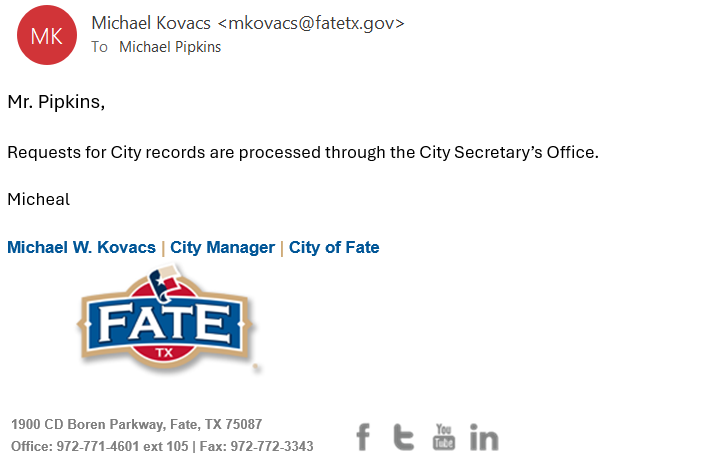
Citizens
Recall Organizer’s Prior Fraud Case Raises Questions About Transparency In Fate Political Fight

Fate, TX – A bitter political battle that has divided residents and fueled an effort to remove the Mayor of Fate and three sitting council members has taken an unexpected turn after court records revealed that one of the recall movement’s principal organizers, Christopher Allen Rains, previously pleaded guilty in a felony fraud case, a fact that appears to have been largely unknown to many local voters.
Court records reviewed by Pipkins Reports show that Rains entered a guilty plea in 2016 to a charge of Fraudulent Use or Possession of Identifying Information, a state jail felony under Texas law. Arrest records reviewed by Pipkins Reports show Rains was also arrested on charges of Tampering with a Government Record. However, the tampering allegation does not appear among the final court dispositions reviewed by Pipkins Reports.
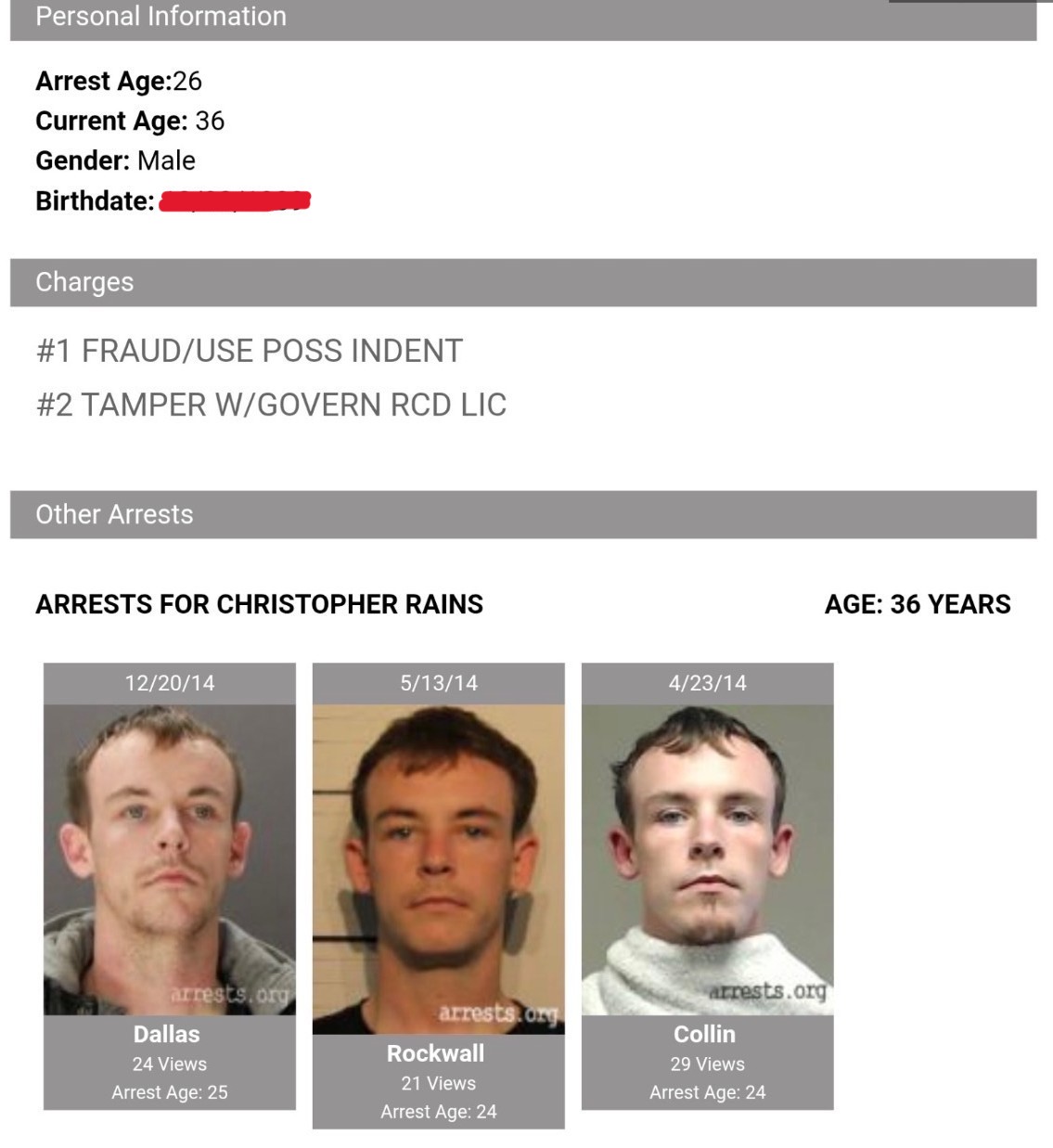
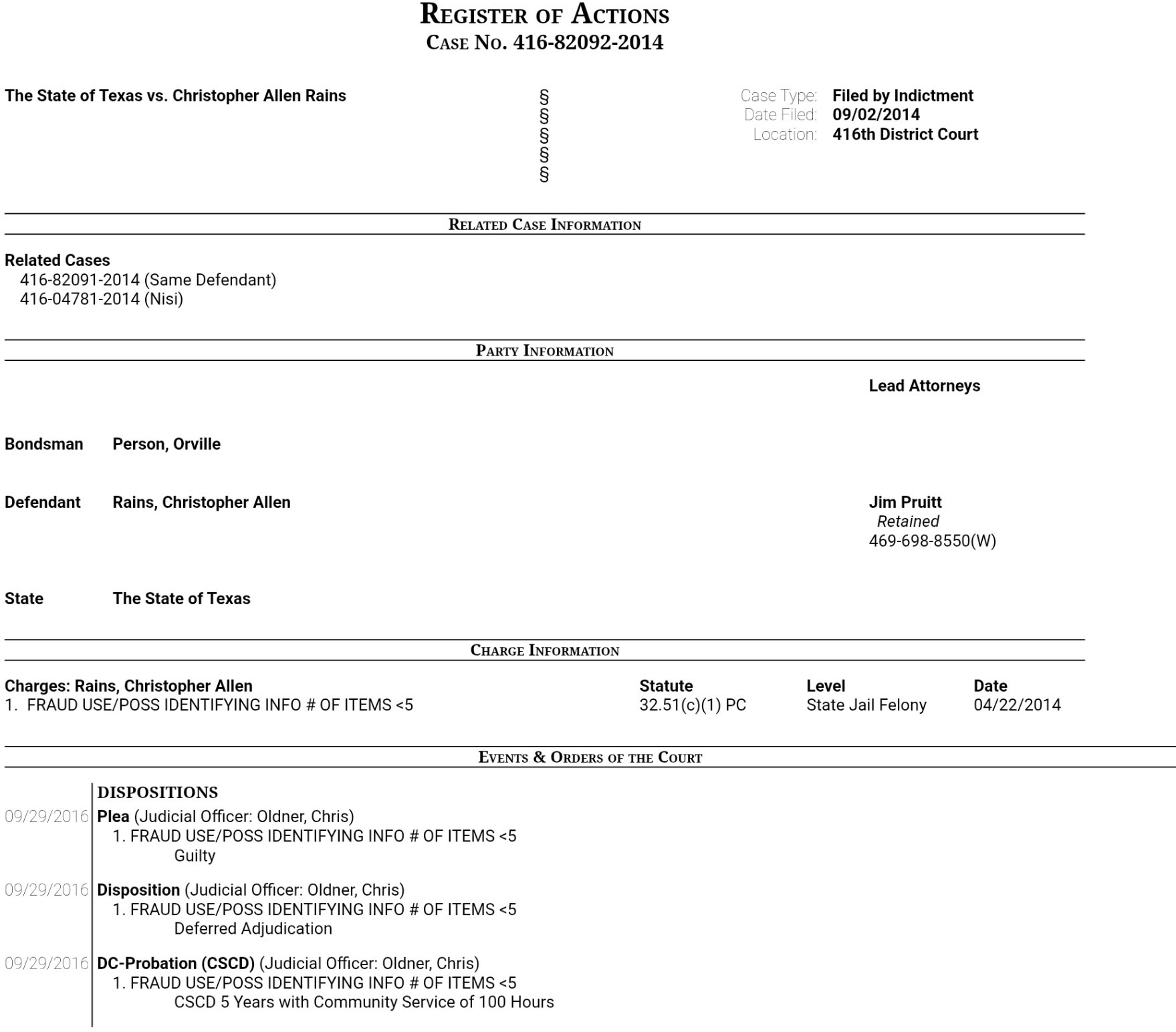
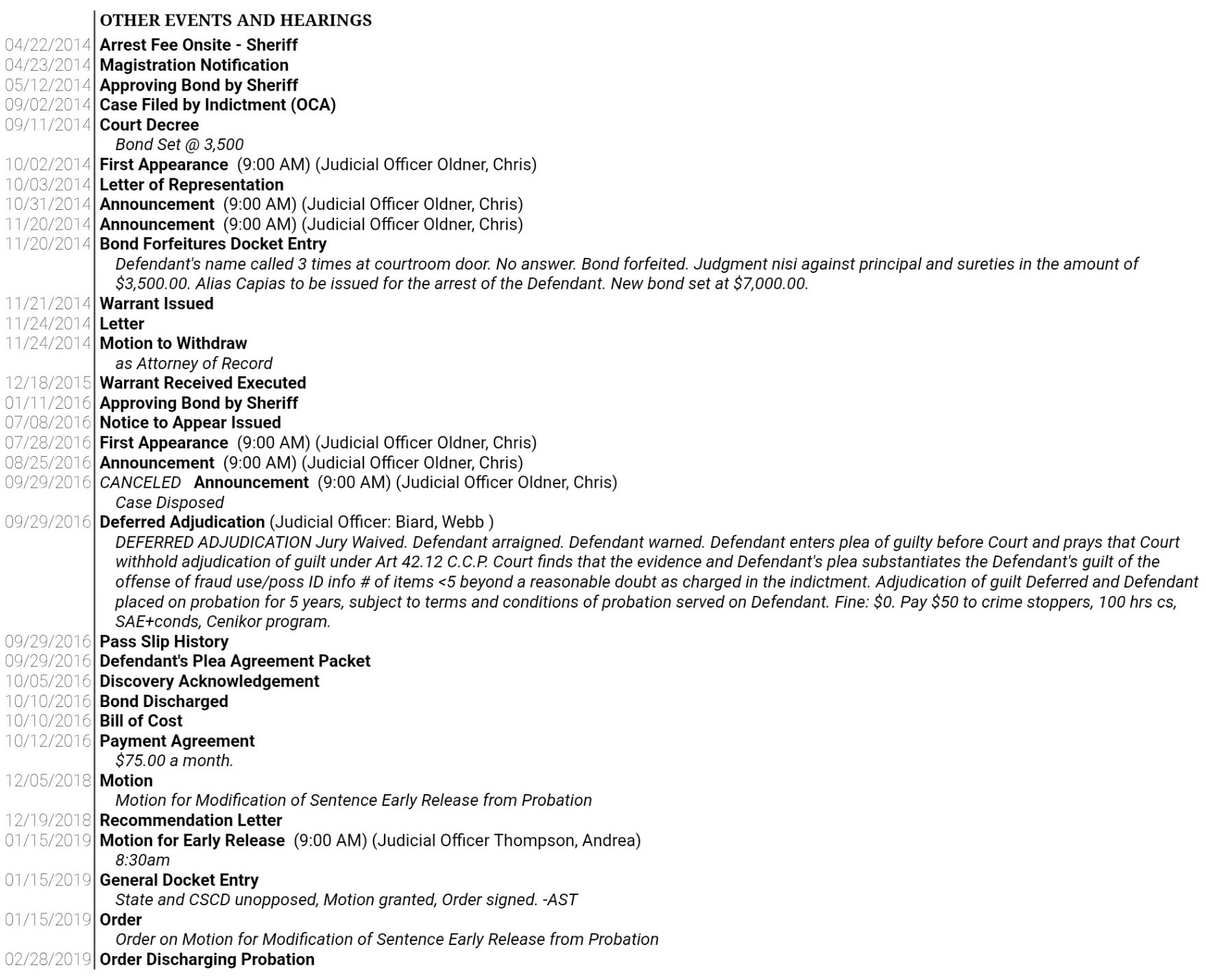
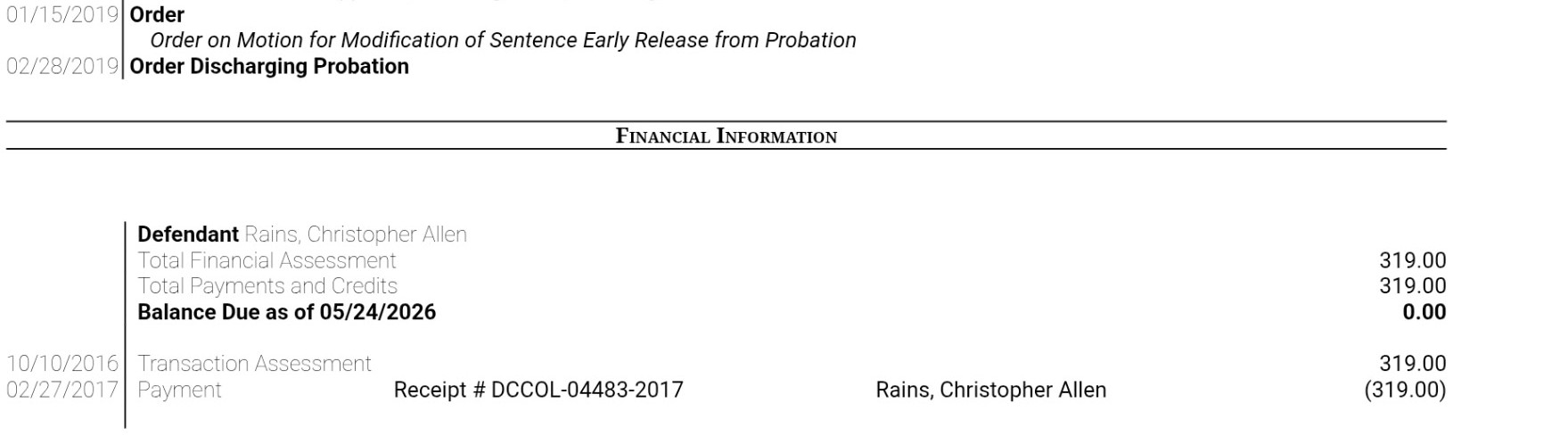
[Images of Arrest, Mugshots, and Court Records of Christopher Allen Rains]
The revelation has drawn attention because the recall campaign has frequently centered on issues of ethics, accountability, transparency, and public trust in government. Critics of the current council have argued that elected officials should be held to a high standard of conduct, while supporters of the council have questioned the motives of those seeking their removal.
According to records from the 416th District Court in Collin County, Rains was indicted in 2014 and later pleaded guilty on Sept. 29, 2016, to Fraudulent Use or Possession of Identifying Information involving fewer than five items. The court placed him on deferred adjudication probation for five years and ordered 100 hours of community service.
Court documents state that the judge found sufficient evidence to support the charge but withheld a formal conviction under the terms of deferred adjudication. Records further show that Rains successfully completed probation requirements and was granted an early release from supervision in 2019.
The issue carries public interest not only because Rains helped organize the recall effort, but because his wife, Ashley Rains, currently serves on the Fate City Council and was politically involved in the recall movement while seeking elected office. Christopher Rains stated to Pipkins Reports that he did not form a relationship with his wife until after he had turned his life around, in 2020.
When contacted by Pipkins Reports, Rains did not dispute the court records or his guilty plea. Instead, he cooperated fully with our questions and described the events as occurring during a difficult period of substance abuse and personal struggles.
“In 2013-2014, I was making IDs, checks, and credit cards. I was sentenced to 10 years of probation and 8 months of state jail. I was discharged 5 years early off probation“, Rains told Pipkins Reports.
Rains goes on to illustrate how he wasn’t in a good place in his life following that discharge and that his conduct during that period was connected to addiction, and does not reflect who he is today.
“It’s nuanced, I was medically discharged from the military.” Referring to events just prior to his arrest.
“My actions in active addiction aren’t who I am,” Rains told Pipkins Reports. “I own and run multiple businesses, write uncle Sam checks for six figures every single year. My two years of being an absolute dirt bag doesn’t define me in any way.“
Rains further stated that he expected the issue would eventually become public and said he was not attempting to hide his past.
“I absolutely knew it would come up,” he said. “I’m not afraid of anything anybody can say about me.“
Rather than deny responsibility, Rains characterized the criminal case as part of a chapter of his life that he has worked to overcome.
“I can not change the past,” Rains said. “I can not control who does what to me. I can only control how I respond. I am in no way the same person I was in 2014.“
His comments are likely to resonate with residents who believe people deserve an opportunity to rebuild their lives after making serious mistakes.
At the same time, the newly disclosed records raise legitimate questions about transparency and public scrutiny. Rains did not publicly disclose his criminal history while gathering signatures for the recall effort. A recall movement that focused attention on the character, ethics, and judgment of elected officials. Voters may reasonably conclude that similar scrutiny should apply to the individuals leading those efforts.
Whether residents view the criminal case as disqualifying, irrelevant, or evidence of personal redemption will ultimately be a matter of individual judgment.
What is not in dispute is that court records show Rains pleaded guilty to a felony fraud charge, received deferred adjudication probation, completed the court’s requirements, and later obtained an early release from supervision. Those facts, now become part of the public record surrounding one of the most visible organizers in Fate’s ongoing political conflict.
Sources: Collin County District Court Case No. 416-82092-2014; Register of Actions; publicly available arrest records; Pipkins Reports interview with Christopher Rains;
You must be logged in to post a comment Login