Connect with us

Published

on

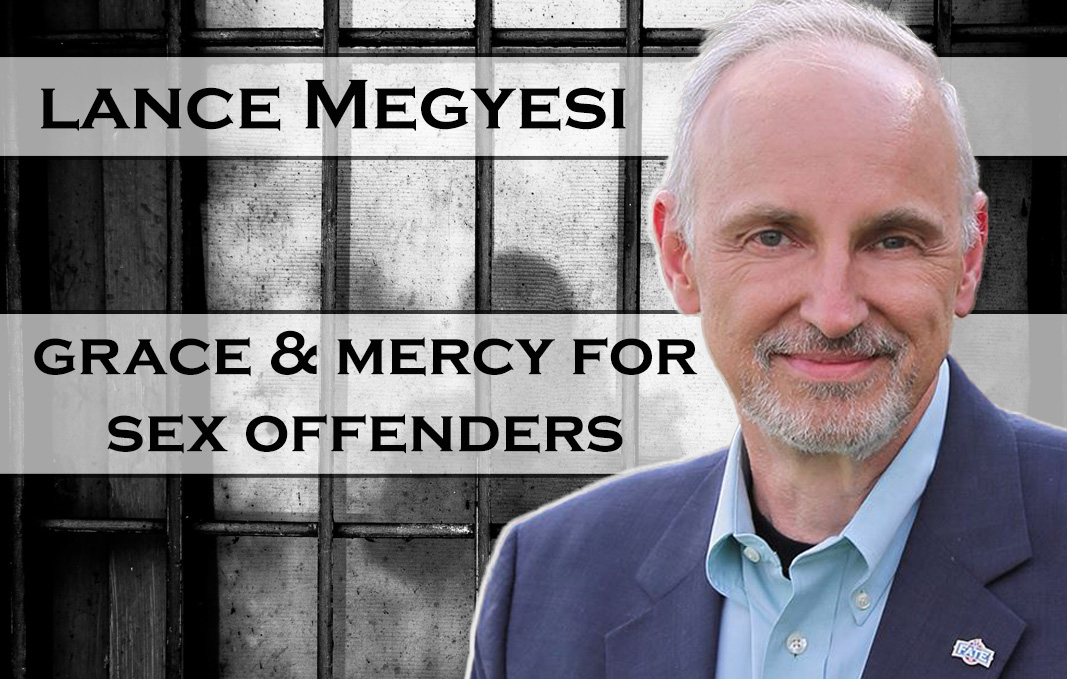
Scathing Critique Emerges as Councilman Lance Megyesi supports exemptions to Child Safety Zone restrictions not once, but twice.

Fate, TX – In a move that has ignited intense debate and drawn sharp criticism, Fate City Councilman Lance Megyesi has twice voted to approve exemptions to the Child Safety Zone restriction ordinance, leaving many residents questioning his judgment and commitment to child safety.

Article III of Chapter 18 of the City of Fate Code of Ordinances prohibits persons convicted of certain sexual offenses from residing within 2,000 feet of any premises where children commonly gather. This generally includes playgrounds, schools, daycare facilities, public parks, public or private youth centers, public swimming pools, etc. The City’s ordinance also provides that anyone who falls under these regulations may apply to the City Council for an exemption from the regulations in Article III.

Map of 2000 foot Child Safety Zones in Fate, TX. (Orange Area)

The first instance occurred on February 6, 2023, when Megyesi voted to approve an exemption for Mr. Donald Wright, a resident of 860 Roland Drive in Fate, TX. Wright had been embroiled in a troubling scenario involving the facilitation of a sex act by individuals under the age of sixteen. Allegedly, he booked a hotel room for minors to engage in sex acts and received a payment of $100 for his involvement. Wright was 31 years old at the time of the incident. Although he acknowledged previous room rentals, he maintained that these had occurred before the disturbing event.

In the aftermath of the incident, Mr. Wright has maintained a clean legal record. He is married and is the stepfather to three boys. However, the egregious nature of the act and its potential implications for the safety and well-being of minors has left many Fate residents deeply concerned about the Councilman’s decision.

Councilman Lance Megyesi and Councilman Jim DeLand both voted in the minority to approve the exemption for Mr. Wright. Fortunately, the motion to approve was rejected by the rest of the council.

The second exemption was requested on August 7, 2023, for Elizabeth M. Wilson of 103 Katie Street in Fate, TX. Wilson had been convicted of child sodomy in 1993 in Virginia. She and her husband purchased their residence in December 2022. Fate’s City Attorney revealed that upon a review by the state, her offense closely resembled a Texas offense that would necessitate lifetime registration as a sex offender.

Mrs. Wilson and her attorney spoke at the Aug. 7th council meeting. She also had a Sexual Risk Assessment performed by Stephen D. Finstein, a licensed Sex Offender Treatment Provider, who provided testimony at the council meeting that she was not a threat. Her husband also spoke at the meeting.

These instances of exemption have thrown Councilman Lance Megyesi into the spotlight for his unusual stance on child safety issues. Megyesi, in an attempt to defend his actions, cited his belief in “grace and mercy” as guiding principles. He acknowledged the controversial nature of his opinion, stating, “The last thing I want to see is someone’s child abused.” However, critics argue that this perspective neglects the fundamental responsibility of safeguarding vulnerable members of the community.

With a margin of 5 to 1, the council overwhelmingly denied the application for Mrs. Wilson’s exemption from Child Safety Zone restrictions. Councilman Megyesi stood as the sole dissenting voice in this case, raising concerns among Fate’s residents about his commitment to the welfare of children and the broader community.

Child safety advocates and concerned citizens have not hesitated to voice their disapproval of Councilman Megyesi’s actions on Facebook. Many argue that the purpose of Child Safety Zone restrictions is to prevent individuals with questionable backgrounds from residing in close proximity to areas frequented by children, such as schools and playgrounds.

The controversy has also sparked broader discussions about the criteria for granting exemptions and the potential consequences of doing so. Critics argue that the Child Safety Zone restrictions exist for a reason – to prevent individuals with prior convictions related to child exploitation or abuse from residing near spaces where children congregate. Granting exemptions, they say, undermines the integrity of these regulations and could potentially place children at unnecessary risk.

As Fate residents grapple with these ethical and practical concerns, the fate of Councilman Megyesi’s political career hangs in the balance. The City Council member’s actions have ignited a firestorm of dissent, leading some residents to call for his resignation, while others express hope that he will reconsider his stance and prioritize the community’s safety. The Fate City Council’s decisions regarding these exemption requests serve as a stark reminder of the complex and often contentious nature of balancing individual rights with the greater good of the community. As the city navigates these tumultuous waters, the long-term consequences of these exemptions and the legacy of Councilman Megyesi’s decisions remain uncertain.


Michael Pipkins focuses on public integrity, governance, constitutional issues, and political developments affecting Texans. His investigative reporting covers public-record disputes, city-government controversies, campaign finance matters, and the use of public authority. Pipkins is a member of the Society of Professional Journalists (SPJ). As an SPJ member, Pipkins adheres to established principles of ethical reporting, including accuracy, fairness, source protection, and independent journalism.

Continue Reading
Click to comment

You must be logged in to post a comment Login

Leave a Reply

Election

Recall Moves Closer: Signatures Verified. Recall Election of Codi Chinn Moves Forward

Published

on

Codi Chinn Recall

Fate, Texas — The City of Fate has completed its review of the recall petition targeting City Councilwoman Codi Chinn, formally verifying the petition as valid and clearing the way for a recall election to be ordered by the City Council.

City officials confirmed that 396 signatures from registered Fate voters were verified and accepted, exceeding the 351 signatures required under the city’s home rule charter. With the verification process complete, the matter now advances to the City Council on Monday, January 26th, which is legally required to call a recall election in accordance with Texas election law.

Under the charter, the action is administerial and the council has no discretion to reject or delay a properly presented petition. Chinn will be given an opportunity for a hearing to address the council, if she chooses, but it will not change the fact that a recall election must be held.

A Stark Electoral Comparison

The verified signature count carries added political significance when viewed against the backdrop of Chinn’s original election.

In June 2024, Chinn prevailed in a runoff election against challenger Cinnamon Krause, winning by a margin of 835 votes (56.92%) to 632 votes (43.08%). The recall petition, which gathered over 400 signatures in approximately one week, represents almost half the total number of votes Chinn received citywide in her election.

While a recall petition is not a direct proxy for voter intent, the comparison underscores the speed and scale of the opposition effort, as well as citizen dissatisfaction with Chinn, particularly in a city where municipal turnout is typically modest and electoral margins are measured in the hundreds, rather than the thousands.

From Certification to the Ballot

With the petition signatures verified and considered “Sufficient”, the recall effort now enters its next—and most consequential—phase. If the council follows the standard timeline, the recall election is expected to be placed on the May ballot, coinciding with regularly scheduled municipal elections for City Council Place 2 (Mark Harper) and Place 3 (Scott Kelley).

Harper and Kelley have not yet announced if they intend to run for reelection.

The recall ballot will present voters with a single question: whether Codi Chinn should be removed from office before the expiration of her term in May 2027. A simple majority is required for removal. If the recall succeeds, the resulting vacancy would be filled by appointment of the council. If it fails, Chinn would retain her seat for the remainder of her term.

Continue Reading

Dallas

Talarico’s Texas Takeover? New Poll Shows Democratic Senate Race Tilting Against Crockett

Published

on

Jazzy behind Talarico

Dallas, TX — A seismic shift in the 2026 Texas Democratic U.S. Senate primary has unsettled party operatives and raised questions about the viability of one of the party’s most visible progressive figures. According to a new Emerson College Polling/Nexstar Media survey released January 15, 2026, State Rep. James Talarico holds a nine-point lead over U.S. Rep. Jasmine Crockett among likely Democratic primary voters. Talarico’s 47 percent support to Crockett’s 38 percent, with 15 percent undecided, signals a remarkable reversal from a December survey in which Crockett held a clear lead.

The poll results make the March 3 primary a focal point of Texas politics, with implications that stretch from the Democratic Party’s ideological battles to the broader contest for control of the U.S. Senate. At a time when Democrats hoped to topple the Republican stranglehold on statewide offices in Texas, internal party dynamics — and voter preferences — are now in sharper focus.

Shift in Voter Preferences
The Emerson poll, conducted January 10–12 with a sample of 413 likely Democratic primary voters, shows Talarico with broad support across key demographic groups. He leads among Hispanic voters at approximately 59 percent and among white voters at roughly 57 percent. Crockett, while commanding strong loyalty among Black Democratic voters — roughly 80 percent back her — struggles to match Talarico’s cross-sectional appeal.

In the same survey, gender splits emerged: men favored Talarico by a wide margin, while women’s support was nearly evenly divided between the two candidates. With a sizable share of Democratic voters still undecided, the primary remains fluid — but Talarico’s edge appears solid at the moment.

Who Are the Candidates?
Rep. Jasmine Crockett (D-Dallas) has been a dynamic presence within Texas Democratic politics since her election to Congress in 2022. Known for her unapologetic progressive rhetoric and criticism of Republican leadership, Crockett quickly became a national figure among the party’s left wing. Early polling suggested she was the Democratic favorite to win the Senate nomination, tapping into energy among urban progressives.

State Rep. James Talarico (D-Austin) has taken a different approach. A former educator with a reputation for grassroots organizing and a comparatively moderate tone on certain issues, Talarico has worked to broaden his appeal beyond traditional Democratic strongholds. His Senate campaign, which has reportedly raised more than $13 million since its launch, emphasizes his capacity to unite diverse factions of the Democratic electorate.

Their differing campaign strategies are reflected in the latest figures: Crockett’s base remains deeply loyal, particularly among Black voters, while Talarico’s performance with Hispanic and white voters has propelled him ahead in the overall count.

Republican Landscape and Broader Stakes
While Democratic eyes are fixed on their own intraparty struggle, the Republican side of the Texas Senate race also reflects volatility. The Emerson poll indicates that Sen. John Cornyn and Attorney General Ken Paxton are locked in a tight GOP primary contest that could head to a runoff if neither candidate reaches a majority. Both Republicans remain below 30 percent support among likely GOP voters, underscoring ongoing divisions within the party.

Looking ahead to the general election, early hypothetical matchups show Republicans maintaining an advantage in this deeply red state, with Cornyn and Paxton both holding leads in polls against the Democratic contenders. Yet with the Democrats’ primary unsettled and a significant share of voters undecided, the path to victory for either party remains complex and contingent on turnout patterns in November.

Historical Context and Trends
Texas has not elected a Democratic U.S. Senator since 1988, a generational drought that has shaped the party’s approach to statewide races. In recent cycles, Democratic candidates have occasionally narrowed margins but fallen short of victory. Crockett’s initial strong polling reflected belief among some observers that her charisma and progressive credentials might overcome historical headwinds. However, the rapid swing in favor of Talarico suggests voters may prioritize electability in a conservative state.

The shifting polls also highlight internal debates within the Texas Democratic coalition over identity, strategy, and how to appeal to a statewide electorate that still tilts Republican. How the candidates navigate these conversations — and how they position themselves against Republican opponents — will likely shape the party’s fortunes in 2026 and beyond.

Conclusion: A Party at a Crossroads
From my vantage point, as someone who approaches politics through a constitutional conservative lens, the Democratic primary in Texas illustrates deeper tensions within that party: a clash between ideological purity and pragmatic calculation. Crockett’s progressive firebrand brand once made her the favorite among activists, but her apparent inability to expand beyond her base underscores the challenges of winning statewide in a state where conservative voters still outnumber Democrats. Talarico’s rise suggests that Democratic voters themselves may be responding to the cold arithmetic of electability rather than purely ideological factors.

Regardless of who wins the Democratic nomination, the general election will be an uphill battle for the party in Texas. Republicans remain firmly positioned, and the competitive primary may deplete resources that could have been directed toward a unified campaign against GOP nominees. If Democrats hope to flip a Senate seat for the first time in nearly four decades, they will need cohesion, strong turnout, and a candidate capable of bridging ideological divides.

For now, the story is not just Crockett versus Talarico — it is a reflection of Texas’s evolving political identity, where margins are tight, and electoral fortunes can turn on a single poll. Only voters themselves, and the campaigns that engage them between now and March, will determine which narrative prevails.

Sources:
Emerson College Polling/Nexstar Media survey, January 15, 2026.
Texas Tribune reporting on Emerson poll results.
Newsmax analysis of Texas primary polling trends.
Black Enterprise – Crockett is behind in polls.

Continue Reading

Election

Recall Pressure Mounts as Petition Targeting Codi Chinn Reaches Required Signatures

Published

on

Codi Chinn Recalled

Fate, Texas — A recall effort targeting Fate City Councilwoman Codi Chinn escalated sharply after organizers behind the petition announced they had collected enough signatures to meet the threshold required under the city charter, setting the stage for a recall election in May.

According to organizers, the petition, submitted yesterday, contains 403 signatures from registered Fate voters, exceeding the minimum threshold of 351 signatures required under the charter. City Secretary Vickey Raduechel is expected to validate the signatures and determine whether the petition is sufficient. If certified, the Fate City Council will be legally obligated to call a recall election, placing Chinn’s political future directly in the hands of voters.

From Petition to Ballot

The recall effort began formally on January 5, 2026, when an application for a recall petition under Fate’s home rule charter was filed with the City.

Within hours of that filing, Chinn received a copy of the petition via her official city email account. She subsequently published images of the document on social media using her personal Facebook profile, exposing the names, signatures, and home addresses of all recall committee members.

That decision became a catalyst—galvanizing supporters of the recall while intensifying criticism of Chinn’s conduct as an elected official.

Beyond the mechanics of the petition itself, several residents pointed to Chinn’s own conduct as an accelerant to the recall effort. In recent months, Chinn has engaged in online exchanges that critics describe as unprofessional and caustic—at times directed not at political opponents, but at individuals who had previously supported her. For many voters, that behavior was viewed as unbecoming of an elected official and inconsistent with the expectations of public service. Coupled with her prominent role in the termination of Fate DPS Chief Lyle Lombard, these actions appear to have served as a catalyst for the unusually swift and decisive outpouring of support behind the recall petition.

From Chinn’s perspective, however, the unfolding backlash is framed very differently. In public comments and online posts, she has portrayed herself as a “freedom fighter,” casting her actions as principled stands taken in the face of overwhelming opposition. Chinn has suggested that the criticism directed at her reflects resistance from a crowd unwilling to accept dissenting views, rather than dissatisfaction with her conduct or decisions. To her supporters, this framing underscores conviction and resolve; to critics, it further illustrates the widening gap between Chinn’s self-perception and how her leadership style is received by a growing segment of the electorate.

Pipkins Reports reached out to Councilman Chinn for a response to the submission of the recall petition. She did not respond prior to publication.

The Signature Drive

What followed was an aggressive and highly organized signature drive that unfolded both online and on the ground. Recall organizers coordinated neighborhood canvassing, direct outreach to registered voters, and private meetups to gather signatures during the charter’s circulation window.

Multiple sources involved in the effort described turnout that exceeded expectations, particularly among longtime residents and voters who had previously remained disengaged from city politics.

What the Council Must Do Now

Under Fate’s charter, once a recall petition is verified, the City Council has no discretion to block or delay the process. The council must formally order a recall election within a defined timeframe, with the election date set in accordance with Texas election law.

If the timing holds steady, the recall is expected to be placed on the May election ballot along with the election of two other offices, Place 2 & Place 3, which are currently held by Mark Harper and Scott Kelley, respectively. Fortunately for Fate Citizens, this process would ensure no additional cost above and beyond the normal election.

Ironically, this puts all three Councilmen, who played a role in the removal of Chief Lyle Lombard on the same ballot. As for Chinn, there would not be an opponent running against her. Instead, the recall ballot will present voters with a simple question: whether Codi Chinn should be removed from office before the expiration of her term, which is May of 2027.

The outcome will be decided by a simple majority. If it passes, and Chinn is removed, the vacancy will be filled by the Council.

If the recall fails, Chinn will retain her seat for the remainder of her term. Politically, however, the survival of a recall may not equate to stability. A failed recall would still leave a deeply divided electorate and a council struggling to function cohesively.

Either outcome will reverberate far beyond the ballot box.

A Decision Now in Voters’ Hands

With the petition certified (shortly) and an election looming, the recall effort will move out of City Hall and into the public square where it belongs. The coming weeks will test not only Chinn’s political support but the capacity of Fate’s civic culture to withstand sustained conflict.

The final judgment will not be rendered in Facebook comments, council chambers, or competing press releases—but at the ballot box, where Fate voters will decide whether this chapter ends with removal, redemption, or something in between.

Continue Reading