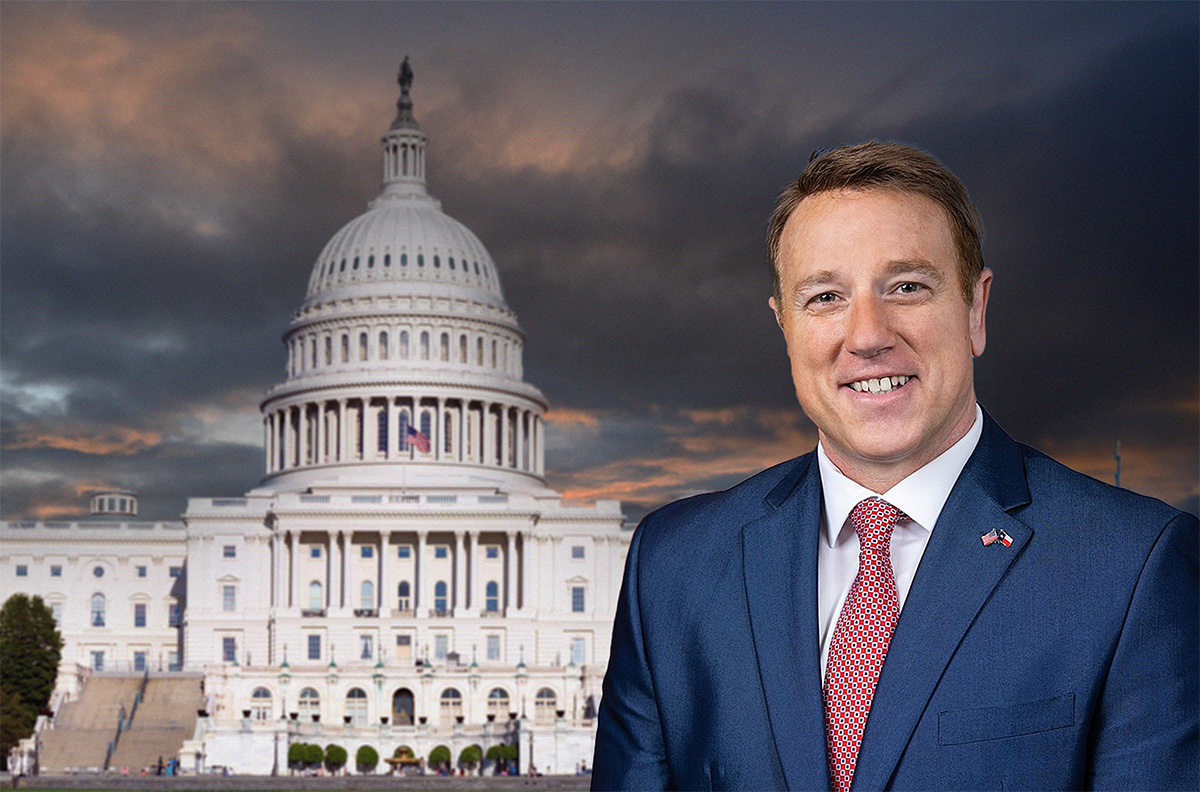
Pat Fallon’s MIA in Mayorkas Impeachment Vote: Constituents Demand Accountability
In a twist of political dynamics, U.S. Representative Pat Fallon (R. TX, District 4) is navigating both an impeachment vote and a significant career transition. Recent reports from K.E.R.A. News reveal Fallon’s decision to leave Congress at the end of his current term, opting to run for the Texas Senate. This development adds layers of complexity to discussions surrounding his absence during the impeachment vote on H.Res.863. Notably, this move comes on the heels of Fallon’s previous introduction of impeachment legislation, H. Res. 8, in January 2023, marking a dramatic shift in his position.
The Impeachment Vote Amidst Congressional Change
Fallon’s recent announcement of leaving Congress and running for Senate District 30 coincides with the unfolding impeachment proceedings against Secretary Mayorkas. Constituents are left to grapple with the implications of Fallon’s shifting focus, as a significant national debate on border security continues to unfold.
Previous Impeachment Advocacy: H. Res. 8
Adding to the intrigue is Fallon’s earlier stance on impeachment. In January 2023, Fallon had put forward H. Res. 8, indicating his support for the process. The legislation, though distinct from H.Res.863, underscores Fallon’s prior willingness to engage in the impeachment discourse. This makes his recent absence during the vote on H.Res.863 a noteworthy departure from his earlier position.
Fallon’s Statement: A Move for the Future of Texas
In a statement to K.E.R.A. News, Fallon explained his decision, stating, “At the end of the day, the decision came down to, If we lose Texas, we lose the nation. It’s just terribly important to ensure that Texas has written a great success story and I want to keep moving that forward.” This perspective offers insight into Fallon’s motivations for transitioning to state-level responsibilities, highlighting a shift from national to state-centric priorities.
Constituent Engagement: Seeking Clarity and Accountability
As constituents grapple with these developments, it becomes imperative to actively engage with Fallon’s office regarding his recent absence during the impeachment vote. The contrast between Fallon’s introduction of H. Res. 8 and his non-participation in H.Res.863 marks a notable shift, prompting constituents to seek clarity on his evolving stance.
Call to Action: Expressing Concerns and Seeking Answers
Contact Pat Fallon’s office at (202) 225-6673 to express your concerns and seek clarification on his evolving position regarding the impeachment proceedings. Acknowledge his prior involvement in introducing impeachment legislation and inquire about the factors influencing his recent absence during the vote.
The juxtaposition of Fallon’s past advocacy for impeachment and his present move to the Texas Senate underscores the dynamic nature of political decision-making. As constituents navigate this intricate landscape, active engagement becomes crucial in holding representatives accountable for their evolving positions on matters of national significance.
Election
Texas Conservatives Turn on Cornyn as Paxton Surges
OPINION – For years, Texas conservatives have watched Republicans campaign as fighters back home, only to return to Washington and govern like cautious corporate managers. That frustration is now boiling over in the growing divide between Texas Attorney General Ken Paxton and U.S. Senator John Cornyn, a battle that increasingly defines the Republican Party in Texas.
Paxton has become one of the most aggressive conservative legal figures in America. Cornyn, meanwhile, is increasingly viewed by grassroots Republicans as an establishment insider tied to the old Bush era wing of the GOP. The contrast could hardly be sharper.
Paxton built his reputation fighting the Biden administration on immigration, election disputes, COVID mandates, and federal overreach. Supporters say he has consistently used the Attorney General’s office to defend Texas sovereignty and conservative values. President Donald Trump praised Paxton during his 2022 reelection fight, calling him “a true warrior for conservative values” while endorsing him against challenger George P. Bush.
For many Texas Republicans, Trump’s support mattered because Paxton was already viewed as willing to confront Washington directly rather than negotiate with it.
Cornyn has found himself on the opposite side of many of those same debates. Conservatives sharply criticized his role in bipartisan gun negotiations after the Uvalde shooting, but immigration remains the biggest source of anger among the Republican base. Cornyn has long supported expansions of employment based immigration programs, including H1B visa policies favored by major corporations.
Critics argue those programs have displaced American workers in industries like engineering, healthcare, technology, and data services by allowing companies to import cheaper foreign labor. Over the years, outsourcing firms and tech companies have repeatedly faced backlash after replacing American employees with foreign visa workers, sometimes even requiring laid off staff to train their replacements before leaving.
Cornyn argues skilled immigration helps fill labor shortages and strengthens the economy. But many Texas conservatives increasingly see the system as benefiting multinational corporations while middle-class American workers fall behind.
Paxton has aligned himself almost entirely with border hawks and immigration enforcement advocates. He has repeatedly sued the Biden administration over border policies and backed Texas efforts to secure the southern border independently of federal action. Supporters argue those lawsuits helped slow federal policies they believed encouraged illegal immigration and weakened state sovereignty.
Some conservatives also frame the immigration debate in cultural and security terms, warning that unchecked migration and weak assimilation policies can destabilize communities and strain public resources. Paxton supporters often portray him as defending Texas from the kinds of social fragmentation seen in parts of Europe.
Cornyn’s critics increasingly label him a “RINO,” shorthand for Republican In Name Only, arguing that he represents donor class priorities rather than grassroots conservatives. Trump allies have also criticized Cornyn as part of the “old Republican guard” that voters rejected during Trump’s rise. Cornyn’s primary supporter is the Lone Star Freedom Project, a dark money 501c(4) operated by former Texas Governor Rick Perry.
Opinion sections are where political realities become unavoidable. The reality is this: many Texas Republicans no longer want cautious institutional Republicans who focus on compromise while Democrats aggressively push cultural and political change nationwide.
They want confrontation. They want resistance. They want politicians willing to fight publicly and relentlessly.
That explains why Paxton continues to maintain strong support despite years of legal and political attacks. Many conservatives interpret those attacks not as proof he should step aside, but as proof he threatens entrenched political interests.
Cornyn, meanwhile, increasingly represents a Republican era many grassroots voters believe failed to defend the border, protect American workers, or stand firmly against Washington’s expansion of power. In today’s Texas Republican politics, that perception may be impossible to overcome.
Featured
“Judge Speedy” Hits the Wall: Bexar County Jurist Resigns, Accepts Lifetime Ban from Texas Bench
SAN ANTONIO, Texas — The political and legal downfall of Bexar County Judge Rosie Speedlin-Gonzalez came to a dramatic conclusion after the embattled jurist resigned from office and accepted a permanent lifetime ban from serving on the Texas bench .
The resignation agreement, signed in April and confirmed by the State Commission on Judicial Conduct, ends months of controversy surrounding Speedlin-Gonzalez, who faced criminal charges and multiple judicial misconduct complaints stemming from a heated courtroom confrontation involving a San Antonio defense attorney.
Speedlin-Gonzalez, an openly gay Democrat who had served on Bexar County Court-at-Law No. 13 since 2018, formally agreed she would be, “forever disqualified from judicial service in the State of Texas.” The agreement prohibits her from serving as a judge, accepting judicial appointments, or performing judicial duties in the future.
The scandal centered on a December 2024 courtroom incident involving defense attorney Elizabeth Russell. Prosecutors alleged Speedlin-Gonzalez ordered Russell handcuffed and detained in the jury box during a contentious exchange after accusing the attorney of coaching her client during a probation revocation hearing.
A Bexar County grand jury later indicted the judge on charges of unlawful restraint and official oppression. Court documents alleged that Speedlin-Gonzalez knowingly restrained Russell without consent while acting under the authority of her judicial office.
The incident generated national attention and quickly became one of the most talked about judicial controversies in Texas. Video clips and courtroom details circulated widely online, while critics questioned whether the judge had crossed a clear constitutional line by using courtroom authority against a practicing attorney during active proceedings.
KSAT reported last month that special prosecutor Brian Cromeens later moved to dismiss the criminal charges after Speedlin-Gonzalez agreed to resign and permanently leave the judiciary. According to reports, prosecutors concluded the resignation and lifetime ban sufficiently addressed the public interest concerns surrounding the case.
The resignation agreement also referenced several additional complaints against the now former judge. One complaint alleged she displayed an “unprofessional demeanor” toward a criminal defendant and failed to timely address motions involving bond modifications and habeas corpus requests. Three additional complaints accused her of abusing judicial authority by issuing “no contact” orders restricting communications among court personnel and former employees.
Speedlin-Gonzalez had already faced disciplinary scrutiny before the handcuffing controversy erupted. According to the San Antonio Express-News, the State Commission on Judicial Conduct previously issued a public warning after she congratulated winning attorneys on social media and posted their photographs on her official judicial Facebook page. The commission also reportedly ordered additional education after complaints involving a pride flag displayed inside her courtroom.
In January, shortly after the indictment became public, Speedlin-Gonzalez defended herself in comments to the New York Post.
“I’m a proud public servant, I’m LGBTQ, I own a gun, I’m bilingual, I’m an American citizen, and I have every right to defend myself,” Gonzalez told the outlet. “As long as I walk in righteousness and have God at my side I will be fine.”
The judge was suspended without pay earlier this year while disciplinary proceedings continued. During that suspension, visiting judges rotated through County Court-at-Law No. 13 to handle pending cases and specialty court matters.
Court-at-Law No. 13 is known in part for overseeing Reflejo Court, a specialty program focused on first time domestic violence offenders and treatment based intervention programs.
The controversy also arrived during a difficult reelection season for Speedlin-Gonzalez. In March, she lost her Democratic primary race to challenger Alicia Perez, effectively ending her political future even before the disciplinary case concluded.
The agreement signed by Speedlin-Gonzalez states that by accepting resignation and permanent disqualification, she does not admit fault or guilt regarding the allegations against her. Such provisions are common in negotiated judicial disciplinary settlements.
One narrow exception remains under the agreement. Speedlin-Gonzalez may still officiate wedding ceremonies, provided she does not wear judicial robes or imply she retains judicial authority while conducting them.
Speedlin-Gonzalez was widely described as the first openly LGBT judge elected in Bexar County. Supporters frequently highlighted that milestone during her tenure on the bench, while critics argued the attention surrounding identity politics often overshadowed concerns about courtroom conduct and professionalism.
Permanent judicial disqualifications remain relatively uncommon in Texas, particularly involving sitting elected county judges. The case now joins a growing list of disciplinary actions taken by the State Commission on Judicial Conduct against jurists accused of misconduct or abuse of authority.
Council
Ethics Fight Ends in Censure of Councilman Mark Hatley
FATE, TX — The Fate City Council voted last night to censure Councilman Mark Hatley following a contentious ethics hearing that exposed deep divisions among elected officials.
The censure stems from two ethics complaints alleging Hatley improperly disclosed confidential information tied to internal discussions about the potential firing of former Department of Public Safety Chief Lyle Lombard. According to testimony, Hatley shared details with local journalist Michael Pipkins of PipkinsReports.com, including references to recorded conversations with City Manager Michael Kovacs.
The complaint was filed by outgoing councilman Scott Kelley, who played a central role throughout the proceedings and ultimately did not recuse himself and voted in favor of censure.
Monday’s meeting included a formal evidentiary hearing where Hatley, represented by attorney David Dodd, presented a defense and attempted to question fellow council members. The process, however, was repeatedly constrained by legal warnings from City Attorney Jennifer Richie, who advised council members not to answer questions related to Lombard’s termination due to ongoing litigation. That guidance, issued numerous times during the hearing, limited testimony and narrowed the scope of cross-examination.
The council ultimately split along familiar lines. Kelley was joined by outgoing councilman Mark Harper and recalled councilwoman Codi Chinn in supporting the censure. Mayor Andrew Greenberg and Councilman Rick Maneval opposed it, creating a 3–2 divide before the deciding vote was cast. Councilwoman Martha Huffman ultimately sided with the majority, breaking what would have otherwise been a tie, and would have quashed the censure.
Under Texas municipal norms, a censure is a formal statement of disapproval by a governing body against one of its own members. It carries no direct legal penalty, meaning Hatley retains his elected position and voting authority. However, such a reprimand can damage political standing, limit influence within the council, and shape future electoral prospects…if the electorate so decides.
The underlying controversy traces back to the dismissal of Lombard, which has since evolved into a broader legal dispute involving claims of wrongful termination. During Monday’s hearing, repeated references to that litigation underscored the complexity of the case and the limits placed on public disclosure. Richie’s guidance, aimed at protecting the city’s legal position, effectively curtailed testimony that might have clarified key details. Critics argue this dynamic left Hatley unable to fully defend himself against the allegations.
The political context surrounding the vote is difficult to ignore. This was Chinn’s last meeting, as she was recalled from office by the voters, in part due to her involvement in the Lombard matter. Kelley, who initiated the ethics complaint, participated fully in the decision-making process knowing that this was his last meeting. Harper has also been linked in prior discussions about leadership conflicts within city administration, and for he as well, this was his last meeting. Meanwhile, all three have supported recall efforts targeting Hatley, Greenberg, Maneval, and Huffman, for additional recall, along with two new councilmen who will take their seats at the next meeting.
From a procedural standpoint, the meeting reflected a council operating under significant strain. Testimony was fragmented, legal cautions were frequent, and the final vote appeared to follow established political alliances rather than shifting based on evidence presented during the hearing. Even Hatley’s legal representation struggled to gain traction within the constraints imposed by the city’s legal posture.
Opinion
The battle for power in Fate is very real. What unfolded Monday night was not merely an ethics hearing; it was the visible culmination of an ongoing political battle inside Fate’s leadership. When a complainant votes on his own accusation; when key witnesses are effectively shielded from cross examination; when you have councilmen under recall by the very people bringing charges against their opponents; the process begins to look less like a search for truth and more like a managed outcome. It’s cut-throat politics at its worst.
What’s changed due to this Hearing? Essentially, nothing. Hatley gets a political black eye, but that’s about it. The sides were already defined, and the votes exactly as expected. Councilmen whose terms were ending anyway are now gone after delivering one last poke in the eye to their opponents. And the City Manager, who is at the heart of this debacle because of his employee decisions, and his inability to stand up to influence from Council Members… is still employed.
For residents of Fate, the final result is an up-close view into how dirty local politics can get. It diminishes the desirability of the city to new residents, hurts economic growth, and the entire process gives citizens the perspective that their city government is completely dysfunctional.
Disclosure
The author of this article was referenced during the hearing as a recipient of information discussed in the ethics complaints. The reporting above is based on observations of the public meeting and review of the proceedings.
You must be logged in to post a comment Login