
Conservatives of Fate: Your Vote is Crucial in the City Council Runoff!

Opinion – Fate, TX – The City of Fate stands at a pivotal crossroads, with the runoff election for City Council Place 1 fast approaching. On the ballot are two starkly different candidates: conservative stalwart Codi Chinn and leftist Democrat Cinnamon Krauss. With early voting closing soon and election day just around the corner, the time to act is now.
Why This Election Matters
The stakes could not be higher for our beloved city. If Cinnamon Krauss secures this seat, the council will be left with only one conservative voice, Mark Hatley, who was just recently elected. This would tip the balance of power towards liberal policies that threaten to alter the character of Fate. Krauss, a vocal supporter of Beto O’Rourke, advocates for restricting gun ownership and opposes school choice. She has even gone on record stating that Texans are ‘stupid’ for not voting for Beto. This is not the direction we want for our city.
Protecting Our Values
Codi Chinn represents the conservative values that resonate with the majority of Fate’s citizens. Her dedication to preserving our community’s integrity, opposing unnecessary government expansion, and maintaining sensible development is what we need. In stark contrast, Cinnamon Krauss’s leftist agenda includes aggressive support for multi-family housing projects that could fundamentally change the landscape of our neighborhoods.
The Power of Your Vote
We cannot afford to be complacent. The time to ensure our voices are heard is now. Early voting continues on June 10th and 11th, from 8 AM to 5 PM at Fate City Hall. Make sure to cast your vote during these critical days. If you miss early voting, mark your calendars for election day on Saturday, June 15th, 2024 from 7 AM to 7 PM.
Looking Ahead
This runoff is not just about one seat. It’s about setting the stage for the future. Next year, two more City Council seats will be up for election. A victory for Codi Chinn now will pave the way for a stronger conservative presence in the future, ensuring that the council truly represents the will of the people and halts the expansion of multi-family housing that many of us oppose.
Call to Action
Conservatives of Fate, our city needs us. Get out and vote for Codi Chinn. Encourage your friends, family, and neighbors to do the same. This election is our opportunity to protect our community and secure a brighter, more stable future for Fate.
Remember:
Early Voting: June 10th & 11th: 8 AM – 5 PM at Fate City Hall
Election Day: Saturday, June 15th: 7 AM – 7 PM
Let’s come together to ensure that Fate continues to reflect the conservative values that make our city great. Every vote counts, and your participation is vital. Vote Codi Chinn for City Council Place 1 and safeguard our community’s future!







Election
Texas Senate Hopeful James Talarico Shared Pride Event Stage With 11-Year-Old Child Drag Performer

Federal Court Upholds State Limits on Minors at Adult Drag Shows
Taylor, TX – A federal appeals court has just upheld a Florida law restricting minors from attending certain adult live performances, including some drag shows. Within hours of that ruling, renewed attention was focused on Texas Democratic U.S. Senate candidate James Talarico after reports resurfaced showing he headlined a 2021 Pride fundraiser featuring an 11-year-old child drag performer promoted as one of the event’s main attractions.
On Tuesday, the U.S. Court of Appeals for the 11th Circuit ruled in HM Florida-ORL, LLC v. Secretary of the Florida Department of Business and Professional Regulation, allowing Florida to enforce its law restricting minors from attending certain adult live performances. Florida Attorney General James Uthmeier announced the decision, calling it a victory for protecting children. The ruling does not prohibit drag performances for adults, but it recognizes that states may impose limits when minors are involved.
The timing has drawn renewed scrutiny to Talarico’s record as he campaigns for the U.S. Senate against Texas Attorney General Ken Paxton.
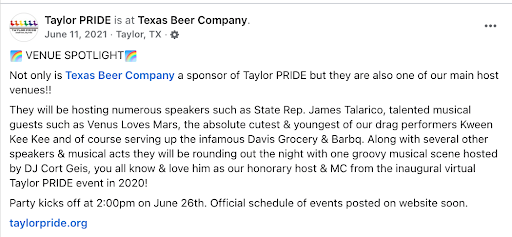
According to promotional materials first highlighted by the Washington Free Beacon, Talarico was a featured speaker during Taylor PRIDE’s June 26, 2021 fundraiser in Taylor, Texas. The event was organized to raise money for “rural LGBTQ communities” and included live music, Drag Story Hour, adult drag performers, and an 11-year-old performer using the stage name “Kween Kee Kee.”
Taylor PRIDE advertised the child as “the absolute cutest & youngest of our drag performers.” Promotional posts stated the child would perform a drag routine and host “Kee Kee Storytime,” where children would participate in Pride-themed craft activities. The event was held at Texas Beer Company.
Photographs published from the event show Talarico addressing attendees from the stage and posing with participants. Additional photographs and video posted publicly show Kween Kee Kee, a local preteen named Keegan, performing in a shimmering blue dress, platinum blonde wig, and theatrical makeup during what organizers described as a Youth Drag Show. One attendee shared video of the child performing the splits before the audience.
The fundraiser also featured several adult drag performers, including Brianna Brinxx, Belladonna Dior, Felecia Enspire, and a performer using the stage name Sedonya Face.
Following criticism from conservative activists who protested the event, Taylor PRIDE defended the festival on social media. The organization rejected claims that the event was sexually explicit or exploitative and encouraged the public to review photographs from the event and decide for themselves.
Talarico’s campaign did not respond to requests for comment from the Washington Free Beacon regarding his participation.
The resurfaced event adds to a broader record that Republicans have highlighted throughout Talarico’s political career. While serving in the Texas House, Talarico opposed legislation restricting drag performances in the presence of children and argued lawmakers should avoid harming what he described as Texas’ drag performers. He has also opposed Republican-backed legislation restricting certain transgender medical treatments for minors and has frequently spoken in support of LGBTQ causes.
More recently, however, Talarico has attempted to present himself as a more moderate statewide candidate. He has described previous remarks, including referring to God as “nonbinary,” as “cringey” and has removed some progressive messaging from campaign materials as he seeks to broaden his appeal beyond Democratic primary voters.
The renewed attention comes as cultural debates surrounding children and drag performances continue playing out both politically and legally. Florida’s appellate court victory represents one of the most significant recent rulings supporting a state’s authority to restrict minors from attending certain adult-oriented live performances, even as litigation over similar laws continues elsewhere.
Art & Culture
McKinney Approves Controversial Islamic Center After Marathon Meeting That Exposed Deep Divisions
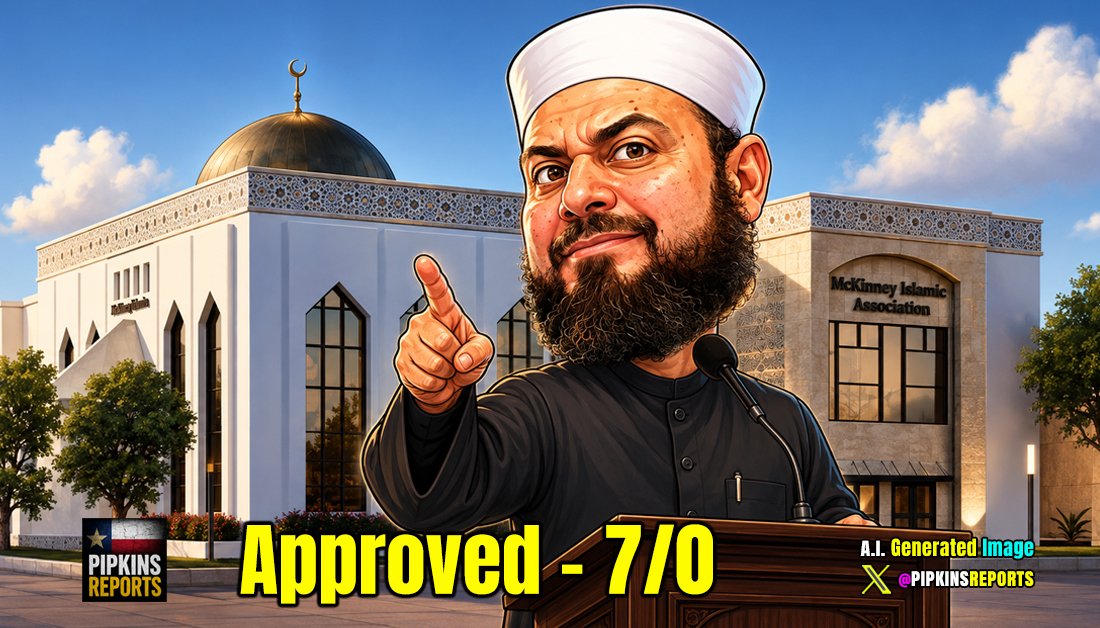
McKinney, TX – After nearly six hours of emotional testimony, shouted applause, boos, and police intervention, the McKinney City Council unanimously approved plans Tuesday night for a new Islamic center, closing another chapter in a debate that has simmered in Collin County for years. The vote may have been unanimous, but it certainly wasn’t uncontroversial.
Just before 11:30 p.m. on August 4, the council voted 7-0 to approve the site plan for the McKinney Islamic Association‘s proposed campus on roughly 5.5 acres at Virginia Parkway and Crutcher Crossing. City officials repeatedly emphasized that the decision before them was not whether Islam should have a place of worship in McKinney, but whether the submitted site plan complied with existing city ordinances and development standards. According to council members, the property’s current planned development zoning already permits religious assembly, leaving the city with little legal discretion to deny an otherwise compliant application.
The approved project includes a roughly 15,000-square-foot sanctuary, a classroom building of approximately 10,000 square feet, a 7,000-square-foot multi-purpose gymnasium, parking, and related site improvements. The McKinney Islamic Association says its current facility, where it has served the community for decades, can no longer accommodate its growing congregation.
The meeting itself became the story.
More than 150 people registered to speak, forcing city officials to delay the start of the regular meeting while names were entered into the system. Supporters and opponents packed the council chambers, overflow rooms, and hallways, creating an atmosphere that multiple local news outlets described as tense and, at times, hostile.
Opponents raised a mix of concerns.
Some focused squarely on practical issues, including increased traffic, parking shortages, neighborhood compatibility, and whether a campus serving large numbers of worshippers could comfortably fit on the site. Others voiced broader objections rooted in concerns about Islamic doctrine, Sharia law, and the changing cultural landscape of North Texas. Congressman Keith Self, whose district includes McKinney, spoke against the proposal before public testimony began, warning of dangers he associates with extremist interpretations of Islam.
Supporters argued that the project involved a long-established congregation simply seeking room to grow. They pointed to constitutional protections for religious liberty and rejected accusations directed toward the association as prejudice against Muslim residents. Veterans, longtime community members, and faith leaders urged the council to evaluate the application based on municipal law rather than religious disagreement.
Former McKinney Mayor George Fuller received one of the night’s harshest public receptions after speaking in support of the project. He was booed by portions of the crowd, and according to WFAA, police escorted him from the building after a woman reportedly shoved a sign reading “Don’t Sharia My Texas” into his shirt while he exited the meeting.
Despite the emotional testimony, council members repeatedly returned to the same legal conclusion, the site plan either met the city’s development requirements or it did not. Planning and Zoning had already recommended approval in July, and council members indicated denying a compliant application would almost certainly expose the city to litigation it was unlikely to win. Previous proposals involving substantially larger facilities required rezoning and were rejected, but the revised plan fits within the property’s existing zoning framework.
The approval does not authorize immediate construction. The project must still complete platting requirements, undergo a traffic study, and obtain building permits before construction can begin.
Below is the list of the current city council that voted 7/0 to approve the project.
| Member Name | Title | |
|---|---|---|
| Bill Cox | Mayor | |
| Rick Franklin | Mayor Pro Tem – District 4 | |
| Justin Beller | Council Member – District 1 | |
| Patrick Cloutier | Council Member – District 2 | |
| Geré Feltus | Council Member – District 3 | |
| Ernest Lynch | Council Member – At Large 1 | |
| Michael Jones | Council Member – At Large 2 |
Featured
Fauci Takes the Fifth, Democrats Rush to His Defense While Sidestepping His Own Pandemic Diary
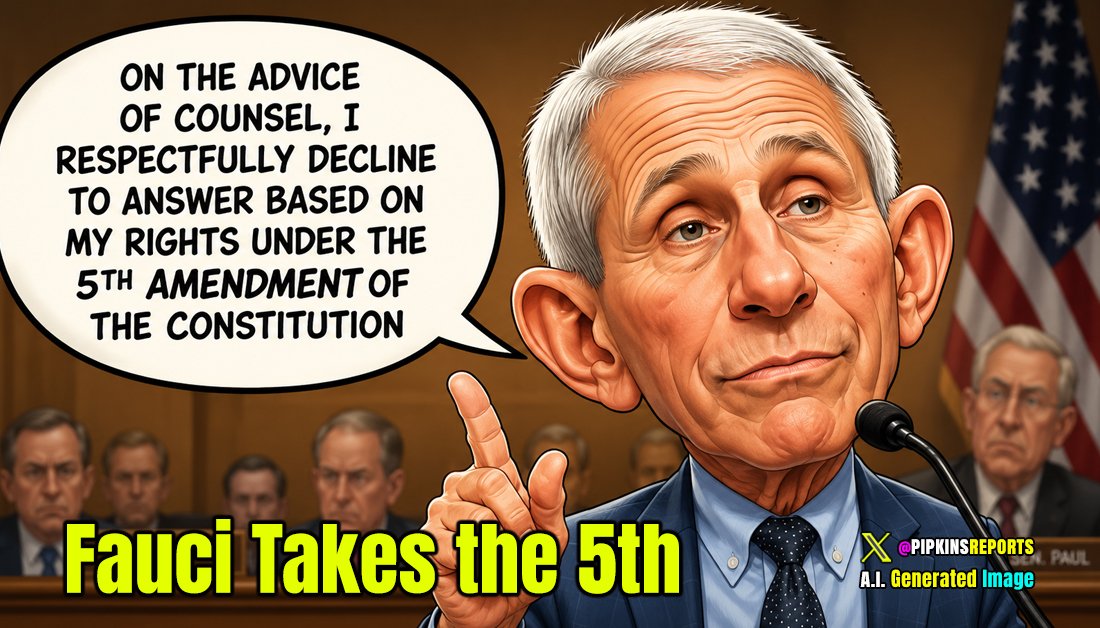
Washington, D.C. — One of the most recognizable faces of the COVID-19 pandemic sat before a U.S. Senate committee Wednesday, raised no dramatic objections, launched no fiery defense of his decisions, and then declined to answer lawmakers’ questions by invoking the Fifth Amendment. It was a moment that instantly became one of the defining political images of the post-pandemic era.
Dr. Anthony Fauci, the former director of the National Institute of Allergy and Infectious Diseases, appeared under subpoena before the Republican-led Senate Homeland Security and Governmental Affairs Committee after being called by Sen. Rand Paul, R-Ky. Rather than respond to questions about his role during the pandemic, Fauci told the committee he was following the advice of counsel and would invoke his constitutional right against self-incrimination.
The hearing quickly became a familiar partisan clash.
Paul argued that Fauci should answer questions surrounding government funding for research connected to the Wuhan Institute of Virology, shifting public statements regarding COVID-19’s origins, and decisions that shaped federal pandemic policy. Democrats, led by Ranking Member Sen. Gary Peters, D-Mich., countered that the hearing was little more than political theater designed to relitigate the pandemic instead of addressing current national security concerns.
But amid hours of defending Fauci’s reputation, Democratic members largely avoided discussing one subject that has increasingly drawn attention in recent days: Fauci’s own pandemic diary.
Before Wednesday’s hearing, Paul released more than 1,000 pages of Fauci’s government-maintained diary covering key periods of the pandemic. The senator argued that the private entries reveal inconsistencies between Fauci’s internal assessments and his public messaging during COVID-19.
[ Read and Download the Diary Here ]
Paul wrote on X that Fauci’s diary showed “what he wrote privately and what he told the country are two different stories.“
Some entries reportedly document uncertainty during the earliest weeks of the outbreak, uncertainty that many scientists shared as information rapidly evolved. Portions of those same observations had previously appeared in Fauci’s 2024 memoir and public interviews, according to the Associated Press. Other critics argue the diary raises additional questions deserving public examination.
Yet during Wednesday’s hearing, Democratic senators spent little time addressing the contents of the diary itself. Instead, much of their defense centered on Fauci’s decades of public service and repeated assertions that there is no credible evidence proving he committed criminal wrongdoing.
Scientists and public health officials likewise defended Fauci ahead of the hearing. More than 150 infectious disease experts signed a public letter rejecting accusations against him and urging Congress to end what they characterized as political attacks. Fauci has consistently denied misleading Congress and has maintained that the available scientific evidence favors a natural origin for COVID-19 rather than a laboratory leak.
Paul, however, has argued the hearing was necessary because Congress still has unanswered questions. He also noted that invoking the Fifth Amendment prevents lawmakers from obtaining sworn testimony that could either confirm or refute allegations surrounding Fauci’s public statements.
Fauci’s attorney, David Schertler, called Paul’s accusations “false and disgraceful” and said they would consider legal options in response.
The hearing also unfolded against an unusual legal backdrop. Former President Joe Biden previously granted Fauci a presidential pardon covering potential federal offenses tied to his government service, though legal scholars have noted that such pardons do not shield a witness from future perjury or contempt allegations arising from new testimony. That reality made Fauci’s decision to invoke the Fifth all the more politically significant, regardless of the legal reasons offered by his attorneys.
Whether Republicans ultimately pursue a contempt referral remains uncertain.
What is certain is that Wednesday’s hearing added another chapter to one of the most divisive political debates in modern American history.
You must be logged in to post a comment Login