Those darn property taxes! Insights from Texas tax protests
What motivates people to protest their property tax? New study looks into people’s propensity to protest their taxes, or not.

20-Nov-2020 4:25 PM EST, by University of California, Berkeley Haas School of Business
Newswise — Everyone loves to complain that their taxes are too high. Yet few people actually take the time to formally protest them.
A recent deep-dive into property tax appeals in Texas offers new insights on what motivates people to protest or accept their tax obligations.
“Historically, the study of people’s support for taxation was limited to survey data, asking people whether they prefer higher or lower taxes,” says Berkeley Haas Assoc. Prof. Ricardo Perez-Truglia says. “However, some individuals may say that they want higher taxes but, when the stakes are real, they may not put their money where their mouths are.”
Some individuals may say that they want higher taxes but, when the stakes are real, they may not put their money where their mouths are. —Ricardo Perez-Truglia


In his National Bureau of Economic Research working paper, Perez-Truglia worked with Brad Nathan and Alejandro Zentner from the University of Texas at Dallas on unique field experiments that measured how different types of information affected people’s propensity to protest their taxes. Through this first-hand look at how people actually behave when it comes to protesting taxes, they found that people are generally motivated by self-interest—but that can be dampened when they find out they’re paying less than their neighbors. They also found substantial differences between Democrats and Republicans.
Dallas County tax protests
The researchers conducted their experiments in Dallas County—the second largest county in Texas, with a population of about 2.6 million. Given that the state has no income tax, property taxes provide a large source of revenue. The average household currently pays about 2% of their home’s market value annually, or about $6,000. Yet local rules allow residents to appeal their tax bills. This year, 8.4% of households filed a protest on their own, and an additional 8.4% filed a protest with the help of an agent. The researchers estimated that around half of all protests were successful; those who prevailed got a $600 tax-bill reduction, on average.
Perez-Truglia and his co-authors were interested in why people make the decision to protest or not. They first examined whether higher tax rates led to more protests, which would support the idea that homeowners act in their own self-interest. Due to a rule in the Texas property code that lets homeowners apply for “homestead” status, which caps increases in the appraised value of their primary residence at 10% per year, the researchers were able to compare homes that fell under that cap with those that didn’t. That allowed them to calculate that the probability of protesting does increase by about 3.7 percentage points per a 0.1 percentage point increase in the tax rate cap.
Hassle costs
Next, they looked at what prevents people from filing protests. There’s no fee requirement, but it does take time to learn how to submit an appeal. To examine these hassle costs, the researchers randomly sent letters to certain homeowners with information on how to file a protest. Some people received letters with a step-by-step guide on how to file an appeal, while others got additional information on how to argue for why their property taxes should be reduced. The letters were customized with the homeowners’ name, a suggested argument that the property was worth less than the assessed value, and a mention of websites like Zillow and Redfin, where people can look up prices of comparable properties. (The letters were labeled as coming from a University of Texas research study and included a url where people could find more information.)
Among those households which didn’t receive any letter, about 9% filed protests on their own. The group that received the basic information on how to appeal increased their probability of protesting by about 1.8 percentage points. Meanwhile, the group that received more details on how to form an argument filed protests at a rate 3.5 percentage points higher than the control group—which represented a 40% increase. This implied that a large reason for why homeowners did not file protests was due to the extra work it took to figure out how to file. Using these results, the researchers calculated that the hassle costs were about $226 on average. Given that only about half of appeals are successful—making the average benefit under $300—this suggests that the costs of filing likely outweighs the benefits.
But what do the neighbors pay?
The researchers also examined whether people considered how their decisions related to broader social goals. In letters sent to an additional group of homeowners, they included information on the county’s average tax rate. They did this to explore whether people are willing to accept their assessed tax rate if they know others are facing even higher burdens—a phenomenon that economists call conditional cooperation. Indeed, they found that giving people additional information on what other residents pay decreased the likelihood that they would file a protest. In sum, they estimated that a 0.1 percentage point increase in the tax rate would increase the likelihood that an individual household would file a protest by almost 10 percentage points. But if taxes were raised countywide by 0.1 percentage point, then the household’s likelihood of protesting would only increase by about 6.4 percentage points.
Finally, the researchers also analyzed differences by whether people were registered as Democrats (about 55% of the county’s homeowners) or Republicans (about 45% of homeowners). Both voter groups responded to information about the benefits and costs of protesting, but Republicans were more likely than Democrats to increase their rate of protests after receiving the detailed letter. However, Perez-Truglia noted that the differences were not as great as our political rhetoric suggests.
Survey data shows that Republicans and Democrats are worlds apart in their support for taxation, but our preliminary findings suggest that those differences are more modest when you look at their behavior. —Ricardo Perez-Truglia
“Survey data shows that Republicans and Democrats are worlds apart in their support for taxation, but our preliminary findings suggest that those differences are more modest when you look at their behavior,” Perez-Truglia says. “I see this finding as good news: there may be a lot more room for agreement than what the survey data (and the media) may suggest.”


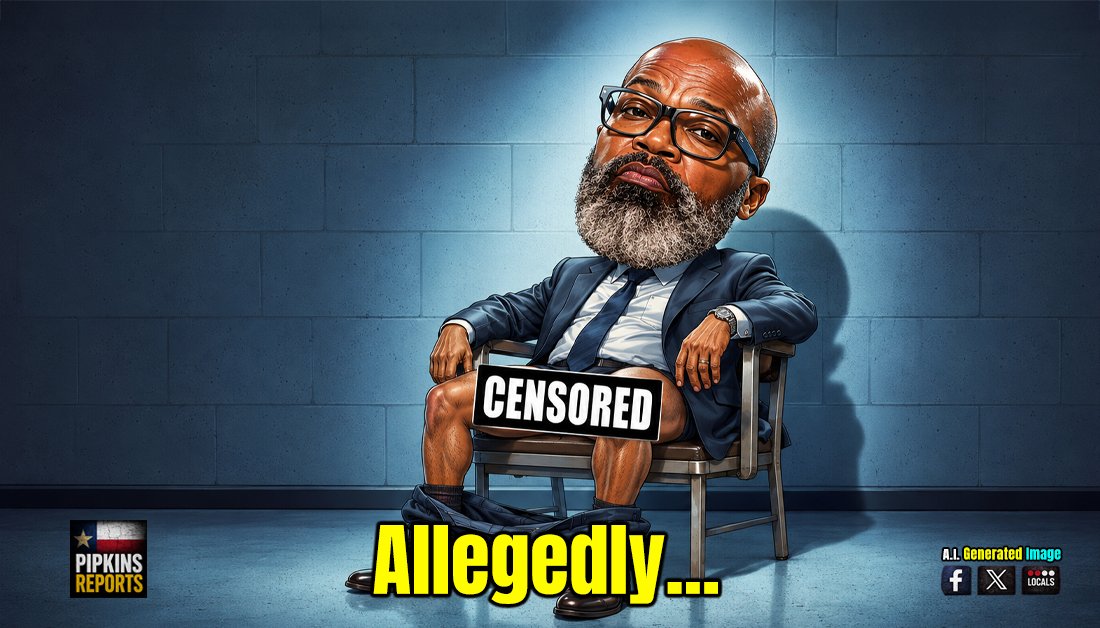
La Marque, TX – Keith Bell, 53, the mayor of La Marque, was arrested Friday in Angleton on a warrant charging him with indecent exposure, a Class B misdemeanor. He was released Saturday after posting a $75,000 bond, with a judge ordering him to have no contact with the woman who reported the incident, stay away from her residence and stay away from the school she attends.
According to the Houston Chronicle, Bell was allegedly seen masturbating in the lobby of an office building in Angleton on Friday morning. A woman, whose identity is being withheld, reportedly witnessed the incident and contacted authorities, prompting Brazoria County Sheriff’s deputies to respond. The Chronicle reported that Bell was taken into custody and booked into the county detention center.
Those are allegations, not a conviction. Bell has not been found guilty of the charge, and the publicly available reporting does not identify an attorney representing him or provide a statement from Bell disputing the accusation.
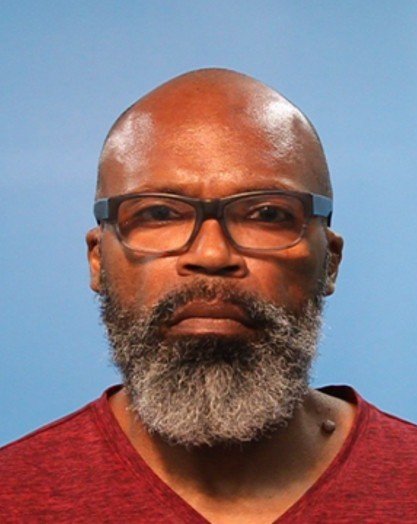
The City of La Marque confirmed the arrest Friday, in a statement where they stated, “To the residents of La Marque, we recognize that this is a shocking and disheartening development during a period that has already brought significant uncertainty and challenges to our community. We understand and share your concerns.” City officials also emphasized that the alleged conduct occurred outside Bell’s official duties as mayor and said the city would follow its charter and applicable law while gathering verified information.
Bell’s arrest does not automatically remove him from office. The city said Saturday that Bell remains mayor unless he resigns or is removed through the procedures established by the city charter and Texas law. City leadership said it had not communicated with Bell following his release, and Bell had not contacted city staff at the time of reporting.
This isn’t Bell’s first trip with controversy.
Bell has been involved in La Marque government for years. He served on the council for 17 years before becoming mayor, and he was sworn into the mayor’s office in January 2021. He was reelected in May 2024, defeating Joel Camacho with 63.57 percent of the vote, according to official Galveston County election results.
Bell also survived a 2022 recall election. More recently, he faced another recall effort in 2025, which Bell disputed as based on false allegations. That political history doesn’t establish anything about the current criminal case, but it does mean La Marque’s mayor has never exactly been a stranger to controversy.
Under Texas Penal Code §21.08, indecent exposure involves exposing the anus or genitals with intent to arouse or gratify sexual desire while being reckless about whether another person is present who will be offended or alarmed. A first offense is generally a Class B misdemeanor.

Montgomery, AL – The woman who spent years telling America which organizations were dangerous has now been arrested by the federal government in a fraud case involving secret payments, extremist informants, alleged shell companies and donor money.
Heidi Beirich, former director of the Southern Poverty Law Center’s Intelligence Project and former chief financial officer, was arrested Wednesday in California as the Justice Department’s criminal investigation into the SPLC widened. Beirich faces charges of wire fraud conspiracy, conspiracy to make false statements to a federally insured bank and conspiracy to conceal money laundering.
That’s quite a turn for someone whose professional career was built around exposing other people’s alleged extremism.
According to federal prosecutors, the case involves an SPLC informant identified in court documents as “F-9,” who operated inside the National Alliance, a white supremacist organization. The Justice Department alleges the SPLC secretly funneled approximately $1.2 million to F-9 over more than two decades as part of its intelligence-gathering operation.
The indictment does not name Beirich. Instead, it identifies a former senior SPLC employee as “Employee-2,” describing that person as someone who would later become director of the organization’s Intelligence Project. Multiple news organizations, including The Associated Press, have identified Employee-2 as Beirich. Her attorney, Michael Proctor, confirmed Wednesday that she had been charged in the federal case.
And the allegations get considerably stranger from there.
Prosecutors allege Beirich and F-9 were romantically involved and shared a residence and two bank accounts. Between 2015 and 2021, roughly $140,000 in SPLC donor money allegedly flowed into those joint accounts. The indictment says that money accounted for about 66 percent of the deposits into the accounts and was used to pay the couple’s personal living expenses.
Federal prosecutors also allege that SPLC officials helped establish bank accounts using fictitious company names to disguise the source and purpose of payments to informants.
This wasn’t simply a matter of paying someone for information. According to the indictment, the government believes the financial arrangements were deliberately structured to conceal what was happening from banks and donors. The original federal indictment against the SPLC alleges that, between 2014 and 2023, the organization secretly funneled more than $3 million to people associated with violent extremist groups, including the Ku Klux Klan, Aryan Nations and the National Socialist Party of America.
The SPLC itself was indicted in April on 11 counts involving wire fraud, false statements to a federally insured bank and conspiracy to commit concealment money laundering. The FBI investigated with assistance from IRS Criminal Investigation.
Beirich’s attorney has rejected the prosecution as politically motivated, saying that the justice system should not be used against political opponents. The SPLC has also maintained that its informant program was legitimate intelligence work designed to gather information about extremist organizations.
Beirich left the SPLC after leading its Intelligence Project from 2012 through 2019. She later co-founded the Global Project Against Hate and Extremism and continued to appear publicly as an expert on political extremism.
Austin
Texas GOP Wants Closed Primaries. New Secretary of State Robert Howden Is Preparing to Fight Them.
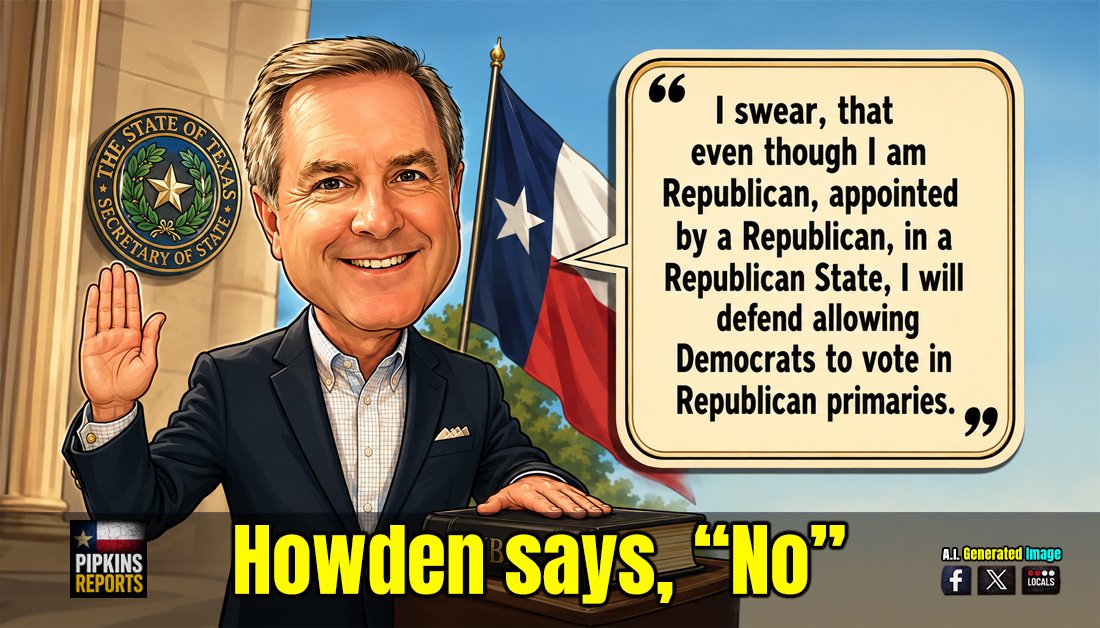
Austin, TX – Texas Republicans spent years demanding control of their own primary. Now they have a new Secretary of State, Robert S. Howden, appointed by Republican Governor Greg Abbott, and the man taking over the state’s election machinery is inheriting a lawsuit in which his office is expected to defend the very open primary system the GOP wants to dismantle.
The Republican Party of Texas filed the federal lawsuit in September 2025, arguing that Texas’ open primary system violates the party’s First Amendment right of association. Under the current system, Texas voters do not register by party and may choose which party’s primary to vote in during an election cycle. The GOP wants only registered Republicans participating in Republican primaries.
The case is pending in federal court in Amarillo before U.S. District Judge Matthew Kacsmaryk.
And Robert S. Howden has now inherited it.
Howden Steps Into the Fight
Gov. Abbott appointed Howden as Texas’ 116th secretary of state on July 17, effective July 18. Howden previously served as Abbott’s senior adviser and director of legislative affairs and has worked in the administrations of four Republican governors. As secretary of state, he is Texas’ chief elections officer.
Abbott has been quite clear about where he stands.
At the 2026 Republican Party convention, he said Texas would eventually make clear that “only Republicans vote in Republican primaries.” Abbott has also said lawmakers “can and should be more responsive to Republicans than a judge may be,” indicating that he expects the Legislature to address the issue during the 2027 session.
But that doesn’t mean the Secretary of State’s office is supposed to simply surrender in court.
That was the position taken by Howden’s predecessor, Jane Nelson.
Nelson argued that changing Texas’ primary system was a job for the Legislature, not a federal judge. In an October 2025 statement, she said it was her responsibility to defend existing election laws and that she would implement whatever changes the Legislature lawfully enacted.
The Attorney General’s office took the opposite position.
Attorney General Ken Paxton sided with the Texas GOP, asking the federal court to strike down portions of the Texas Election Code governing open primaries. According to reporting by The Texas Tribune, Nelson’s lawyers said Paxton’s office gave them less than an hour’s notice before taking the opposing position.
So the Republican Party sued the Republican-controlled state government. The Republican Attorney General joined the plaintiffs. And the Republican Secretary of State fought the lawsuit.
That’s not exactly the tidy party unity politicians like to advertise.
The Real Fight Is Over Who Controls the Nomination
The GOP argues that crossover voting allows Democrats and independents to influence Republican nominations, potentially helping candidates who are less conservative than the party base.
The lawsuit specifically pointed to the 2024 Republican primaries involving former House Speaker Dade Phelan and Rep. Gary VanDeaver. Both won their races by fewer than 800 votes, and the party argued that crossover voters helped determine the outcomes.
The party has already made closing primaries an official priority. Republicans adopted rules supporting closed primaries in 2024 and renewed that push at their 2026 convention.
But changing the system is not as simple as flipping a switch.
Texas has more than 18 million registered voters, and the state’s registration system was never designed around party registration. Moving to closed primaries could require new registration procedures, computer-system changes and a method for existing voters to establish party affiliation.
The GOP wants the courts to clear the way, preferably in time for 2028.