Election polls are 95% confident but only 60% accurate, Berkeley Haas study finds
Analysis of 1,400 polls from 11 election cycles found that the outcome lands within the poll’s result just 60% of the time.

26-Oct-2020 4:25 PM EDT, by University of California, Berkeley Haas School of Business
Newswise — How confident should you be in election polls? Not nearly as confident as the pollsters claim, according to a new Berkeley Haas study.
Most election polls report a 95% confidence level. Yet an analysis of 1,400 polls from 11 election cycles found that the outcome lands within the poll’s result just 60% of the time. And that’s for polls just one week before an election—accuracy drops even more further out.
“If you’re confident, based on polling, about how the 2020 election will come out, think again,” said Berkeley Haas Prof. Don Moore, who conducted the analysis with former student Aditya Kotak, BA 20. “There are a lot of reasons why the actual outcome could be different from the poll, and the way pollsters compute confidence intervals does not take those issues into account.”


<<< Probability and Statistics Games for Kids >>>
Many people were surprised when President Donald Trump beat Hillary Clinton in 2016 after trailing her in the polls, and speculated that polls are getting less accurate or that the election was so unusual it threw them off. But Moore and Kotak found no evidence of declining accuracy in their sample of polls back to 2008—rather, they found consistently overconfident claims on the part of pollsters.
“Perhaps the way we interpret polls as a whole needs to be adjusted, to account for the uncertainty that comes with them,” Kotak said. In fact, to be 95% confident, polls would need to double the margins of error they report even a week from election day, the analysis concluded.
As a statistics and computer science student on an undergraduate research apprenticeship in Moore’s Accuracy Lab during the 2019 presidential primary, Kotak grew curious about the confidence intervals included with polls. He noticed that polls’ margin of error was frequently mentioned as a footnote in news articles and election forecast methodologies, and he wondered whether they were as accurate as their margins of error implied they should be.
Kotak brought the idea to Moore, who studies overconfidence from both a psychological and statistical perspective. Much of the research on polling accuracy considers only whether the poll correctly called the winner. To gauge poll confidence, they decided to take a retroactive look at polls based on how long before an election they were conducted, and consider not whether a candidate won or lost, but whether the actual share of the vote fell within the margin of error the poll had reported. For example, if a poll showed that 54% of voters favored a candidate, and it had a 5% margin of error, it would be accurate if the candidate garnered 49% to 59% of the vote, but would be a miss if the candidate won with more than 59% of the vote (or less than 49%).
Moore and Kotak obtained 1,400 polls conducted ahead of the general elections of 2008, 2012, and 2016, as well as the Democratic presidential primaries in Iowa and New Hampshire from 2008 and 2016 and the Republican primaries in the same states from 2012 and 2016. Because some polls asked about multiple candidates, the sample included results of over 5,000 surveys of how people said they’d vote on particular candidates, as well as the accompanying margins of error.
Analyzing the polls in seven-day batches, they found a steady decline in accuracy the farther from an election the poll was conducted, with only about half proving to be accurate 10 weeks before an election. This makes sense, since unforeseen events occur—such as former FBI director James Comey announcing an investigation into Clinton’s emails just a week before the 2016 presidential election. Yet most polls, even weeks out, reported the industry standard 95% confidence interval.
Sampling error and confidence intervals
The confidence interval quantifies how sure one can be that the sample of people surveyed reflects the whole voter population. A 95% confidence interval, for example, means that if the same sampling procedure were followed 100 times, 95 of those samples would contain the true voter population. Therein lies the problem, however.
The confidence level takes into account “sampling error,” a statistical term that quantifies how likely it is that by pure chance, the sample varies from the larger population of voters from which the sample was drawn. For example, not surveying a large enough group of voters would increase the sampling error. But sampling error does not include any other kinds of errors—such as surveying the wrong set of people to begin with.
“People often forget that margins of error for polls only capture the statistical sources of error,” said David Broockman, an associate professor in Berkeley’s Department of Political Science. “This analysis shows just how large the remaining non-statistical sources of error are in practice.”
Added Prof. Gabriel Lenz, also of Berkeley Political Science, “This is a fascinating analysis, and future work could sort out the sources of the inaccuracy, such as low-quality pollsters, difficulty screening likely voters, last-minute changes in voter intentions, and more.”
It’s easy to take sampling error into account in polling statistics, but much harder to account for all the other unknowns, Moore said. It’s a lesson that goes far beyond polling.
“Because we base our beliefs on imperfect and biased samples of information, sometimes we will be wrong for reasons that we did not anticipate,” he said.






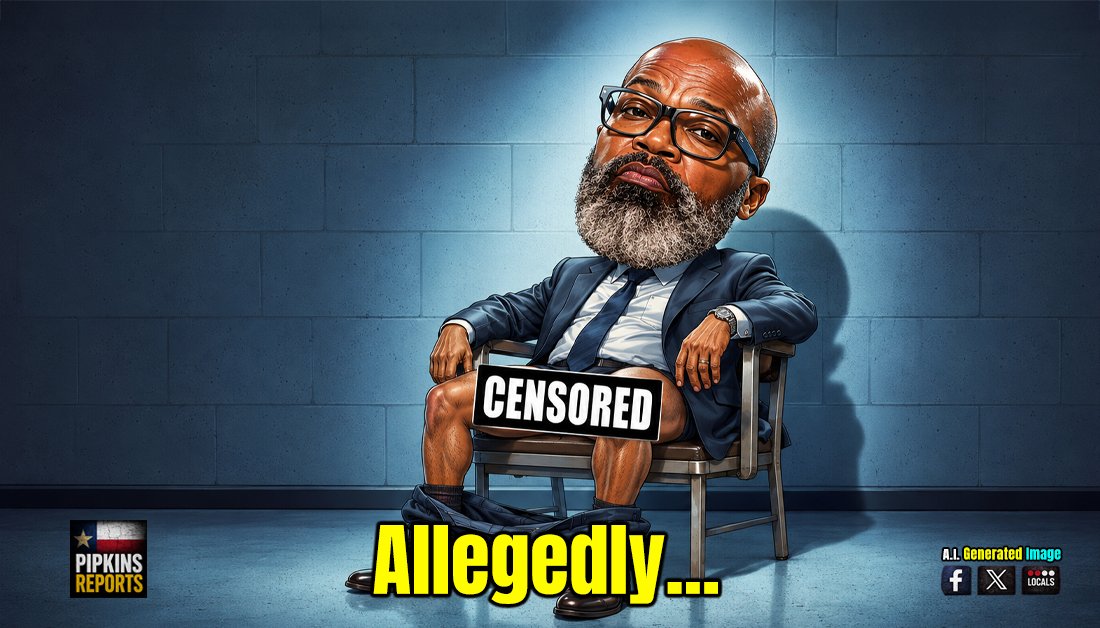
La Marque, TX – Keith Bell, 53, the mayor of La Marque, was arrested Friday in Angleton on a warrant charging him with indecent exposure, a Class B misdemeanor. He was released Saturday after posting a $75,000 bond, with a judge ordering him to have no contact with the woman who reported the incident, stay away from her residence and stay away from the school she attends.
According to the Houston Chronicle, Bell was allegedly seen masturbating in the lobby of an office building in Angleton on Friday morning. A woman, whose identity is being withheld, reportedly witnessed the incident and contacted authorities, prompting Brazoria County Sheriff’s deputies to respond. The Chronicle reported that Bell was taken into custody and booked into the county detention center.
Those are allegations, not a conviction. Bell has not been found guilty of the charge, and the publicly available reporting does not identify an attorney representing him or provide a statement from Bell disputing the accusation.
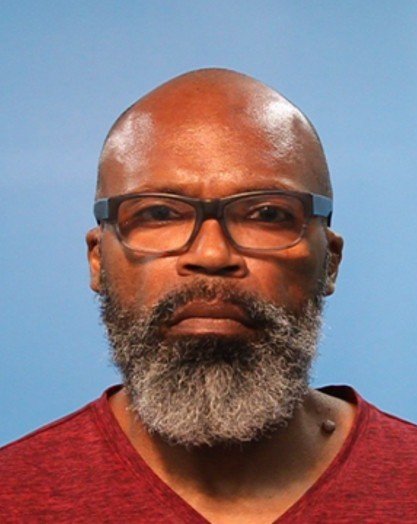
The City of La Marque confirmed the arrest Friday, in a statement where they stated, “To the residents of La Marque, we recognize that this is a shocking and disheartening development during a period that has already brought significant uncertainty and challenges to our community. We understand and share your concerns.” City officials also emphasized that the alleged conduct occurred outside Bell’s official duties as mayor and said the city would follow its charter and applicable law while gathering verified information.
Bell’s arrest does not automatically remove him from office. The city said Saturday that Bell remains mayor unless he resigns or is removed through the procedures established by the city charter and Texas law. City leadership said it had not communicated with Bell following his release, and Bell had not contacted city staff at the time of reporting.
This isn’t Bell’s first trip with controversy.
Bell has been involved in La Marque government for years. He served on the council for 17 years before becoming mayor, and he was sworn into the mayor’s office in January 2021. He was reelected in May 2024, defeating Joel Camacho with 63.57 percent of the vote, according to official Galveston County election results.
Bell also survived a 2022 recall election. More recently, he faced another recall effort in 2025, which Bell disputed as based on false allegations. That political history doesn’t establish anything about the current criminal case, but it does mean La Marque’s mayor has never exactly been a stranger to controversy.
Under Texas Penal Code §21.08, indecent exposure involves exposing the anus or genitals with intent to arouse or gratify sexual desire while being reckless about whether another person is present who will be offended or alarmed. A first offense is generally a Class B misdemeanor.
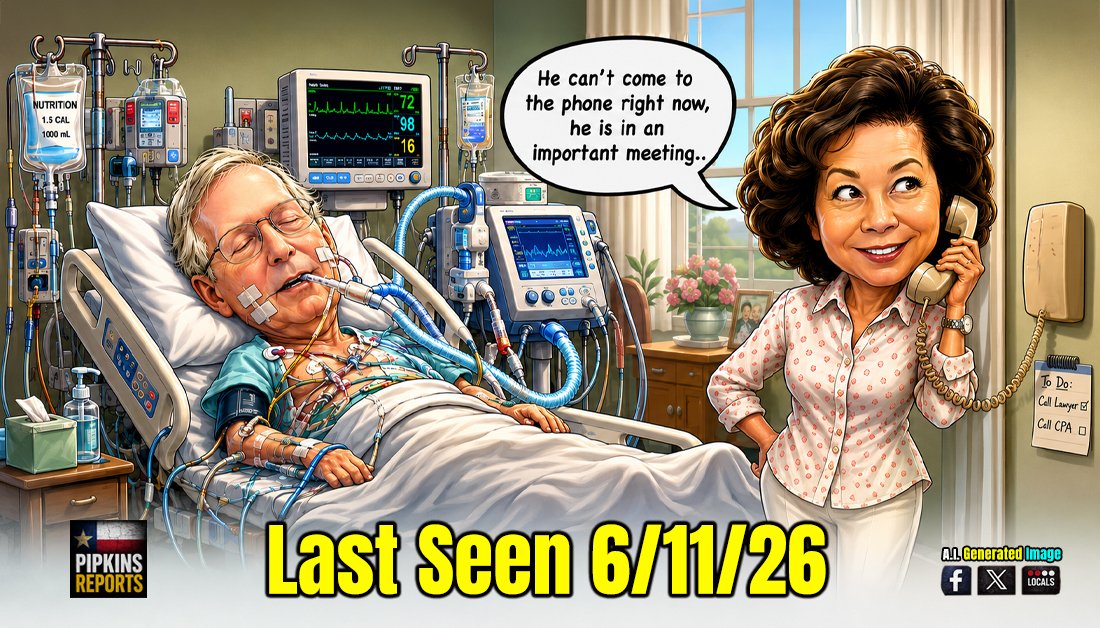
Kentucky, USA – Mitch McConnell has been out of public view for 71 days. No speech. No interview. No video. No public appearance. Not even a short phone recording of the 84-year-old senator telling Kentucky voters, in his own voice, that he’s doing OK.
For a man who spent nearly two decades at the center of American political power, that is an extraordinary silence. And it has created a vacuum, as every vacuum eventually does, that the internet has been more than happy to fill.
McConnell’s last confirmed in-person Senate vote came June 11, when he voted on a cloture motion involving judicial nominee Justin D. Smith. He had also been present during the Senate’s marathon June 4 vote-a-rama, which ran into the early morning hours, and Senate records show him presiding over a Defense Appropriations subcommittee hearing June 9.
Three days after that last confirmed Senate appearance, McConnell was hospitalized following a fall at his Washington residence that left him “briefly unconscious”. His office later said he suffered a mild case of pneumonia and was undergoing rehabilitation.
On July 12, McConnell allegedly addressed Kentuckians in a written statement, saying he was recovering from the fall and pneumonia. His office released a photograph showing him sitting beside his wife, Elaine Chao, holding that day’s Washington Post.
That photo did not end the questions. It multiplied them.
A second photograph, released July 27 and reportedly dated July 26, showed McConnell again with Chao. Neither image included video or audio of McConnell speaking.
McConnell was discharged from a rehabilitation facility Aug. 6 and said he would continue intensive physical therapy at home while remaining engaged with Senate business remotely. His office has not announced when, or whether, he will return to the Capitol.
Republican colleagues have said they have spoken privately with him. Former McConnell adviser Scott Jennings described a lengthy conversation in which he said McConnell sounded alert and discussed politics and world affairs. But those conversations remain private.
And that is the heart of the problem.
Kentucky Gov. Andy Beshear, a Democrat, has repeatedly called for McConnell to provide a direct public update. Beshear recently said he had received “absolutely nothing” back from McConnell despite reaching out.
Meanwhile, social media has gone full Texas-sized conspiracy mill.
Benny Johnson on X wrote July 7 that McConnell’s family should answer demands for “proof of life,” while raising questions about Chao’s China connections and travel. Laura Loomer on X went considerably further, claiming without publicly established evidence that McConnell was “brain dead” and being kept alive by machines.
There is no actual evidence establishing those claims.
But dismissing every question as a conspiracy theory is equally lazy. The public record really is unusual: an elderly senator suffers a serious fall, spends weeks hospitalized and in rehabilitation, releases two questionable photographs and written statements, and remains completely absent from public view.
If he were truly coherent, a 30-second video would solve the issue … speculation grows that this is simply not possible and that is the reason they haven’t provided one.
There is now a natural deadline looming over this strange saga: September 14, 2026. That is the date the Senate is scheduled to return to regular business after its August recess, meaning McConnell will have been absent from public view for 95 days since his last confirmed appearance on June 11.
By then, a photograph and another written statement attributed to McConnell simply won’t cut it. If he is healthy enough to continue serving, his constituents should be able to see and hear him. If he isn’t, Kentucky voters deserve to know that, too.
September 14 shouldn’t necessarily be a literal deadline for his medical recovery, but it is a reasonable public accountability deadline: when the Senate comes back to work, the senator whose name appears on the roll should be able to demonstrate, in his own voice and on camera, that he is alive, aware and capable of carrying out the job for which Kentucky elected him.
If the nation doesn’t hear from him by September 14th, a criminal investigation should take place.

Fate, TX – The race to fill the vacant Fate City Council Place 1 seat vacated by the recall of Codi Chinn, will consist of four candidates. Randy Long, Stephanie Delaine Adams, Joshua Martin and Donovan Heinrich.
Randy Long is a serves as the Rockwall County director for True Texas Project, a conservative grassroots organization.
Stephanie Delaine Adams served 12 years on the Rockwall ISD Board of Trustees, including two years as board president from 2017 to 2019. She is now a Realtor.
Joshua Martin has lived in Fate for approximately six years and is a recruiting manager with QXO. He previously served as president of the Old Shepard Place neighborhood association in Plano.
Donovan Heinrich previously ran for Fate City Council, Place 5, in 2021, receiving 288 votes, or 30.48%, against eventual winner Jim DeLand.
More to follow on each candidate in the upcoming days.