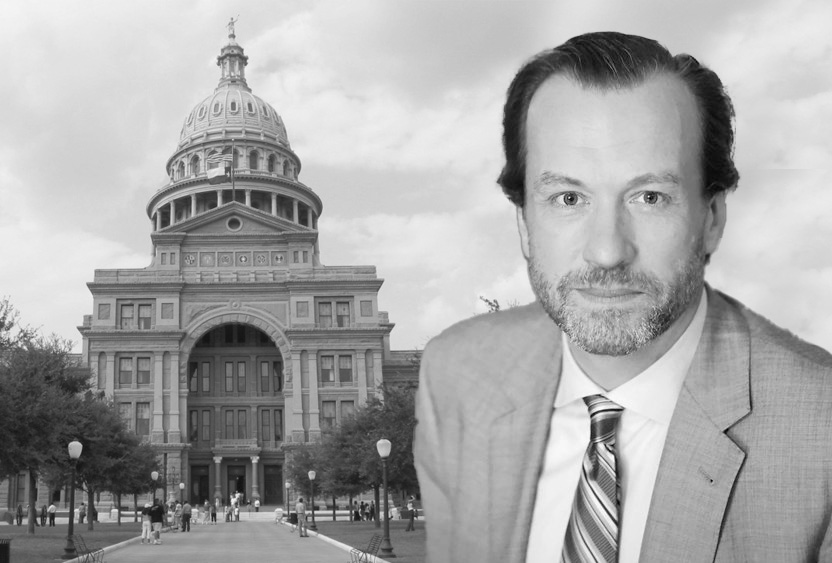
Behind Closed Doors: Fate’s Tax Dollars and Secret Lobbying
In the quaint town of Fate, Texas, nestled away from the bustling cities of the Lone Star State, residents believed that their hard-earned tax dollars were being used to improve their lives and support their community. However, a shocking revelation that has come to light raises questions about the allocation of public funds.
Fate’s city council, in a quite motion that flew in under the radar as just ‘proceedure’, approved Resolution R-2022-066 in 2022. This resolution authorized the city to enter into a contract with Focused Advocacy, LLC., a consulting firm headed by CEO Curt Seidlits and his partners, Brandon Aghamalian and Snapper Carr.
Under the guise of an “independent consultant,” Focused Advocacy was granted a lucrative monthly fee of $4,166.67, along with an additional $350 for expenses, and the possibility of seeking further compensation at a staggering $8,333.33 per month… for extended services … if needed.

Records show that the taxpayers in Fate have paid Focused Advocacy $149,000.00 in the last year and the contract has been renewed for another $149,000.00. This figure is enough to fund the cost of at least one, if not two additional police officers for our community.
This substantial financial commitment by the city to an entity with questionable ties raises significant concerns among Fate’s residents. The situation becomes even murkier when examining the involvement of Snapper Carr, who is not only a partner in Focused Advocacy but also a registered lobbyist.
Snapper Carr’s involvement takes on an ominous hue as it is revealed that he operates the “Focused Advocacy Political Action Committee (PAC),” a organization that channels funds to various political figures. While political contributions are not uncommon, what sets this situation apart is the absolute lack of transparency in how funds are distributed, leaving the citizens of Fate in the dark about the true intentions of these financial transactions.
Our investigation has uncovered that the Focused Advocacy PAC has made substantial contributions to several key political figures, including:
- $500 to Justin Holland,
- $5,500 to Dade Phelan (the second-largest contribution),
- $3,000 to Tan Parker,
- $2,000 to Dustin Burrows,
- $1,000 to the House Democratic Caucus, and
- $750 to John W. Bryant.
- A short list of dozens of political donations
Perhaps you don’t support these candidates, or any of dozens of other candidates. Whether you did or not, your tax money found its way into their campaign pockets because the sole benefactor of the PAC contributions appears to be Focused Advocacy itself … thus, Snapper Carr. Whom the town has contracted in order to provide legislative assistance.
Basically, our city gives our money to Mr. Carr and he gives the money to the candidates. Leaving the citizens of Fate left to wonder how these contributions were decided upon, and whether they serve the best interests of the community. In case you were wondering … to the best of our understanding, this is all 100% legal according to Texas law.

Despite our efforts to seek answers, Snapper Carr has chosen not to respond to our inquiries, further deepening the shadows of secrecy surrounding the activities of Focused Advocacy and its PAC. This lack of transparency raises questions about the motivations behind these political contributions and their alignment with the interests of Fate’s citizens.
In 2019, the online newspaper, “Stateline” reported the five lobbyists at Focused Advocacy represent more than 20 Texas cities before the legislature. In that year, the firm tracked 3,300 municipal-related bills during that year’s 140-day session.
Enter the Texas Municipal League
Adding to the web of intrigue is the revelation that Snapper Carr has previously served as legislative counsel for the Texas Municipal League (TML), an organization that the City of Fate also contracts with for various services, including lobbying efforts aimed at state legislators.
Fate City Manager Michael Kovacs served on the Legislative Policy Summit Committee for the Texas Municipal League in the last quarter of 2022. He and Mayor David Billings spoke to the committee to advocate for changes in local Zoning Reform.
According to a letter obtained by the Fate Tribune under an Open Records Request, Mr. Kovacs sent a letter to the Texas Municipal League and advocated that they support the following with regard to Zoning Reform:
“This moves the required ownership percentage of protests within 200 feet of a zoning change that would trigger a super-super majority of a 75% vote needed by a City Council, from 20% to 50%.
This change would enhance liberty and property rights while allowing the majority will of citizens in cities to advance quality projects for the public good to ensure housing affordability by raising supplies. The concept, that we think is logical, is that if a majority of nearby property ownership interests will protest a zoning change, then they can make it difficult for a majority of the cities’ citizens’ local representatives to pass a project, but a small minority should not be able to stop a project’s property owners and developers. This will have the biggest impacts in large cities and first ring suburbs.”
Translation: Make it harder for citizens to successfully oppose zone changes proposed by developers.
The TML has been a significant player in Texas politics and has been known to wield considerable influence in the state legislature. The City of Fate’s association with both Focused Advocacy and the TML raises concerns about the potential for conflicts of interest and the influence of outside entities on local decision-making.
It’s important to understand that the Texas Municipal League represents and advocates for its member Cities … NOT citizens. Their goal is the empowerment of city governments. They lobby to take power from the State to give to the City. They lobby for laws that take decisions away from the People to give to the City Governments. In short, they are not your friends… unless you are part of a City Government.
The citizens of Fate, who entrust their elected officials with their hard-earned tax dollars, deserve better. They deserve a transparent and accountable government that prioritizes their welfare above all else. The revelations surrounding Resolution R-2022-066 and the city’s association with Focused Advocacy and the TML cast a dark shadow over the integrity of Fate’s local governance.
The lack of transparency and accountability in the decision-making process surrounding these contracts and political contributions raises troubling questions about who truly benefits from Fate’s finances.
Citizens should not have to go through endless open record request documents to learn about the objectives and actions being taken by their City Manager, or Mayor, with regard to lobbying activity. It ought not to take sleuthing skills to unravel an undisclosed decision-making process that is spoken only when the council is not in session. It is exactly this kind of backroom actions taken without full public transparency that erodes trust in our institutions.
Fate’s residents deserve nothing less than a thorough investigation and a commitment to transparency from their city’s leadership. It is only through vigilance and unwavering commitment to accountability that the citizens of Fate can hope to regain their trust in their local government and ensure that their tax dollars are used to benefit all residents.
###
Further Resources
Editor’s Note:
This article investigates public records, city contracts, and lobbying activities related to the City of Fate, Texas. All figures and documents cited are drawn from official city resolutions, open records requests, and publicly available lobbying filings. Some statements in the article represent analysis and interpretation of these records; they are not intended to assert wrongdoing by any individual or organization. Readers are encouraged to review the cited public documents to form their own conclusions regarding the transparency and use of public funds.
Council
Ethics Fight Ends in Censure of Councilman Mark Hatley
FATE, TX — The Fate City Council voted last night to censure Councilman Mark Hatley following a contentious ethics hearing that exposed deep divisions among elected officials.
The censure stems from two ethics complaints alleging Hatley improperly disclosed confidential information tied to internal discussions about the potential firing of former Department of Public Safety Chief Lyle Lombard. According to testimony, Hatley shared details with local journalist Michael Pipkins of PipkinsReports.com, including references to recorded conversations with City Manager Michael Kovacs.
The complaint was filed by outgoing councilman Scott Kelley, who played a central role throughout the proceedings and ultimately did not recuse himself and voted in favor of censure.
Monday’s meeting included a formal evidentiary hearing where Hatley, represented by attorney David Dodd, presented a defense and attempted to question fellow council members. The process, however, was repeatedly constrained by legal warnings from City Attorney Jennifer Richie, who advised council members not to answer questions related to Lombard’s termination due to ongoing litigation. That guidance, issued numerous times during the hearing, limited testimony and narrowed the scope of cross-examination.
The council ultimately split along familiar lines. Kelley was joined by outgoing councilman Mark Harper and recalled councilwoman Codi Chinn in supporting the censure. Mayor Andrew Greenberg and Councilman Rick Maneval opposed it, creating a 3–2 divide before the deciding vote was cast. Councilwoman Martha Huffman ultimately sided with the majority, breaking what would have otherwise been a tie, and would have quashed the censure.
Under Texas municipal norms, a censure is a formal statement of disapproval by a governing body against one of its own members. It carries no direct legal penalty, meaning Hatley retains his elected position and voting authority. However, such a reprimand can damage political standing, limit influence within the council, and shape future electoral prospects…if the electorate so decides.
The underlying controversy traces back to the dismissal of Lombard, which has since evolved into a broader legal dispute involving claims of wrongful termination. During Monday’s hearing, repeated references to that litigation underscored the complexity of the case and the limits placed on public disclosure. Richie’s guidance, aimed at protecting the city’s legal position, effectively curtailed testimony that might have clarified key details. Critics argue this dynamic left Hatley unable to fully defend himself against the allegations.
The political context surrounding the vote is difficult to ignore. This was Chinn’s last meeting, as she was recalled from office by the voters, in part due to her involvement in the Lombard matter. Kelley, who initiated the ethics complaint, participated fully in the decision-making process knowing that this was his last meeting. Harper has also been linked in prior discussions about leadership conflicts within city administration, and for he as well, this was his last meeting. Meanwhile, all three have supported recall efforts targeting Hatley, Greenberg, Maneval, and Huffman, for additional recall, along with two new councilmen who will take their seats at the next meeting.
From a procedural standpoint, the meeting reflected a council operating under significant strain. Testimony was fragmented, legal cautions were frequent, and the final vote appeared to follow established political alliances rather than shifting based on evidence presented during the hearing. Even Hatley’s legal representation struggled to gain traction within the constraints imposed by the city’s legal posture.
Opinion
The battle for power in Fate is very real. What unfolded Monday night was not merely an ethics hearing; it was the visible culmination of an ongoing political battle inside Fate’s leadership. When a complainant votes on his own accusation; when key witnesses are effectively shielded from cross examination; when you have councilmen under recall by the very people bringing charges against their opponents; the process begins to look less like a search for truth and more like a managed outcome. It’s cut-throat politics at its worst.
What’s changed due to this Hearing? Essentially, nothing. Hatley gets a political black eye, but that’s about it. The sides were already defined, and the votes exactly as expected. Councilmen whose terms were ending anyway are now gone after delivering one last poke in the eye to their opponents. And the City Manager, who is at the heart of this debacle because of his employee decisions, and his inability to stand up to influence from Council Members… is still employed.
For residents of Fate, the final result is an up-close view into how dirty local politics can get. It diminishes the desirability of the city to new residents, hurts economic growth, and the entire process gives citizens the perspective that their city government is completely dysfunctional.
Disclosure
The author of this article was referenced during the hearing as a recipient of information discussed in the ethics complaints. The reporting above is based on observations of the public meeting and review of the proceedings.
Council
Recall Petitions Verified Against Four Fate Officials, Elections to Follow
FATE, TX — The political battle in Fate has escalated significantly, as Vickey Raduechel, the City Secretary for Fate, has completed her review and verified that the recall petition signatures submitted against four of the city’s top elected officials are “sufficient”.
According to official confirmation obtained by Pipkins Reports, the petitions to recall Mayor Andrew Greenberg, Councilman Rick Maneval, Councilman Mark Hatley, and Councilwoman Martha Huffman have now been verified following their submission on April 6, 2026.
With the verification process complete, the petitions have cleared a critical legal hurdle, setting the stage for recall elections that could reshape the city’s leadership.
Verified Signature Counts
As part of the certification process, the City Secretary validated the number of signatures submitted for each petition to ensure compliance with the city charter requirement of at least 351 qualified voters.
- Andrew Greenberg, Mayor (contained 385 valid signatures)
- Richard Maneval, Council Member Place 4 (contained 366 valid signatures)
- Mark Hatley, Council Member Place 5 (contained 382 valid signatures)
- Martha Huffman, Council Member Place 6 (contained 353 valid signatures)
*Update: The City of Fate responded to our inquiry and provided the verified signature counts above.
From Petition Drive to Certification
The now-verified petitions mark the culmination of a 30-day signature collection effort launched in early March. Organizers, led by local activists Christopher Rains, and Ashley Rains, who is running for City Council, initiated the recall campaign in response to actions taken by the same officials against Councilwoman Codi Chinn. Chinn is already scheduled to face voters in the May 2nd, 2026 election.
As previously reported by Pipkins Reports , the effort quickly mobilized residents, with organizers establishing signing locations and conducting outreach across the community.
Supporters of the recall effort have framed it as a necessary check on elected officials, while critics have argued it represents political retaliation. The certification of the petitions now shifts the debate from signature gathering to the ballot box.
What Happens Next
Under the Fate city charter, once recall petitions are certified as sufficient, the city council is required to formally call a recall election. That process includes setting an election date and coordinating with election officials to place the measure before voters. It is likely that the recall election will be set for November 2026. Estimates indicate this recall will cost taxpayers up to $15,000.
Unless one of the targeted officials resigns—and the vacancy is filled by the remaining council prior to any election—there is a credible risk of a temporary governance breakdown if voters remove all four members at once, a scenario explored in prior Pipkins Reports coverage examining how a full-scale recall could leave the city unable to function.
The outcome of these efforts could result in a significant shift in the composition of the city council—and potentially the mayor’s office—depending on how voters respond.
This is an ongoing story. Pipkins Reports will continue to provide updates as recall election dates are announced and additional details become available.
Council
Fate City Council Finds “Credible Evidence” Against Mark Hatley, Moves Toward Hearing
FATE, TX — The Fate City Council voted Monday night to formally recognize what it called “credible evidence” that Councilman Mark Hatley may have violated the city’s Code of Ethics, setting the stage for a hearing and potential sanctions, and intensifying an already bitter political divide.
The decision came following an executive session on Monday night, and considered a motion by Councilman Scott Kelley, who was the person who filed the ethics complaint against Hatley. Kelley’s motion asserted that the council had sufficient basis to proceed under Section 2-309.10 of the Fate Code of Ethics and Section 3.093 of the City Charter.
The motion passed with support from Codi Chinn, Scott Kelley, Mark Harper, and Martha Huffman. Mayor Andrew Greenberg and Councilman Rick Maneval voted against the measure, according to the official meeting record and public proceedings.
It remains unclear from the meeting record whether Hatley voted on the motion concerning himself. He was not presented as voting in the negative, yet the Mayor made no mention of him abstaining either.
Mayor Greenberg highlighted that this process is political, not criminal.
Following the vote, Kelley introduced a second motion, requesting that Hatley provide a sworn affidavit within seven days addressing key questions tied to the investigation.
Those questions focused on whether Hatley had shared recorded conversations involving City Manager Michael Kovacs with anyone outside city government, including investigative journalist Michael Pipkins. The motion also sought to compel Hatley to cooperate with any additional information requests from the city’s Ethics Council.
Councilwoman Chinn clarified during the discussion that Hatley is not legally required to submit such an affidavit, implying the request is voluntary rather than enforceable under current rules.
The council set the public hearing for May 4, 2026.
That date falls after the city’s General Election on May 2, but before the results are officially canvassed on May 11, meaning the current council will still be seated at the time of the hearing.
Harper currently holds Place 2, a seat being sought by candidates Lorna Grove and Ashley Rains. Rains is one of the petition members seeking to remove multiple councilmembers, including Hatley, through a new recall effort.
Kelley holds Place 3, which is being sought by former Councilman Allen Robbins and Melinda McCarthy. Robbins is also aligned with those supporting the recall of the four councilmen, while McCarthy supported the recall of Codi Chinn, which is already on the ballot for May 2nd.
Early voting for that election is scheduled to begin April 20.
You must be logged in to post a comment Login