


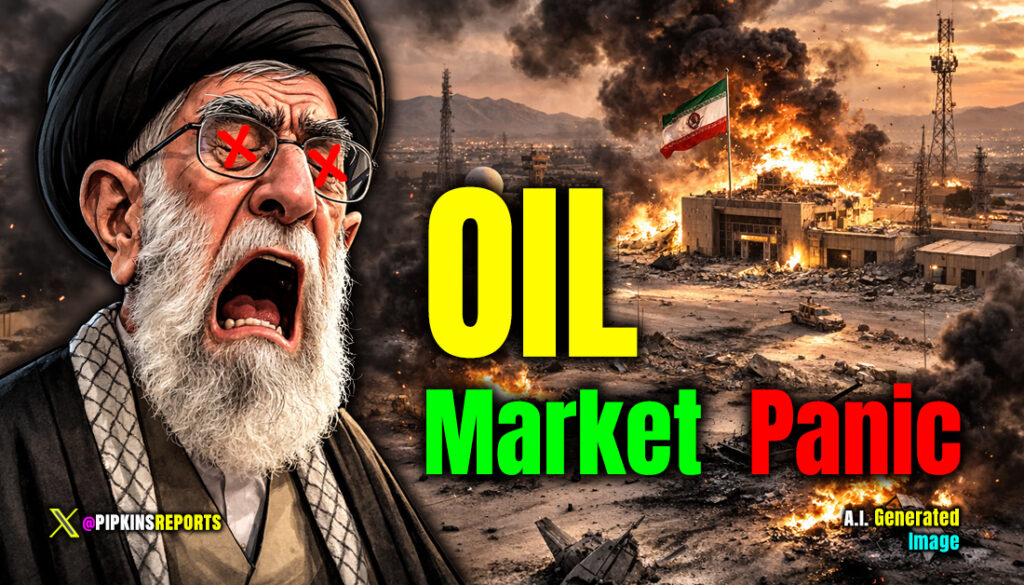
New York, NY – Global markets convulsed at the opening bell, shedding billions in value as war headlines involving Iran ricocheted across trading floors from New York to Tokyo. Traders reacted swiftly, energy prices spiked, and the financial press warned of supply shocks rippling across the world economy.
According to reporting from The New York Times, major stock indices fell sharply amid intensified military activity tied to Iran. Exchanges in the United States, Europe, and Asia all registered significant losses. Oil futures climbed on fears that instability in the Persian Gulf could disrupt tanker traffic through the Strait of Hormuz, a critical shipping lane for global crude.
The downturn began early in the trading session as reports of expanded strikes circulated. Analysts cited by The New York Times described widespread panic selling, with algorithmic trading accelerating declines once volatility thresholds were breached. Technology and transportation stocks led losses. Defense firms saw modest gains as investors anticipated increased military spending.
Yet beneath the red ink and breathless headlines lies a critical fact often missing from early coverage.
Iran accounts for roughly 2 percent of the global traded oil supply. While it remains a member of the Organization of the Petroleum Exporting Countries, years of sanctions following the U.S. withdrawal from the Joint Comprehensive Plan of Action in 2018 have pushed much of its crude into what analysts call the “grey market.”
Rather than selling transparently on regulated exchanges, Iranian oil typically moves through ship-to-ship transfers, obscured tracking systems, and intermediary traders. China has been a principal buyer of these discounted barrels. Transactions often bypass Western financial clearing systems, making the supply less visible but still economically present.
In short, Iran’s oil is already marginal to formal global trading structures.
Markets nevertheless reacted as though a primary energy artery had been severed. The CBOE Volatility Index surged, reflecting investor anxiety. Safe-haven assets, including gold and U.S. Treasury bonds, drew inflows as portfolio managers sought shelter from geopolitical uncertainty.
Complicating the picture, U.S. military officials confirmed that American forces conducted strikes that neutralized Iran’s naval presence in the Gulf of Oman, according to public statements released by U.S. Central Command. Those operations reportedly destroyed multiple Iranian vessels operating in that theater, significantly degrading Tehran’s ability to threaten commercial shipping lanes in the immediate area.
While independent verification remains limited, the operational effect appears clear: Iran’s capacity to directly interfere with tanker traffic near the Strait of Hormuz has been substantially reduced in the short term.
Energy analysts note that the Strait, while strategically vital, is patrolled by multiple international naval forces. With Iran’s regional naval capabilities diminished, the probability of prolonged shipping disruption appears lower than early market reactions suggested.
Moreover, if sanctions enforcement tightens amid escalating hostilities, nations purchasing discounted Iranian crude may be compelled to source oil from legitimate, regulated markets instead of grey market channels. That shift would not remove supply from the global system. It would redirect demand toward transparent producers.
Historically, geopolitical shocks produce immediate price spikes followed by recalibration once traders assess actual supply data. During prior Middle East conflicts, oil markets often stabilized after initial surges, particularly when physical infrastructure remained intact.
Government officials in several countries have urged calm. At this stage, no confirmed long term production outages have been reported. Strategic reserves among major economies provide additional buffers against short term volatility.
Opinion
Financial markets dislike uncertainty, but they often overprice fear.
When a nation responsible for about 2 percent of global traded supply triggers worldwide selling, the reaction says more about investor psychology than structural fundamentals. Iran’s oil already circulates through shadow networks at discounted rates. If conflict constrains that channel further, buyers such as China would likely pivot toward lawful suppliers, strengthening formal markets rather than collapsing them.
The destruction of Iran’s naval presence in the Gulf of Oman, if sustained, further reduces the specter of prolonged maritime shutdowns. Shipping lanes do not appear poised for indefinite closure.
Panic selling generates drama. It does not automatically generate durable economic damage.
Investors would be wise to separate headlines from hard supply data. Markets tend to correct once reality asserts itself. And reality, at least for now, suggests the global oil system remains far more resilient than Monday’s selloff implied.