


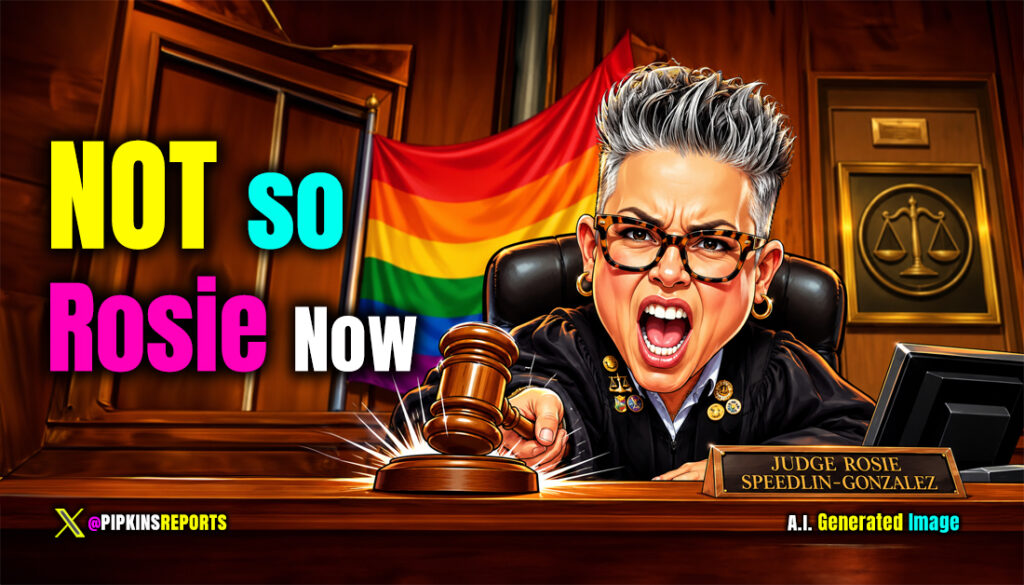
SAN ANTONIO, Texas — The political and legal downfall of Bexar County Judge Rosie Speedlin-Gonzalez came to a dramatic conclusion after the embattled jurist resigned from office and accepted a permanent lifetime ban from serving on the Texas bench .
The resignation agreement, signed in April and confirmed by the State Commission on Judicial Conduct, ends months of controversy surrounding Speedlin-Gonzalez, who faced criminal charges and multiple judicial misconduct complaints stemming from a heated courtroom confrontation involving a San Antonio defense attorney.
Speedlin-Gonzalez, an openly gay Democrat who had served on Bexar County Court-at-Law No. 13 since 2018, formally agreed she would be, “forever disqualified from judicial service in the State of Texas.” The agreement prohibits her from serving as a judge, accepting judicial appointments, or performing judicial duties in the future.
The scandal centered on a December 2024 courtroom incident involving defense attorney Elizabeth Russell. Prosecutors alleged Speedlin-Gonzalez ordered Russell handcuffed and detained in the jury box during a contentious exchange after accusing the attorney of coaching her client during a probation revocation hearing.
A Bexar County grand jury later indicted the judge on charges of unlawful restraint and official oppression. Court documents alleged that Speedlin-Gonzalez knowingly restrained Russell without consent while acting under the authority of her judicial office.
The incident generated national attention and quickly became one of the most talked about judicial controversies in Texas. Video clips and courtroom details circulated widely online, while critics questioned whether the judge had crossed a clear constitutional line by using courtroom authority against a practicing attorney during active proceedings.
KSAT reported last month that special prosecutor Brian Cromeens later moved to dismiss the criminal charges after Speedlin-Gonzalez agreed to resign and permanently leave the judiciary. According to reports, prosecutors concluded the resignation and lifetime ban sufficiently addressed the public interest concerns surrounding the case.
The resignation agreement also referenced several additional complaints against the now former judge. One complaint alleged she displayed an “unprofessional demeanor” toward a criminal defendant and failed to timely address motions involving bond modifications and habeas corpus requests. Three additional complaints accused her of abusing judicial authority by issuing “no contact” orders restricting communications among court personnel and former employees.
Speedlin-Gonzalez had already faced disciplinary scrutiny before the handcuffing controversy erupted. According to the San Antonio Express-News, the State Commission on Judicial Conduct previously issued a public warning after she congratulated winning attorneys on social media and posted their photographs on her official judicial Facebook page. The commission also reportedly ordered additional education after complaints involving a pride flag displayed inside her courtroom.
In January, shortly after the indictment became public, Speedlin-Gonzalez defended herself in comments to the New York Post.
“I’m a proud public servant, I’m LGBTQ, I own a gun, I’m bilingual, I’m an American citizen, and I have every right to defend myself,” Gonzalez told the outlet. “As long as I walk in righteousness and have God at my side I will be fine.”
The judge was suspended without pay earlier this year while disciplinary proceedings continued. During that suspension, visiting judges rotated through County Court-at-Law No. 13 to handle pending cases and specialty court matters.
Court-at-Law No. 13 is known in part for overseeing Reflejo Court, a specialty program focused on first time domestic violence offenders and treatment based intervention programs.
The controversy also arrived during a difficult reelection season for Speedlin-Gonzalez. In March, she lost her Democratic primary race to challenger Alicia Perez, effectively ending her political future even before the disciplinary case concluded.
The agreement signed by Speedlin-Gonzalez states that by accepting resignation and permanent disqualification, she does not admit fault or guilt regarding the allegations against her. Such provisions are common in negotiated judicial disciplinary settlements.
One narrow exception remains under the agreement. Speedlin-Gonzalez may still officiate wedding ceremonies, provided she does not wear judicial robes or imply she retains judicial authority while conducting them.
Speedlin-Gonzalez was widely described as the first openly LGBT judge elected in Bexar County. Supporters frequently highlighted that milestone during her tenure on the bench, while critics argued the attention surrounding identity politics often overshadowed concerns about courtroom conduct and professionalism.
Permanent judicial disqualifications remain relatively uncommon in Texas, particularly involving sitting elected county judges. The case now joins a growing list of disciplinary actions taken by the State Commission on Judicial Conduct against jurists accused of misconduct or abuse of authority.