


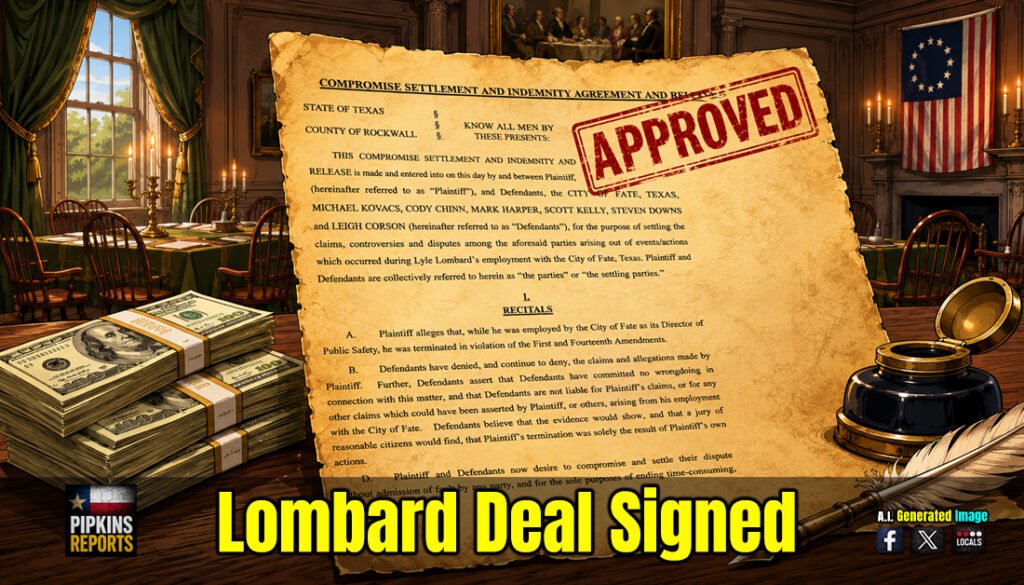
Fate, TX — The courtroom showdown over former Fate Department of Public Safety Director Lyle Lombard is over before it ever really began, and the settlement agreement just released by the City of Fate gives the public something it did not have before: the full list of people who were on the other side of the dispute.
And there were more names than the original lawsuit suggested.
The final Compromise Settlement and Indemnity Agreement and Release, names the City of Fate and six individuals as defendants: City Manager Michael Kovacs, former Councilwoman Codi Chinn, former Councilman Mark Harper, former Councilman Scott Kelly, Steven Downs and Leigh Corson. The agreement states that the dispute arose from events and actions occurring during Lombard’s employment with the city.
For residents who have followed the Lombard controversy for months, that list is significant. These were not merely names floating around the political edges of the controversy. They were the people specifically identified in the final settlement as defendants, meaning their conduct could have been examined in discovery and, had the case proceeded to trial, placed before a jury.
In other words, this is the cast that could have found itself answering questions under oath.
The original complaint prepared for Lombard identified the City of Fate and Kovacs as defendants and alleged violations of his First and Fourteenth Amendment rights, along with claims arising under federal civil rights law. The complaint alleged Lombard was terminated after his wife engaged in criticism of Fate government on social media.
A subsequent demand letter from Lombard’s attorney put the stakes at $440,000 and warned that litigation would involve preservation of emails, electronic files, computer data and other evidence concerning Lombard’s employment and termination.
That litigation will now never get its day in court.
Under the settlement, Lombard agreed to release the defendants and related persons from claims arising from the dispute, including employment-related claims, tort claims, contract claims and other claims that were or could have been asserted based on events occurring before the agreement was executed. The agreement further states that Lombard will not file another claim, complaint, charge, lawsuit or other proceeding based on the matters covered by the settlement.
The price of bringing the dispute to an end is substantial. The agreement provides Lombard with $250,000, according to the settlement document, in exchange for the releases and other promises contained in the agreement. The agreement also provides other consideration, including employment-related benefits. To put this figure in context, this is only slightly more than the severance package afforded to Michael Kovacs … should he ever be terminated.
There is, however, no finding of wrongdoing.
The settlement expressly says it is a compromise of disputed claims and is not an admission of fault, wrongdoing or liability by any party. The defendants specifically deny Lombard’s allegations and maintain that his termination was the result of his own actions.
The settlement brings the Lombard matter to a permanent close, but it also leaves a public record of who was named as defendants and who could have been called to answer questions had the case gone to trial. There will be no jury verdict, no sworn testimony from those witnesses in open court, and no judicial determination of whose version of events was correct. The $250,000 settlement ends the dispute, and under its terms, ends any further litigation against the defendants arising from the claims covered by the agreement.