


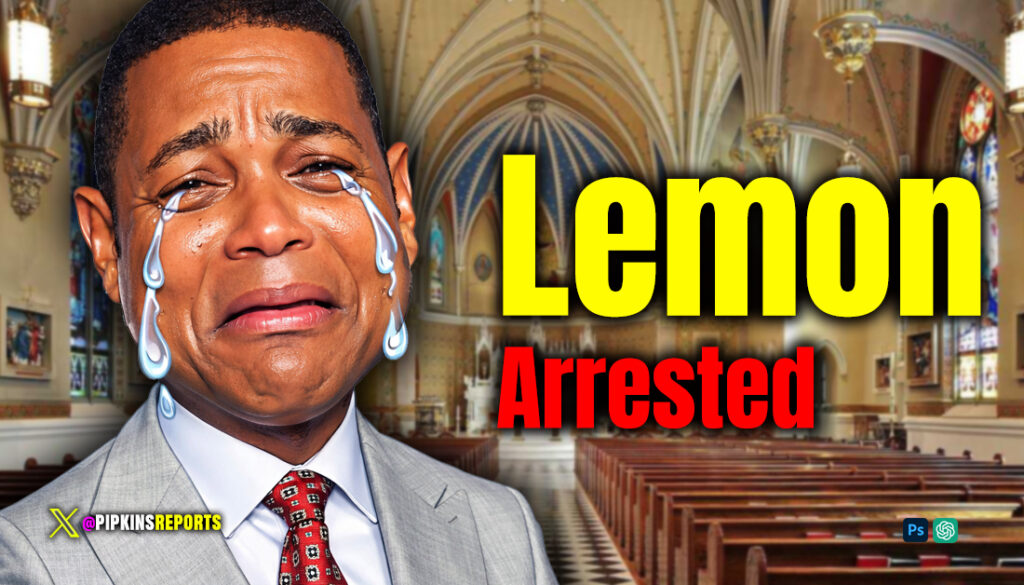
First Amendment Clash Erupts
LOS ANGELES, CA – Former CNN anchor and independent journalist Don Lemon was taken into federal custody Thursday night in Los Angeles, in connection with a disruptive protest that entered a St. Paul, Minnesota church during a service on January 18, 2026.
Federal agents, acting on information developed by prosecutors, apprehended Lemon while he was in California covering the Grammy Awards. This stunning development has ignited nationwide debate over protest rights, press freedom, and federal enforcement priorities.
Don Lemon, 60, a former CNN primetime anchor and currently an independent media figure and commentator, is known for his radical leftist ideology and anti-white racist slant in his reporting. After being fired from CNN he started his own podcast which can be seen on YouTube and iHeart.
Abbe Lowell, Lemon’s attorney, confirmed the arrest and provided the account of events to multiple outlets.
Multiple unnamed federal law enforcement sources and government officials are involved in the investigation.
Sources say Lemon was taken into custody under federal authority, though specific criminal charges have not yet been publicly disclosed. Federal agents reportedly acted after a grand jury was empaneled earlier on Thursday, indicating prosecutors are pursuing formal charges tied to the church incident.
The Minnesota protest targeted a pastor allegedly associated with ICE, and demonstrators called for removal of federal immigration enforcement involvement in local communities. The service disruption drew immediate attention from local media and legal authorities, and the federal government opened a civil rights and enforcement inquiry.
At least three other individuals connected to the protest have been arrested in connection with civil rights violations related to disrupting the church service. Authorities have indicated that any action in a place of worship, including entering without permission and interrupting religious activities, can invoke both criminal and civil statutes protecting access to houses of worship.
LEGAL BACKGROUND SO FAR
Earlier in the month, a federal magistrate judge refused to approve charges against Lemon, citing insufficient evidence at that early stage. Prosecutors were reportedly instructed to seek a grand jury indictment instead. Subsequently, that path appears to have succeeded, culminating in the arrest.
At least one federal appellate panel previously declined the Justice Department’s emergency request to authorize an arrest, though one judge acknowledged probable cause existed. This procedural history illustrates the complexity of prosecuting protest-related actions that intersect with press coverage and constitutional protections. The magistrate’s rejection, and subsequent grand jury action, have raised questions about prosecutorial judgment and judicial oversight.
RESPONSES FROM THE PARTIES
Lawyer Abbe Lowell — representing Lemon — publicly denounced the arrest as an “attack on the First Amendment,” asserting Lemon was acting entirely in his capacity as a journalist and that his actions were constitutionally protected reporting. Lowell vowed that Lemon will “fight these charges vigorously and thoroughly in court.”
Lemon himself has consistently maintained he was present to report and document, not to participate, and that he had no organizational role in the demonstration.
Federal authorities have not released official statements on the legal basis for the arrest, and charges remain undisclosed in public filings as of this publication. Prosecutors have linked the church disruption to violations of laws designed to protect the free exercise of religion and civil rights, but official charging documents have not yet been filed in open court.
This arrest marks a rare instance where a national media figure has been taken into custody for coverage of a protest event, particularly one involving the disruption of a religious service. For conservative observers and press freedom advocates alike, the case poses questions about the boundary between journalism and participation in politically charged events, and whether the federal government is setting a precedent for prosecuting media figures covering controversial demonstrations.
Legal scholars note that journalists generally receive broad protection under the First Amendment when documenting events, even if those events turn chaotic or involve other participants committing crimes. The government’s position, as implied by its pursuit of Lemon, suggests prosecutors believe Lemon’s presence and actions may have crossed a legal line — a position his defense vigorously disputes.
Observers expect formal charges to be announced when Lemon next appears in federal court, potentially in Los Angeles. The case is likely to draw intense scrutiny from press freedom groups, civil liberties advocates, and political commentators nationwide.
Opinion and Analysis
The arrest of Don Lemon raises serious questions: Are journalists being held to the same standards as ordinary citizens when they cover protests? The First Amendment is clear — the freedom to gather news is sacred and necessary to hold government accountable. Yet this case demonstrates how federal enforcement can transform neutral reporting into a prosecutorial target when political sensitivities run high.
If Lemon truly was reporting, walking ahead of protestors who later disrupted a service, then the act of documenting events should be protected. The government’s expansion of enforcement into spaces where journalistic documentation occurs threatens to blur the line between witness and participant — a dangerous ambiguity that chills free speech and press freedom.
Conversely, if Lemon participated in the disruption of worship services by providing aid or assistance in any way, he was no longer a reporter, and his press badge would not act as a shield from prosecution. The federal statutes designed to protect religious gatherings are legitimate insofar as they preserve Americans’ rights to worship without intimidation or interference. Enforcement of those statutes should be even-handed, not influenced by political or media status.
Here’s the critical question: Is the DOJ enforcing law impartially, or choosing political targets? That answer will shape the future of American civil liberties. Lemon’s arrest is not just about one man — it is about the fundamental guarantees of free expression and religious liberty in a democratic society.