


How Fate registered a developer’s project domain after seeing it in official plans, then fought to keep that fact hidden
FATE, TX – Cities are expected to regulate development, not steal its name.
Records obtained by Pipkins Reports show the City of Fate registered the domain name of a private development, lafayettecrossing.com, while actively working with the developer who had already claimed that name in official plans. The move, made quietly during a heated approval process, raises serious questions about whether Fate’s city government crossed from partner to predator, taking digital ownership of a project it was supposed to oversee with neutrality and good faith… and depriving the developer of their rights to domain ownership.
What followed, attempts to conceal the purchase, shifting explanations from city officials, and a documented pattern of advocacy on behalf of the developer, suggests the domain registration was not an accident, but part of a broader effort to control the narrative around one of the most divisive projects in the city’s history.
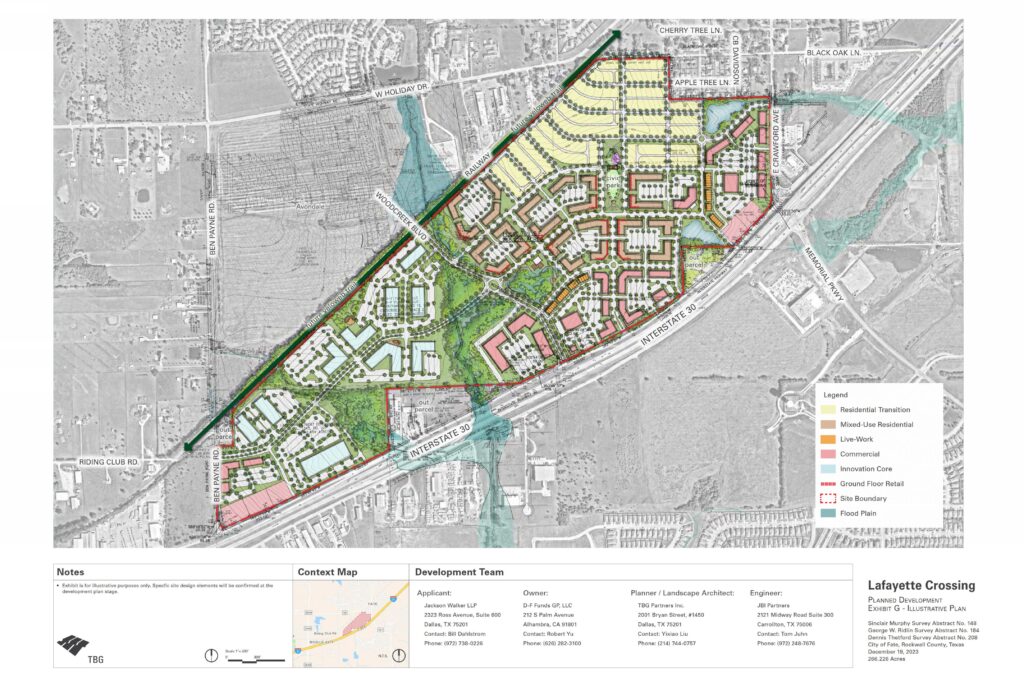
A site plan submitted by the developer, D-F Funds GP, LLC, led by Robert Yu, shows the project title “Lafayette Crossing” clearly identified in the title block on December 20, 2023. The document was part of the city’s official development review for the controversial project at the corner of I-30 and Highway 551.

Less than two months later, on February 7, 2024, the City of Fate registered the domain lafayettecrossing.com, Invoice #116953461, for $12.
Domain records confirm the registration date, with the domain set to expire on February 7, 2027. By that point, Lafayette Crossing was already the established name of the project, used by the developer and embedded in official plans circulating within City Hall.
This was not a coincidence. The city had the plans from the developer. Their were extensive talks regarding the project. Then the city registered the domain without the knowledge of the developer. This is known in the industry as, “Cybersquatting.”
The development, originally referred to as the “Yu Tract,” became known as Lafayette Crossing as it moved through the approval process. The project ignited intense public opposition over density, traffic congestion, infrastructure strain, and the long-term direction of Fate’s growth. Despite sustained resistance and packed council chambers, the city council approved the project.
The political fallout was severe. In the elections that followed, four council members and the mayor were replaced, an extraordinary level of turnover that reflected deep voter dissatisfaction. Two members from that Council, Councilman Mark Harper and Councilman Scott Kelley, remain, but are up for reelection this May.
That context matters, because the domain registration did not occur in isolation. It occurred amid a broader, documented pattern of city officials actively working to shape public perception in favor of the developer.
In February 2024, Pipkins Reports, then operating as the Fate Tribune, published an exposé based on internal city emails showing City Manager Michael Kovacs discussing strategies to “educate” the public about Lafayette Crossing. In those emails, Kovacs suggested deploying what he referred to as “Fire Support,” a term used to describe both paid and unpaid advocates brought forward to counter citizen opposition and astroturf public support for the project.
That reporting revealed a city government not merely responding to public concerns, but actively attempting to manage and counter them.
In a later publication, Pipkins Reports (Fate Tribune) documented the City of Fate’s hiring of Ryan Breckenridge of BRK Partners, engaging in what records showed to be a coordinated public relations effort aimed at improving the project’s image and swaying public sentiment. The campaign was presented as informational, but residents viewed it as advocacy on behalf of the developer, funded with public resources.
It was within this environment, where city staff had already aligned themselves publicly and privately with the developer’s interests, that the city registered the lafayettecrossing.com domain. Yet that fact remained hidden until PipkinsReports.com submitted an Open Records Request on September 30, 2025, seeking a list of all domains owned by the city.
Rather than comply, the City of Fate objected. On October 14, 2025, officials asked the Texas Attorney General’s Office for permission to withhold the records, citing “cybersecurity” concerns.
On January 6, 2026, the Attorney General rejected that claim and ordered the information released. The city complied on January 20, 2026.
In addition to the lafayettecrossing.com domain, the records revealed the city owns numerous domains tied to redevelopment and branding initiatives, including:
- FateTX.gov
- DowntownFate.com
- FateFoodHaul.com
- FateMainStreet.com
- FateStationHub.com
- FateStationMarket.com
- FateStationPark.com
- FateStationSpur.com
- OldTownFate.com
- TheHubAtFateStation.com
- TheSpurAtFateStation.com
- ForwardFate.com
Most clearly relate to city-led initiatives. LafayetteCrossing.com stands apart because it mirrors the established name of a private development already proposed, named, and publicly debated.
When questioned via email, Assistant City Manager Steven Downs initially suggested the domain purchase occurred long before his involvement and downplayed any potential issues. When we revealed documents to show Downs was actively engaged with the project at the same time the Lafayette Crossing name entered the city’s official workflow, his story changed.
In follow-up correspondence, Downs acknowledged he was aware of the project name, while placing responsibility for the domain purchase on former Assistant City Manager Justin Weiss. Downs stated he did not know whether the developer was aware of the purchase and said he was not concerned about potential liability.
What remains unexplained is why the city registered the domain at all, knowing it belonged to a private project, and why it attempted to keep that information from the public.
Opinion
Viewed in isolation, a $12 domain purchase might seem trivial. Viewed in context, it is not.
When a city that has already worked to astroturf support, hire public relations firms, and counter citizen opposition also quietly registers a developer’s project domain, then attempts to conceal that information from the public, the line between regulator and advocate disappears.
The question is no longer whether the city knew the name. The record shows it did.
The question is why a city government so deeply invested in selling a controversial project to its residents felt the need to take ownership of the project’s digital identity as well.
Control of messaging, control of perception, and control of narrative are powerful tools. Sometimes it is equally as important to control what is not said.